*Based on 2026–2027 Boston University tuition and fees.
Gain Skills to Create Impactful Digital Health Campaigns
Boston University’s online Graduate Certificate in Visual & Digital Health Communication is a 16-unit course of study that examines the impact of the communication technology revolution on the field of health marketing and outreach, and prepares graduates for careers in this rapidly changing and growing industry through the development of visual and digital storytelling tools vital to modern messaging. It can be completed in less than a year.
The next decade will be a transformative one for healthcare. According to the U.S. Census Bureau, by 2030 aging baby boomers will outnumber children for the first time. By 2034, more than 77 million (one in five residents) will be age 65 or older. In addition to this predicted demand for healthcare needs, an increase in chronic lifestyle diseases—diabetes, blood pressure, asthma, arthritis, cancer, dementia, and other stress-related disorders—is helping drive expansion of the wellness industry, the value of which is poised to grow by $1,299.8 billion through 2024, according to a report by Technavio.
Digital technology will continue to have an impact on healthcare, with venture funding for health tech innovators at $14 billion in 2020 and expected to increase, according to Deloitte. The same can be said of social media. According to a report by Hootsuite and We Are Social, the number of active social media users is in the billions—and growing exponentially. With more than half the world’s population using social media, and with such rapid and continued expansion, it is essential to harness the power of this tool in your healthcare marketing and communication efforts.
Savvy communicators, marketers, and coverage providers recognize the importance of effective storytelling and strategic social media practices in capturing the engagement and participation of patients, consumers, or desired target audiences. How those audiences and consumers experience initiatives through social media, websites, mobile apps, videos, and branded content can make or break the success of an otherwise well-defined health campaign or project.
In the Visual & Digital Health Communication certificate program’s required courses, students will learn the fundamental principles of design and how to apply them to the creation of powerful health education and delivery application tools, such as infographics, data visualization graphics, videos, websites, mobile apps, and branded content. Students will also examine how social media is used in health care and why using it effectively has become a necessary skill for many health care professionals.
Curriculum
The online Graduate Certificate in Visual & Digital Health Communication consists of four required courses (16 units).
Learn about application requirements for BU MET graduate degree and certificate programs.
How You Benefit from a Boston University Education
A BU credential can help lay the foundation for career advancement and personal success.
Benefit from a 24:1 average student-to-instructor ratio.
Work closely with experienced health professionals and faculty experts from across Boston University, including the College of Communication, School of Public Health, and Metropolitan College.
BU MET’s Health Communication program provides practical, hands-on education that you can apply on the job.
Study principles of healthcare and communication alongside peers with industry experience, learn from faculty who have valuable contacts in the field, and benefit from an alumni community with strong professional connections.
Graduate with Health Communication Expertise
Students who complete the Graduate Certificate in Visual & Digital Health Communication will be able to demonstrate:
Knowledge of the value and significance of traditional, social, and emerging digital media practice in the health communication field.
The ability to design communication strategies and methods that employ digital and visual information to influence audiences or affect change on health-related topics and issues.
Expertise in the role that communication—including digital and visual content—plays in the health care industry.
The capacity to analyze, synthesize, interpret, and present health and scientific information for public consumption using clear and concise messaging.
Proficiency in creating digital images and visual tools—including infographics, branded content, video, data visualization graphics, webpage, and mobile page design—that purposely and ethically help bridge digital divides in health education and comprehension.
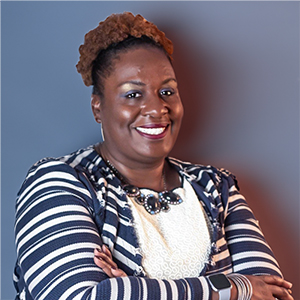
“Shortly after completing the program, I was offered a new position that I attribute to my educational advancement. I previously worked as a Clinical Content Writer and now I’m a Senior Clinical Content Strategist. This program taught me the skills necessary to work in this role (and I believe future roles are to come).” Read more.
Raina Cordell (MET’23) Senior Clinical Content Strategist, Evernorth Health Services (Cigna Group) MS, Health Communication; Concentration, Visual & Digital Health Communication
Advance Your Career
BU MET’s Visual & Digital Health Communication graduate certificate prepares you for a wealth of different roles in public health communications, patient advocacy, health education, community health organizing, healthcare marketing communications, patient experience, social media communications, healthcare administration, and crisis management among others.
Recent graduates have found job opportunities and career paths at companies such as:
Beth Israel Deaconess Medical Center
Cigna
Genzyme
Kaiser Permanente
Memorial Sloan Kettering Cancer Center
UnitedHealth Group
American Red Cross
Aetna
Boston Medical Center
Beth Israel Lahey Health
Health Communication Faculty
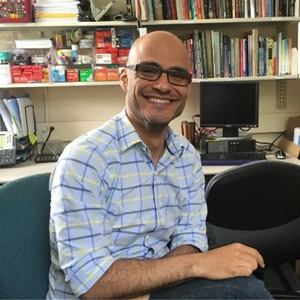
Justin Joseph
Program Director, Health Communication Associate Professor of the Practice, Public Relations, Boston University College of Communication
Felipe Agudelo Acevedo
Lecturer
Associate Director of Diversity and Inclusion,
Boston University Chobanian & Avedisian School of Medicine
Alane Bearder
Lecturer and Program Facilitator
Digital Marketing Strategist, Strategic Communications Consultant
Stephanie Burke
Lecturer Associate Professor, Prince George’s Community College
View All Faculty
Paul Buta Lecturer
Leigh Curtin-Wilding Lecturer
Anne Danehy Senior Lecturer, Boston University College of Communication
Donna Duffy Lecturer
James Gardner Lecturer
Gabraelle Lane Lecturer
Stephen Quigley Academic Advisor Associate Professor of Public Relations, Boston University College of Communication
Domenic Screnci Academic Advisor Lecturer, Boston University College of Communication
Whether a master’s in artificial intelligence pays off depends on more than tuition. Boston University’s Online Master of Science in Computer Science & Artificial Intelligence costs $25,000 in total and typically takes four semesters part-time. Those numbers are easy to find. The harder question is what that investment actually changes for you. The four numbers […]
Engineers considering the move from data engineer to data scientist tend to ask a version of the same question: how different is this, really, from what I already do? It’s a fair question. After all, you already write production code. You already handle data at volume. You have probably built the infrastructure that the data […]
When people ask how long it takes to earn a master’s in data science, the answer often focuses on the shortest completion timeline. That can be useful, but it does not reflect every student’s experience. For working professionals, the better question is what pace fits alongside work and other commitments. A sustainable pace matters because […]