
Welcome to our classroom! Here you’ll find snapshots of the vibrant mix of projects, site visits, and immersive experiences that shape our students’ learning. In the Preservation Program, our faculty champion interdisciplinary exploration and the power of stepping directly into the places where history lives. From tracing the fine workmanship of significant and vernacular architectural sites or engaging directly with preservation professionals, our students gain hands-on knowledge that deepens their knowledge and fuels their passion for the field.
As part of their program requirements, the MA in Preservation Studies students undertake various types of research and scholarly project, occasionally publishing their work or presenting it at conferences and seminars. They also develop capstone projects and take part in internships. Our program faculty and instructors also host studios and workshops that engage undergraduate students in aspects of preservation.
CAS AM 555 Boston Architectural and Community History Workshop
The Boston Architectural and Community History Workshop, taught by Ian Stevenson (PSP ‘13), immerses students in place-based historical fieldwork by focusing each semester on a Boston neighborhood. In Fall 2025, students examined a cluster of brick buildings in Allston centered on Holmes, Mead, Raymond, and Franklin Streets, culminating in the preparation of an Inventory (B) Form for submission to the City of Boston and the Massachusetts Historical Commission.
Students traced property ownership, narrated resident histories, and analyzed the built environment using historic maps and newspapers, and census records, as well as technological tools like MACRIS and Atlascope. Fieldwork deepened this research, beginning with an initial site visit, allowing students to study the buildings as a collective streetscape, while a second visit supported focused architectural analysis of individually selected properties.
Throughout the project, students explored how vernacular architecture reflects social status, aspiration, and community identity, developing narratives that connect individual buildings and their occupants to broader patterns of development and change in Allston and Boston.
View this post on Instagram
Spring 2026 Professions in Preservation
In Spring 2026, Preservation Studies Director Carolyn White and James R. Wiseman Chair in Classical Archaeology Andrea Berlin taught Professional Futures in Archaeology and Preservation, a course designed for undergraduate and graduate students preparing to enter the preservation and archeology fields. Throughout the semester, students had the opportunity to hear from a range of accomplished professionals working in preservation and archaeology, gaining valuable insight into career paths, current challenges in the field, and emerging opportunities. These conversations encouraged students to ask questions, engage directly with practitioners, and begin building professional networks that will support their future career.
Additionally, as part of the course, students completed a preservation project focused on Boston University’s Mugar Memorial Library, which is scheduled to undergo renovations in the coming years. The project explored ways the library could preserve and interpret both its social history and architectural legacy for future generations of BU students.
The class also participated in several field excursions. During one visit, students toured the City of Boston’s Preservation Planning division, where they met with members of the department and learned about preservation planning in practice. Students had the opportunity to ask questions about the profession, discuss career pathways, and network with professionals, gaining firsthand insight into the work of the department and the broader preservation field.
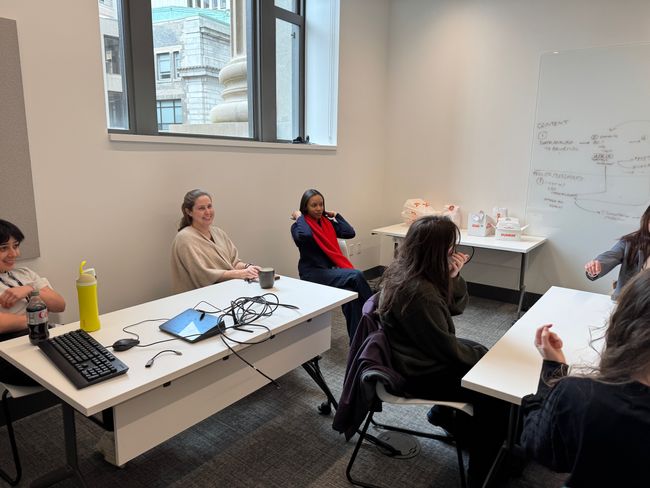

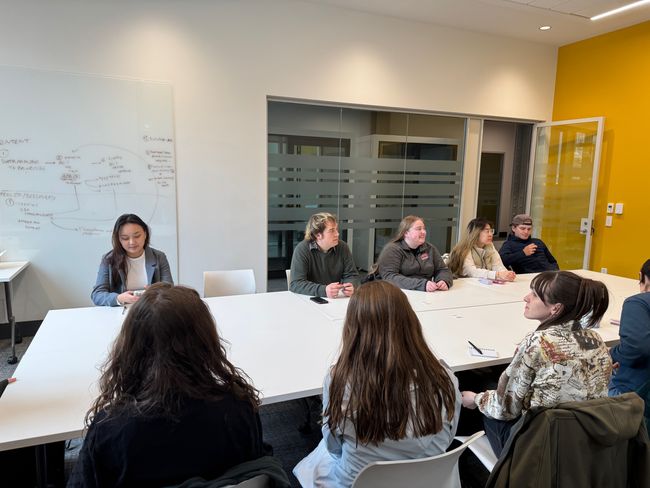
Reimagining Minute Man National Historical Park Visitor Center Landscape: Landscape Design and Preservation Studio
The Landscape Design and Preservation Studios introduces students to design in the context of a historical landscape. This studio sample shows material of students’ studio work to reimagine the Battle Road visitor center landscape experience at Minute Man National Historical Park, Lincoln, MA. Explore the studio here.
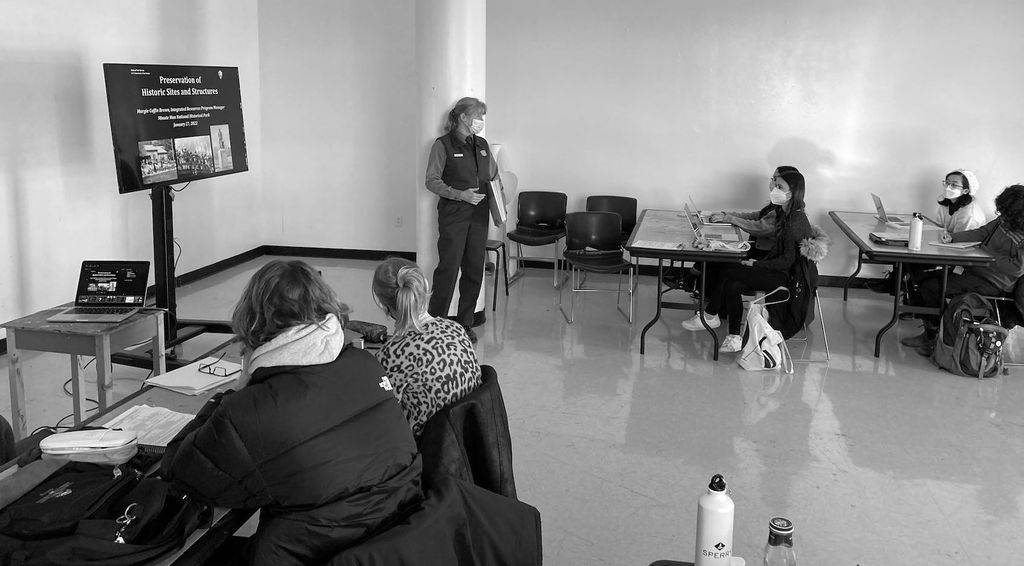
The Afterlife of a Baseball Stadium
David Lewis (MA 2022) explored for our course on Adaptive Reuse and Revitalization the history of the Boston Braves’ baseball stadium in “The Afterlife of a Baseball Stadium: Braves Field and the Creation of Boston University’s West Campus.”
Brighton, Architectural & Community History Workshop
Over the course of the nineteenth century, Brighton’s landscape changed drastically, due in large part to the decline of the cattle market as a result of to new technologies, such as the invention of refrigerated cars, and increased awareness of public health. As the cattle slaughter began to wane, many wealthy members of the community began to look towards the potential profits in the real estate market as Brighton emerged as a commuter suburb of Boston. Many of those individuals owned large tracts of land and began selling them off for profit. Explore the workshop’s documentation here.
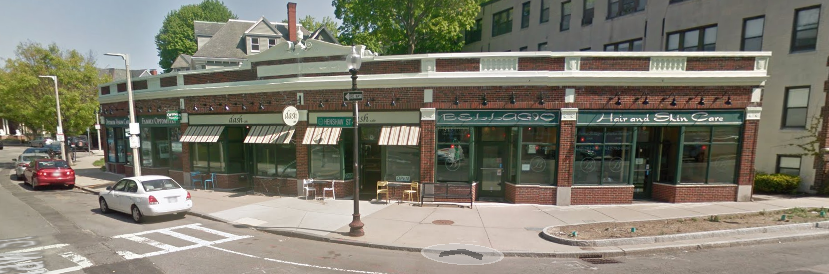
Jamaica Plain, Architectural & Community History Workshop
In 1800, Jamaica Plain was a quiet agricultural and residential district a few miles west of downtown Boston. The hilly landscape’s numerous farms and orchards provided fresh produce and milk to the nearby city. Along the shores of Jamaica Pond and on the banks of the Stony Brook, wealthy residents of Boston built extensive landscaped estates to which they retreated during hot summer months. Explore the workshop’s documentation here.
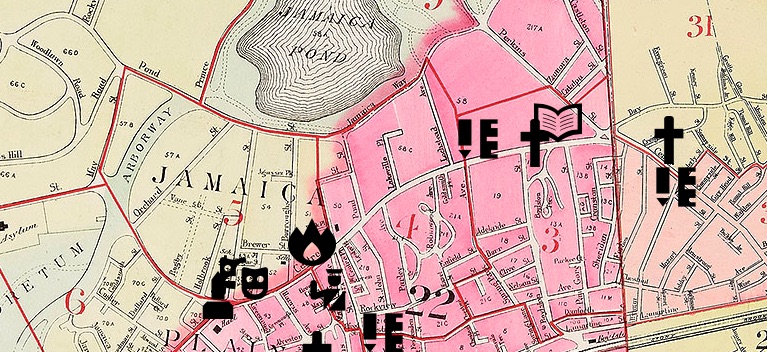
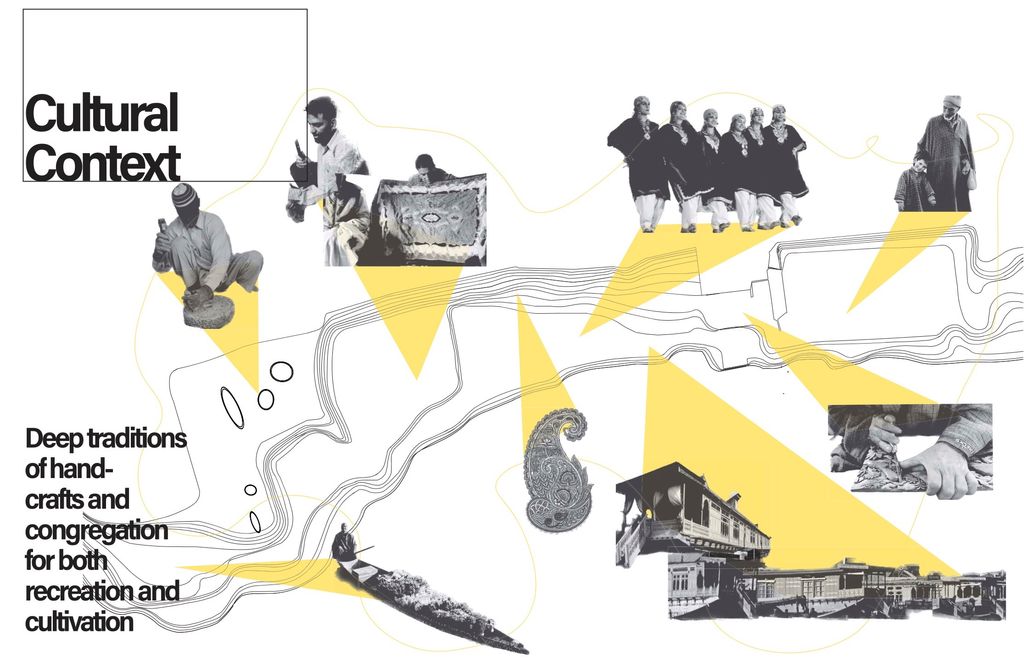
Cherry Park, Srinagar, Kashmir: Landscape Design and Preservation Studio
This Design Studio embarked on an inspiring journey to Cherry Park, nestled on the banks of Nigeen Lake in Srinagar, Kashmir. The studio looked at ways to restore ecosystems, preserve historical elements, and integrate interpretation, all while embracing sustainable practices and native plantings. Find out more.
Architectural & Community History Workshop, including Workshop Resources, Research Tools & Process
The Architectural and Community History Workshop (AM 555) is a required course in the MA in Preservation Studies. The course allows students to work hands-on with primary sources to uncover the rich histories of Boston’s neighborhoods. Samples of the body of work compiled by the class each semester can be found by clicking through the below image, including course resources for the workshop, research tools and info on the research process.

Architectural & Community History Workshop: Charlestown, Massachusetts
The course focuses on the community and architectural histories of Charlestown, a neighborhood within Boston. As part of the class, students go on site visits, applying and practicing their taught skills on site, such a building identification on instructor-led neighborhood walks. See a news update of site visits in the course.
MA Capstone Projects
Each MA in Preservation Studies student completes a capstone as an independent research project, that is the culmination of their work at Boston University. For some selected topics of recent projects, click here.
Preservation Studies Internships
As part of their graduation requirements, MA in Preservation Studies students undertake an internship with a preservation organization, working on a diverse range of preservation projects and initiatives. Find some samples in our list of recent internships.