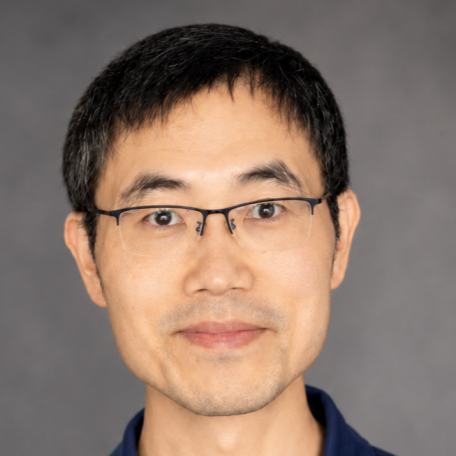
Liang Gao
UCLA
Dr. Liang Gao is a Professor of Bioengineering at UCLA. His lab develops high-speed, multidimensional optical imaging technologies—combining computational optics, novel sensing, and advanced reconstruction—to probe dynamic biological systems in vivo. He has published over 90 peer-reviewed papers in journals including Nature, Nature Methods, Nature Photonics, Nature Communications, Science Advances, and PNAS. He is the recipient of an NSF CAREER Award, an NIH MIRA Award, the ICBS Frontiers of Science Award in Computational Optics, and the SPIE Harold E. Edgerton Award in High-Speed Optics, and is a Fellow of SPIE and Optica.
Presentation Title:
Breaking the Speed Barrier: High-Speed Light-Field Microscopy for Kilohertz 3D Imaging and Beyond
Abstract:
Biology is fast—and increasingly, the questions we care about are faster than our microscopes. Electrical signaling in neural circuits, rapid hemodynamics, cardiac excitation waves, and transient metabolic events unfold on millisecond timescales across three-dimensional tissue. Yet much of modern microscopy still forces a trade: see in 3D, or see in real time.
In this presentation, I will describe how we are working to dissolve that tradeoff by rethinking light-field microscopy as a bandwidth-engineering problem. Classic light-field imaging is powerful because it captures a volume in a single snapshot, but it has long been throttled by the burden of large-format measurements and reconstruction overhead. Our recent advances at the intersection of computational optics, sensing, and algorithm design reframe the light-field camera not as a passive recorder, but as an optimized measurement engine—one that compresses information at acquisition and restores it computationally with high fidelity.
Building on our recent demonstrations of squeezed light-field microscopy (SLIM) and light-field tomographic FLIM (LIFT-FLIM), I will outline a roadmap toward ultrafast volumetric microscopy: from kHz 3D imaging for voltage dynamics and closed-loop experiments, to emerging detector and reconstruction paradigms that push the concept toward far higher effective rates—ultimately approaching regimes where “continuous” 3D imaging becomes practical. The broader vision is a new class of microscopes that treat time as a first-class dimension: instruments that can track biology as it happens, at the speed it happens, while preserving volumetric context.
Organization Page
- Fields
- SYM-FALL-2026