News
Why Global COVID Vaccinations Are Dangerously Lagging: Six Things to Know
As Delta variant spreads rapidly, BU-led panel explains why vaccination rollout isn’t keeping pace
Global Vaccine Access: Insights from International Public Health Experts on Ensuring an Equitable Pandemic Recovery
BU hosted a Global Vaccine Access virtual briefing on July 21, 2021.
First Woman to Lead NASA’s Kennedy Space Center Is a BU Alum
Janet Petro (MET’88) foresees great things from rise of private space companies and a return to the moon
House Committee Offers Increases for NIH, NSF, NASA, Student Aid
BU IN DC
Ibram X. Kendi of the Center for Antiracist Research addressed the AFT TEACH Virtual Conference on July 7th.
HOUSE COMMITTEE OFFERS INCREASES FOR NIH, NSF, NASA, STUDENT AID
This week, the House Appropriations Committee approved spending bills that would significantly increase federal science and student aid investments in fiscal year 2022. The bills, which have been sent to the full U.S. House of Representatives for approval, would provide:
- $49 billion for the National Institutes of Health, a 14.2% increase
- $9.63 billion for the National Science Foundation, a 13.6% increase
- $7.97 billion for NASA Science programs, an 9.2% increase
- $7.32 billion for the Department of Energy Office of Science, a 4.2% increase
- $2.4 billion for Department of Defense basic research, a 7% decrease
- $762.5 million for the Institute for Education Sciences, an 18.7% increase
- $6,895 for the Pell Grant maximum award, a 6.1% increase
- $1.43 billion for Federal-Work Study, a 20% increase
The U.S. Senate is expected to unveil its version of the spending bills later this summer, and then both chambers will need to agree on a final spending level with the Biden Administration. Although the federal fiscal year starts on October 1st, lawmakers will probably need a continuing resolution to keep the government operating while they finalize their spending decisions later in the year.
BUZZ BITS...
- The National Science Foundation (NSF) has named Dr. Susan S. Margulies as the new head of the NSF Engineering Directorate and Dr. Alexandra Isern as the new head of the NSF Geosciences Directorate. Margulies previously chaired the biomedical engineering department at Emory University and Georgia Tech. Isern has worked at NSF for twenty years.
- President Joe Biden nominated BU alumna Rachel Jacobson (LAW '84) as Assistant Secretary of the Army for Installations and Environment. Jacobson has previously held roles at the Departments of Interior, Justice, and Defense.
- BU alumna Janet Petro (MET '88) has been named the 11th head of the Kennedy Space Center. She had been deputy director since 2007, and acting director since May 2021.
- Danielle Carnival has been named senior advisor for the White House Office of Science and Technology Policy's anti-cancer activities, focusing on "patient engagement and outreach for cancer and other diseases building on the spirit and learnings from the Cancer Moonshot." Carnival is a neuroscientist who was previously involved in Cancer Moonshot activities for the Obama Administration.
POLICYMAKERS DISCUSS HIGH-SKILLED IMMIGRATION
The House Subcommittee on Immigration and Citizenship held a hearing on Tuesday entitled "Oh, Canada! How Outdated U.S. Immigration Policies Push Top Talent to Other Countries." Witnesses described the importance of international scholars to American's scientific enterprise and why these scholars are increasingly choosing to study and work in nations other than the United States, such as Canada. The hearing follows the Biden Administration's decision to withdraw the Trump Administration's controversial "duration of status" proposal, which would have arbitrarily limited how long international students could study in the United States.
Watch the hearing
As Temperatures Set Records, Heat Exposure Hits Some Neighborhoods Harder than Others
RESEARCH HIGHLIGHT
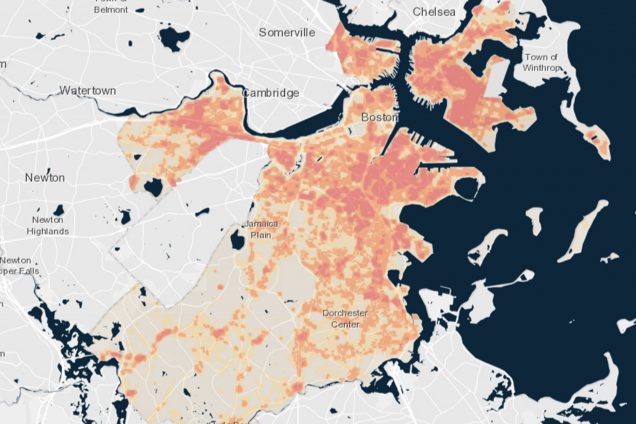
As Temperatures Set Records, Heat Exposure Hits Some Neighborhoods Harder than Others
BU researchers say vulnerable communities experience the most dangerous effects of heat stress and heat-related illness. See what's happening
YOU'RE INVITED

Achieving Global Vaccine Equity: What Should US Policymakers Do?
Join Dr. Nahid Bhadelia of the BU Center for Emerging Infectious Diseases Policy & Research, Congresswoman Lois Frankel (D-FL), and global health experts for a July 21st virtual lunchtime briefing on what U.S. policymakers can do to ensure equitable access to vaccines worldwide. RSVP today
FACULTY EXPERTS
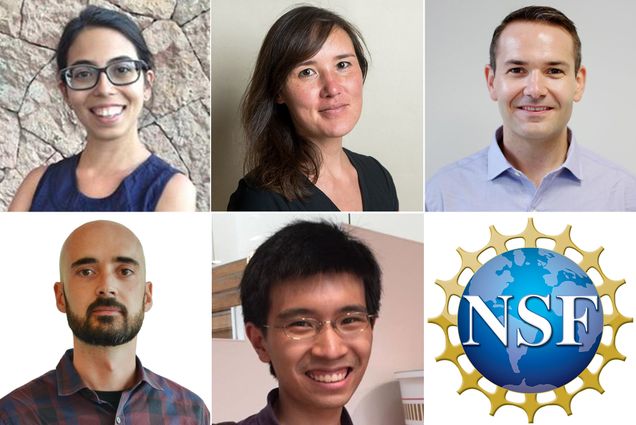
Pushing the Limits
Five Boston University scientists will use National Science Foundation early-career grants to jump start their research in physics, fabrication techniques, and algorithm design. Glimpse the future
THOUGHT LEADERS
In Case You Missed It...
Helen Tager-Flusberg of the BU College of Arts & Sciences was appointed to the federal Interagency Autism Coordinating Committee... Stephanie Curenton of the BU Wheelock College of Education & Human Development coauthored a report on how the COVID-19 pandemic is affecting Black families' experiences with racism... Junia Howell of the BU Center for Antiracist Research explains how FEMA's focus on property rather than people means Americans may not get the disaster aid they need on NPR... Mandy Coles of the BU School of Medicine outlines what medical options are available for transgender youth in The Conversation... Allan Walkey of the BU School of Medicine discussed his research demonstrating that the Ohio vaccine lottery did not increase vaccination rates with Forbes.
House Approves Changes to NSF and Dept. of Energy
BU IN DC
David Bishop of the College of Engineering participated in a National Science Foundation panel on growing convergence research on June 29th.
HOUSE APPROVES CHANGES TO NSF AND DEPT. OF ENERGY
On Monday, the U.S. House of Representatives voted overwhelmingly in favor of two bills that authorize funding increases for both the National Science Foundation (NSF) and the U.S. Department of Energy (DOE) Office of Science. The NSF for the Future Act (H.R. 2225) was passed by a vote of 346-67 and directs NSF to create a new science and engineering solutions directorate, increases funding for graduate education and creates additional opportunities for scholars at Minority Serving Institutions. BU President Robert A. Brown had urged lawmakers to support the bill, citing its strong commitment to basic research and a diverse scientific workforce. The DOE Science for the Future Act (H.R. 3593) was passed by a vote of 351-68, and would authorize new and existing programs at the Office of Science and DOE national labs. The bills are expected to be part of broader negotiations between both chambers of Congress on a comprehensive research and competitiveness bill that lawmakers hope to send to President Joe Biden by the end of the year.
Learn more
LAWMAKERS CONSIDER HIGHER ED TAX BENEFITS
The House Ways and Means Oversight Subcommittee held a hearing on Tuesday to discuss how the tax code could be improved to increase access to higher education among underrepresented populations. Witnesses encouraged lawmakers to double the amount of the federal Pell Grant, stating that the program has not kept pace with inflation and increasing its value would be the most effective means of assisting low-income students. Other recommendations to broaden access included streamlining existing tax credits so that they better target those in lower tax brackets, ending the taxability of academic scholarships, and strengthening policies that encourage charitable giving, such as repealing the tax on net investment income for certain colleges and universities.
Watch the hearing
BUZZ BITS...
- The House Appropriations Committee voted in favor of funding the National Endowment for the Humanities (NEH) at $201 million in fiscal year 2022,a 20% increase over the previous year's levels. The U.S. Senate is not expected to release their proposed funding levels until later this summer.
- Earlier this week, the National Collegiate Athletic Association (NCAA) announced an interim policy change that permits student athletes to benefit financially from use of their name, image or likeness. Prohibitions for pay-for-play schemes or improper payments tied to attending a particular school remain in effect.
- The White House Office of Science and Technology Policy (OSTP) is asking for input from the scientific community on how the federal research enterprise can improve scientific integrity policies. OSTP's Scientific Integrity Taskforce seeks answers to a series of questions on issues such as promoting trust in science, improving scientific communications, and building a strong federal scientific workforce. Responses are due by July 28th.
- The leaders of the House Subcommittee on Civil Rights and Civil Liberties and the Congressional Asian Pacific American Caucus held a roundtable on Wednesday to discuss potential racial profiling of federal researchers of Chinese descent. Participants included former U.S. Energy Secretary Steven Chu, Randy Katz, Vice Chancellor for Research at the University of California-Berkeley, and scientists who have been the subject of federal investigations related to their ties to China.
A Note To Our Readers: Due to the July 4th Congressional District Work Period, Beltway BUzz will not publish next week.
You’re Invited! Achieving Global Vaccine Equity: What Should US Policymakers Do?

Join Dr. Nahid Bhadelia and the BU Center for Emerging Infectious Diseases Policy & Research for a virtual lunchtime briefing on July 21st on what U.S. policymakers can do to ensure equitable access to vaccines worldwide to protect the health of their constituents. RSVP today
RESEARCH HIGHLIGHT

How Do Children Develop Religious Beliefs?
BU researcher will study how families around the world and from different religions teach children about religious practices, stereotypes, and natural vs. supernatural entities. See why it matters
FACULTY EXPERT

Supreme Court Rules That Over 400,000 Immigrants Are Ineligible to Remain Permanently in U.S.
Sarah Sherman-Stokes of the BU School of Law argues that the decision for individuals with Temporary Protected Status (TPS) will "have a devastating and far-reaching impact" on thousands of immigrant families. Read her take
THOUGHT LEADERS
In Case You Missed It...
Research by Joshua Goodman of the BU Wheelock College of Education & Human Development on how heat negatively impacts learning was cited in a White House blog post about the discriminatory impacts of exclusionary zoning... Jemar Tisby of the BU Center for Antiracist Research discusses the unintended consequences of making Juneteenth a national holiday in The Boston Globe... The BU Institute for Sustainable Energy, the Fraunhofer USA Center for Manufacturing Innovation at BU, and the Information Technology & Innovation Foundation released a report on how the U.S. manufacturing sector can reduce its carbon emissions... Rachel Brulé of the BU College of Arts & Sciences explains how supporting women's economic well-being led one political party to power in India in The Washington Post... Robert Tsai of the BU School of Law examines how the anti-abortion movement is successfully utilizing progressive advocacy tactics in Politico.
House Committee Endorses Changes to NSF and Dept. of Energy
BU IN DC
Michelle P. Durham of the School of Medicine testified about mental health care during a Senate Finance Committee hearing on June 15th.
College of Communication Dean Mariette DiChristina moderated a National Academies of Sciences, Engineering, and Medicine panel on the role of infrastructure in building a climate resilient future on June 17th.
Kevin Outterson, executive director of CARB-X and School of Law faculty, hosted a virtual policy briefing on combatting antibiotic resistance featuring Senator Michael Bennet (D-CO) and White House staff on June 23rd.
HOUSE COMMITTEE ENDORSES CHANGES TO NSF AND DEPT. OF ENERGY
On June 15th, the House Science, Space, and Technology Committee approved the National Science Foundation (NSF) for the Future Act (H.R. 2225), which would establish a new science and engineering solutions directorate at NSF to focus on applied solutions to scientific problems. The bill, which BU President Robert A. Brown urged legislators to support, would also increase funding for graduate education and create opportunities for scholars at Minority Serving Institutions. The Committee also approved the Department of Energy (DOE) Science for the Future Act (H.R. 3593), which would authorize new and existing programs at the Office of Science and DOE national labs. The full U.S. House of Representatives is expected to vote on the bills this summer, and then negotiate differences between the House measures and similar legislation passed earlier this month by the U.S. Senate.
BUZZ BITS...
- The U.S. Department of Education affirmed last week that Title IX prohibits discrimination against students on the basis of sexual orientation or gender identity. The Department's guidance is consistent with a 2020 Supreme Court ruling, and reverses the Trump Administration's policies on transgender students.
- The U.S. Supreme Court unanimously ruled that the National Collegiate Athletic Association (NCAA) cannot limit payments to college athletes that are related to their education, such as scholarships for post-graduate education, study abroad opportunities, or academic awards. The narrow ruling did not discuss whether the NCAA may set limits on compensation related to the athletes' sports endeavors.
- Last week, President Joe Biden announced his intention to appoint BU alumna Dr. Cynthia Ann Telles (GRS '76, '82) as ambassador to Costa Rica. Dr. Telles is director of the UCLA Hispanic Neuropsychiatric Center of Excellence and earned her Master's and PhD in clinical psychology from BU.
GRANTS NEWS YOU CAN USE
The National Aeronautics and Space Administration (NASA) is requesting public comments on how the agency can broaden participation by underrepresented populations who interact with NASA, including in grant opportunities. The feedback will help the agency develop its new Mission Equity initiative, which seeks to rectify the barriers that underrepresented communities may face when engaging with the agency. The agency is soliciting feedback on:
- “Diversity and Equal Opportunity at NASA and in the STEM Community
- Opportunities for NASA to Leverage its Data, Expertise, and Missions to Help Underserved Communities
- Barriers/Gaps to Accessing Current NASA Grants, Programs, and Procurements
- Engagement and Outreach with Organizations and Individuals from Underserved and Underrepresented Communities”
NASA will be hosting a virtual stakeholder meeting on June 29th to further discuss the initiative and the request for information.
LAW Dean Angela Onwuachi-Willig Elected to American Academy of Arts & Sciences
She’s honored to be in same class as civil rights lawyer and scholar Kimberlé Crenshaw—and another of her heroes, Oprah Winfrey.
How the U.S. Can Cut Carbon Emissions in Half by 2030, With or Without Congress

RESEARCH HIGHLIGHT
How the U.S. Can Cut Carbon Emissions in Half by 2030, With or Without Congress
BU environment and climate experts are hoping to see major changes in the next nine years, including investments in clean energy, alternative transportation, and more. Find out what they recommend

FACULTY EXPERT
Why Are Ransomware Attacks Happening So Often -- and Can They Be Stopped?
BU cybersecurity expert Sharon Goldberg explains the reasons behind the recent cyberattacks and how organizations can adapt. Learn from an expert
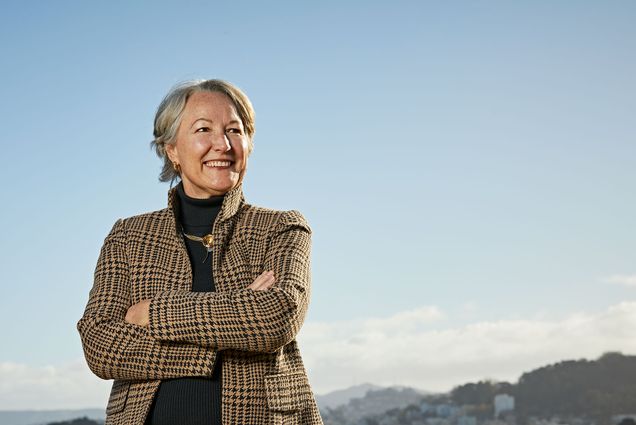
NOTABLE ALUMNI
Chair of the U.S. Olympic and Paralympic Committee Discusses Overcoming Crises and What's Ahead for the Tokyo Olympics
Susanne Lyons (Questrom '82) expects the summer Games in Tokyo "will look and feel very different from Games of the past." See what's coming up
THOUGHT LEADERS
In Case You Missed It...
Register for a June 24th webinar on how U.S. manufacturing can reduce its carbon footprint, hosted by the BU Institute for Sustainable Energy, theFraunhofer USA Center for Manufacturing Innovation at BU, and the Information Technology & Innovation Foundation... BU College of Communications Dean Mariette DiChristina will moderate a discussion on the role of infrastructure in a climate resilient future with the National Academies of Science, Engineering, and Medicine on June 17th... BU alumnus Fernando Ortiz (CAS '17, Questrom '24) discusses what it's like working for U.S. Labor Secretary Marty Walsh... Ibram X. Kendi of the BU Center for Antiracist Research has launched the Be Antiracist podcast ... David Jernigan of the BU School of Public Health argues that companies that profit from underage drinking have little incentive to prevent it in The Conversation.