News
Tax-Free Pell Grants, Legalization for DACA Recipients Advance
BU IN DC
The National Oceanic and Atmospheric Administration (NOAA) announced on Monday that Dr. Kelly Kyrc (GRS '03) has been appointed deputy assistant secretary for international fisheries. Dr. Kryc earned her Ph.D. in earth science at BU.
TAX-FREE PELL GRANTS, LEGALIZATION FOR DACA RECIPIENTS ADVANCE
Committees in the U.S. House of Representatives continued to approve portions of a $3.5 trillion budget reconciliation bill this week. Of note, the following provisions received committee approval:
- Eliminating the taxation of Pell Grants. Under current law, low-income students are taxed when they use the grant for items other than tuition.
- Allowing schools to offset to their endowment tax liability based on how much institutional student aid they provide.
- Creating a new research infrastructure grant for public colleges.
- Providing a pathway to citizenship for certain undocumented individuals, including those in the Deferred Action for Childhood Arrivals program.
- Creating an Advanced Research Projects Agency - Health (ARPA-H) to fund breakthrough medical research.
Lawmakers will continue to modify the provisions as they merge the committee-passed bills into a larger package that can be voted on by both chambers of Congress and sent to the President.
BUZZ BITS...
- The U.S. Senate confirmed James Kvaal as undersecretary of the U.S. Department of Education on Tuesday. He will oversee the Department's higher education policies. Kvaal previously led The Institute for College Access & Success and, before that, led the Obama Administration's increased oversight of for-profit colleges.
- The National Science Foundation (NSF) announced this summer that Dr. Karen Marrongelle is NSF's chief operating officer. Dr. Marrongelle had been serving as the assistant director of the agency's Education and Human Resources (EHR) directorate, which will now be overseen by EHR Deputy Director Dr. Sylvia James until a permanent replacement is named.
- The National Institutes of Health (NIH) released the NIH-Wide Strategic Plan for 2021-2025, outlining the agency's research priorities for the next five years. Among other topics, the strategic plan focuses on five cross-cutting themes: improving minority health and addressing health disparities, enhancing women's health, addressing public health challenges across the life span, promoting collaborative science, and leveraging data science for biomedical discovery.
EVENTS NEWS YOU CAN USE
Did you know that the U.S. Department of Energy (DOE) supports basic research in fields ranging from biomedicine and environmental science to high-performance computing and physics? Have you considered pursuing DOE funding, but are unsure where to start? Join the Office of Research and Federal Relations for a webinar on Understanding Department of Energy Research Opportunities on September 28th at 3 pm. Griffin Reinecke from Lewis-Burke Associates will provide an overview of DOE funding opportunities and guidance on engaging with program managers, and BU faculty from Biology, Electrical & Computer Engineering, and Physics will offer their insights on successfully working with the agency.
BMC Immigrant & Refugee Health Center Prepares to Welcome Afghans
Clinic helps vulnerable people from around the world fleeing religious and political persecution, gang violence, civil war, and climate-driven disasters
US Census Bureau Has Released Some 2020 Census Results: What’s Next?
CAS political scientist Maxwell Palmer on how data will shape redistricting
BU School of Law Joins Fight to Help Tenants in Eviction Moratorium Crisis
COMMUNITY RESOURCE

BU School of Law Joins Fight to Help Tenants in Eviction Moratorium Crisis
Responding to U.S. Attorney General Merrick Garland's request for assistance from the legal community, BU School of Law Dean Angela Onwuachi-Willig hopes the school's work helps "students learn how fulfilling it can be to give voice to the voiceless." Here's what we are doing
RESEARCH HIGHLIGHT

The Toll on Children's Health During COVID-19
BU experts say that although kids faced a dizzying array of disruptions in the pandemic, they are resilient and there is reason for hope. Learn why the kids will be alright
FACULTY EXPERTS

How 9/11 Changed The World
BU experts in international relations, immigration, terrorism, health law, and policing reflect on how that day's events have reshaped our lives over the last 20 years. Read their insights
THOUGHT LEADERS
In Case You Missed It...
Deborah Carr of the BU College of Arts & Sciences delivered a keynote address at the 2021 Healthy Aging Symposium sponsored by the U.S. Department of Health and Human Services on September 8th... Paul Shafer of the BU School of Public Health warns that preventive health services covered by the Affordable Care Act may be in jeopardy in The Conversation... Nahid Bhadelia of the BU Center for Emerging Infectious Diseases Policy & Research says the Biden Administration's pandemic preparedness proposal is a good start in Science... BU epidemiologist Lauren Wise is one of several researchers awarded a National Institutes of Health grant to learn how COVID vaccines affected women's menstruation... Dan Miller of the BU School of Social Work tells CNN that this year's enhanced child tax credit should ease food insecurity among children.
House Committees Approve Bills with Science, Pell Investments
BU IN DC
Joseph Fewsmith of the Pardee School of Global Studies discussed his book on rethinking Chinese politics at a virtual Center for Strategic & International Studies event on September 2nd.
Deborah Carr of the College of Arts & Sciences delivered a keynote address at the 2021 Healthy Aging Symposium sponsored by the U.S. Department of Health and Human Services on September 8th.
HOUSE COMMITTEES APPROVE BILLS WITH SCIENCE, PELL INVESTMENTS
On Thursday, the House Science, Space, and Technology Committee passed a $46 billion spending bill that would provide significant support for research and research infrastructure activities at the National Science Foundation (NSF), Department of Energy (DOE), and other science agencies. The Committee-passed bill would provide $11 billion for the NSF, more than doubling its existing budget, and $2 billion for the DOE Office of Science. The House Education and Labor Committee passed its own $765 billion funding bill on Thursday that would provide a $500 increase to the maximum Pell Grant award and create a new program to make two years of community college tuition-free. The Pell increase proposed in the Committee's Build Back Better Act is significantly less than the amount called for by the Biden Administration. Both bills will be combined into a larger $3.5 trillion budget reconciliation package that Congressional leaders hope to pass by the end of the month.
WHITE HOUSE OUTLINES FUTURE RESEARCH PRIORITIES
In a memorandum issued on August 27th, the Biden Administration unveiled its research and development priorities for fiscal year 2023. The memo highlights many of the recurring themes that President Biden has emphasized in his first few months in office: pandemic readiness and prevention, diversity and equity, and responding to climate change. New priorities were also included, such as microelectronics, biosecurity and biosafety, and defending against both supply chain and cyber attacks. The document will guide federal agencies as they propose science and technology investments in the next budget cycle.
EVENTS NEWS YOU CAN USE
The popular Research on Tap series hosted by BU Research will kick off its fall schedule with Pandemic Preparedness and Response, hosted by Dr. Nahid Bhadelia of the BU Center for Emerging Infectious Diseases Policy & Research. On Wednesday, September 22nd at 4 p.m., BU scholars in the fields of public health, engineering, communication, data science, and environmental science will deliver micro-talks on their work to understand, predict, prepare, and recover from future pandemic threats. Attendees will have the opportunity to meet the presenters and connect with potential research collaborators after the presentations.
House Approves Budget Bill with Science, Pell Investments
BU IN DC
Roscoe Giles of the College of Engineering participated in a meeting of the U.S. Department of Energy's Advanced Scientific Computing Advisory Committee, of which he is a member, on July 29th.
Nahid Bhadelia of the Center for Emerging Infectious Diseases Policy & Research spoke with Senate offices about pandemic preparedness legislation on August 11th and 17th.
President Joe Biden announced his intent to nominate BU alumnus David Young (STH '87, Pardee '88) as ambassador to Malawi on August 4th.
HOUSE APPROVES BUDGET BILL WITH SCIENCE, PELL INVESTMENTS
The U.S. House of Representatives approved a $3.5 trillion budget reconciliation bill this week which directs Congressional committees to provide significant investments in both the National Science Foundation and Pell Grant awards for low-income students. The House-passed measure directs the House Science, Space, and Technology Committee to craft a bill to invest more than $40 billion in the National Science Foundation, five times its current budget. It also provides more than $779 billion for the House Education and Labor Committee to support increases in Pell Grant awards, tuition-free community college, and childcare. The U.S. Senate passed an identical bill earlier this month. Congress has until September 15th to craft the individual spending bills to implement the plans in the budget reconciliation bill.
BUZZ BITS...
- The White House Office of Science and Technology Policy (OSTP) announced earlier this month that it is working on the implementation of a Trump Administration memorandum that provides research security guidelines for investigators, universities, and federal agencies. OSTP emphasized the importance of clear, uniform guidance to ensure that federally-funded research can be both secure and collaborative, and that well-intentioned researchers do not inadvertently run afoul of the rules. OSTP hopes to have the guidance ready this fall.
- Nearly 100 Members of Congress sent a letter to U.S. Attorney General Merrick Garland requesting an investigation into possible racial profiling of Asian researchers by the U.S. Department of Justice (DOJ). Pointing to several high-profile espionage cases against researchers of Chinese descent that were eventually dropped, the lawmakers asked for an update on the agency's mandatory implicit bias training and the status of the DOJ China Initiative created by the Trump Administration.
- The Senate Appropriations Committee approved a spending bill that would provide $7.5 billion to the U.S. Department of Energy Office of Science for fiscal year 2022, a $464 million increase over current funding levels. The bill will need to be approved by the U.S. Senate and negotiated with the version passed by the U.S. House of Representatives before it can be signed into law.
GRANTS NEWS YOU CAN USE
The Office of Naval Research (ONR) released the fiscal year 2022 Vannevar Bush Faculty Fellowship funding opportunity announcement (FOA). This grant asks single investigators to submit ambitious “blue sky” research proposals that could spark new, revolutionary capabilities at the Department of Defense. Fellows go on to become experts and conveners in Defense science and technology communities. ONR is particularly interested in research in computational science, artificial intelligence, cognitive neuroscience, bioengineering, quantum information science, photonics, and engineered materials. Required white papers are due no later than October 15th.
Submit a white paper
A Note to Our Readers: Due to the Labor Day holiday, Beltway BUzz will not publish next week.
MassMutual Donates $1 Million to BU’s Faculty of Computing & Data Sciences
Gift will fund a professor with real-world expertise, boost diversity efforts in the field, and award undergraduate stipends
Biden Nominees Continue to Advance
BU IN DC
College of Communication Dean Mariette DeChristina spoke about the future of science communications at the Science Public Engagement Partnership conference on July 28th.
Jonathan Levy of the School of Public Health addressed a National Academies of Sciences, Engineering, and Medicine meeting on how the Environmental Protection Agency can better assess the health impacts of underrepresented populations on July 28th.
BIDEN NOMINEES CONTINUE TO ADVANCE
Six months into his presidency, President Joe Biden continues to make progress in appointing key personnel and getting them confirmed by the U.S. Senate. Recent updates relevant to the BU community include:
- The President announced his intent to nominate Dr. Laurie Locascio as director of the National Institute of Standards and Technology (NIST). Dr. Locascio is currently the Vice President for Research at two University of Maryland campuses, and previously worked at NIST for more than two decades.
- Last week, the U.S. Senate confirmed Heidi Shyu as undersecretary of defense for research and engineering, which oversees research programs at the U.S. Department of Defense. Ms. Shyu has had an extensive career in both the military and private sector.
- The Senate also confirmed BU alumna Gina Ortiz Jones (CAS’03, GRS’03) as Under Secretary of the U.S. Air Force last week. Ms. Ortiz Jones, a former intelligence officer, is now the second-highest ranking civilian at the Air Force.
BUZZ BITS...
- On Monday, the U.S. Departments of State and Education issued a joint statement of principles in support of international education. Citing the value of collaboration between American and international students and researchers, the agencies pledged to work together to welcome and provide practical experiences for foreign scholars, and to expand access to international study opportunities for underrepresented populations.
- The White House Office of Science and Technology Policy and the National Science Foundation released a request for input on establishing a national artificial intelligence (AI) research infrastructure. Responses are due by September 1st and will be used to develop a roadmap for providing high quality AI resources to students and researchers across all disciplines.
- This week, the U.S. House of Representatives passed several spending bills with robust funding for federal research agencies and student aid programs in fiscal year 2022. The U.S. Senate is expected to begin its appropriations process next week, and it is likely Congress will have to extend current funding authorities into the new fiscal year, which begins on October 1st.
GRANTS NEWS YOU CAN USE
The Environmental Protection Agency's Office of Children’s Health Protection is seeking proposals to support capacity building, outreach, and education activities to increase awareness of the wide range of disproportionate exposure to environmental hazards that impact children in school and childcare settings that primarily serve low-income and/or minority communities, with a focus on health outcome disparities from pollution and/or the COVID-19 pandemic. Cooperative agreements under this solicitation will support proposals that promote learning at schools and child care facilities; they will not support research. Applications are due by September 10th.
A Note to Our Readers: Due to the Congressional District Work Period, Beltway BUzz will be on hiatus for the month of August. See you in September!
Achieving Global Vaccine Equity: What Should US Policymakers Do?
BU IN DC

Achieving Global Vaccine Equity: What Should US Policymakers Do?
Congresswoman Lois Frankel (D-FL) welcomed the BU Center for Emerging Infectious Diseases Policy & Research as they hosted a virtual discussion with global health experts on July 21st about how policymakers can ensure equitable vaccine access globally. Watch the discussion
FACULTY EXPERTS
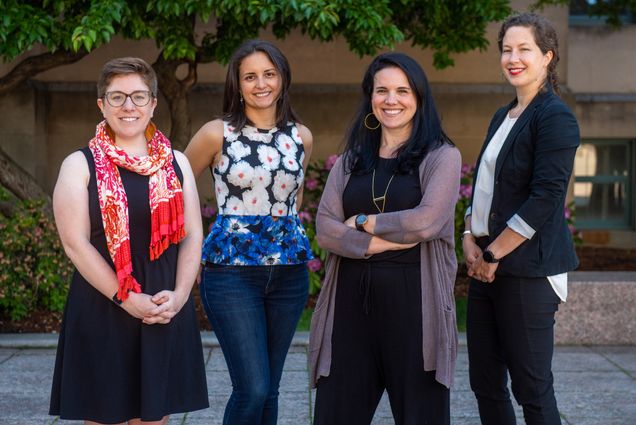
Sexism and Racism in Science: How the Pandemic Exposed Everything
Four BU researchers and their collaborators argue it's time for new policies that promote strong mentorship, diversity, and equity in the scientific workforce.
See what they recommend
NOTABLE ALUMNI

First Woman to Lead NASA's Kennedy Space Center is a BU Alum
Janet Petro (MET '88), the Center's 11th director, foresees great things ahead, from the rise of private space companies to a return to the moon. Blast off
THOUGHT LEADERS
In Case You Missed It...
Leslie Boden, Will Raderman, and Patricia Fabian of the BU School of Public Health explain how we can circumvent COVID-19 with better ventilation and air quality in STAT... Ronald Corley of the BU School of Medicine discusses how the BU National Emerging Infectious Diseases Laboratories conducts research safely in The Conversation... Phillipe Copeland of the BU School of Social Work links the January 6th insurrection with a racist relapse in The Hill... Roberta Clarke of the BU Questrom School of Business explains how tobacco companies market menthol cigarettes to Black smokers to Bloomberg... Ibram X. Kendi of the BU Center for Antiracist Research says opponents of critical race theory are arguing with themselves in The Atlantic.
BU CEID Briefs Congress on Global Vaccine Equity
BU IN DC
Ibram X. Kendi of the Center for Antiracist Research joined The Atlanticcolumnist Adam Serwer for a discussion of Serwer's book on the origins of the Trump presidency at the Politics & Prose bookstore on July 19th.
BU CEID BRIEFS CONGRESS ON GLOBAL VACCINE EQUITY
The BU Center for Emerging Infectious Diseases Policy & Research (CEID) hosted a virtual Capitol Hill briefing on expanding global access to vaccines on Wednesday. Congresswoman Lois Frankel (D-FL, CAS '70) welcomed the audience of Congressional staff, international nongovernmental organizations, and Washington, DC, stakeholders. CEID Founding Director Nahid Bhadelia spoke about the barriers to exporting vaccines quickly to high-need countries, how this negatively impacts the world's recovery from the pandemic, and what U.S. policymakers can do to address the shortages. Dr. Joshua Michaud of the Kaiser Family Foundation provided global data and Dr. Mosoka Fallah of Refuge Place International shared perspectives from African nations. Dr. Amy Maxmen of Nature moderated the session.
BUZZ BITS...
- Last week, a federal judge in Texas struck down the Deferred Action for Childhood Arrivals (DACA) program, ruling that the Obama Administration exceeded its authority when it created the program to give legal status to undocumented immigrants brought into the U.S. The ruling -- which allows current DACA recipients to maintain their status, but prohibits the processing of new applications -- puts pressure on Congress to enact legislation to codify the program.
- The National Institutes of Health (NIH) announced a series of public hearing sessions to receive feedback on the Biden Administration's proposal to create an Advanced Research Projects Agency-Health (ARPA-H). The listening sessions are targeted to specific patient and research stakeholders and run through the middle of August.
- The White House Office of Science and Technology Policy's (OSTP) Task Force on Scientific Integrity will hold listening sessions next week covering three topics: science communications, education, and using scientific information. Participants must register by 5:00 p.m. Eastern today; the sessions will inform OSTP's review of the federal government's scientific integrity policies.
GRANTS NEWS YOU CAN USE
Are you looking for funding to establish a research center or support large research collaborations? Check out the Federal Relations web site for an updated compendium from Lewis-Burke Associates on federal resources for large research centers. The document provides detailed information on opportunities available at the National Science Foundation, the National Institutes of Health, the Department of Defense, the Department of Energy, the National Aeronautics and Space Administration, the Department of Homeland Security, and the Department of Transportation.