News
The Battle for Reproductive Rights
Following a historic Supreme Court decision on abortion, alum Shwetika Baijal is organizing a national response for the Planned Parenthood Action Fund.
America the Miserly: How Our Refugee System Fails Desperate People
With thousands fleeing Ukraine and millions still displaced by the Syrian civil war, a BU sociologist’s new book faults the United States, Canada, and Germany for letting down refugees.
Two Technologies That Can Make Diagnosing Dementia Easier for Doctors and Patients
With millions of older adults projected to develop Alzhiemer’s in the next few decades, researchers are creating novel systems for diagnosing the disease.
White House Science Advisor, Title IX, ARPA-H
BU IN DC
Doctoral students in the BU URBAN program met with Congressional staff, science policy experts, and leaders in nongovernmental organizations about science policymaking between June 14th and 16th.
Kevin Gallagher of the Global Development Policy Center hosted a discussion and reception with members of the Task Force on Climate, Development and the International Monetary Fund at the National Press Club on June 23rd
David Glick of the College of Arts & Sciences and Katharine Lusk of the Initiative on Cities briefed White House staffers on the findings of the Menino Survey of Mayors on June 21st.
Ryan Lovell of the Wheelock College of Education & Human Development attended the National Charter Schools Conference from June 19th through 23rd.
Ibram X. Kendi of the Center for Antiracist Research discussed his How to Raise an Antiracist book at an event hosted by Politics & Prose bookstore on June 15th.
BIDEN NOMINATES SCIENCE ADVISOR
On Tuesday, President Joe Biden announced he will nominate Dr. Arati Prabhakar as director of the White House Office of Science and Technology Policy (OSTP). Once confirmed by the U.S. Senate, Dr. Prabhakar will also serve in the President's Cabinet as Chief Advisor for Science and Technology. Dr. Prabhakar is a physicist who previously led the Defense Advanced Research Projects Agency during the Obama Administration and the National Institute of Standards and Technology during the Clinton Administration. She is the first woman, immigrant, or person of color nominated to serve as leader of OSTP. Prabhakar will replace Acting Science Advisor Dr. Francis Collins and Acting OSTP Director Dr. Alondra Nelson, who will remain as Deputy Director of OSTP. Collins and Nelson assumed their roles earlier this year after former OSTP Director Dr. Eric Lander resigned in the wake of a White House investigation that determined he bullied OSTP staff.
ADMINISTRATION PROPOSES NEW TITLE IX RULES
The U.S. Department of Education proposed a new set of rules yesterday for Title IX, the federal law that prohibits discrimination based on sex in educational settings. The proposal would reverse many Trump Administration policies governing how colleges adjudicate sexual misconduct, including eliminating a requirement that schools use live hearings and cross-examination to determine whether misconduct has occurred. The rule would also add a new federal prohibition against discrimination based on sexual orientation and gender identity in educational programs. After a 60-day comment period, the Biden Administration will review stakeholder input and issue a final rule with an implementation date.
HOUSE APPROVES ARPA-H BILL
On Wednesday, the U.S. House of Representatives passed the Advanced Research Projects Agency - Health (ARPA-H) Act (H.R. 5585), a bill to guide the new federal agency created this spring to support high-risk, high-reward biomedical breakthroughs. The bill would separate the new agency from the National Institutes of Health (NIH), where it is currently housed, and make the director a Senate-confirmed, term-limited position. The Biden Administration opposes removing ARPA-H from the NIH, but nonetheless urged support for the House bill. A Senate committee approved its own ARPA-H legislation this spring as part of a pandemic preparedness bill, but its prospects for moving through the chamber are unclear.
Read the Biden Administration's views
A NOTE TO OUR READERS...
With Congress heading into its Fourth of July District Work Period, Beltway BUzz will temporarily pause publication. We will be back in your inbox in July.
Data Gaps for Race and Ethnicity Are Holding Back Antiracism Efforts, New Report Says
Ibram X. Kendi–led BU Center for Antiracist Research calls for new data standards to help confront racial inequities and injustice.
Title IX Turns 50: It Changed Society—but Now It Must Go Further
In 1972, women comprised 15 percent of all student athletes, now it’s 44 percent, women were less than 10 percent of doctors and lawyers, today it’s more than 50 percent.
Juneteenth, Pell Grants, Climate Workforce
ON THE CHARLES RIVER

What Juneteenth Means To Me
In a photo essay, the BU community reflects on the significance of the holiday. Graduate student Tomeka Frieson (SPH'23) says, "Juneteenth, for me, then, is equal parts celebration and remembrance."
STUDENT LIFE

Pell Grant 50th Anniversary: BU Students Share How It Changed Their Lives
It "transformed the trajectory of my career by allowing me to fulfill my full potential," says Angela Wang (COM'23, Pardee'23).
BU IN DC

Building a Diverse, Strong Climate Workforce
Climate leaders from Boston University and around the country hosted Congresswoman Suzanne Bonamici (D-OR) for a Congressional briefing on how they are working to train the next generation for careers solving the climate crisis.
THOUGHT LEADERS
In Case You Missed It...
BU political scientist Katherine Levine Einstein tells WBUR that decisions by local land use boards may be skewed because they are dominated by white, male homeowners... Joshua Goodman of BU Wheelock College of Education & Human Development explains how air conditioning in schools can improve academic performance to Marketplace... Spencer Piston of the BU College of Arts & Sciences highlights steps policymakers can take to close the racial wealth gap in The Hill... BU historian Bruce Schulman discusses how Watergate contributed to a decline in trust in public institutions in The Washington Post... Wendy Heiger-Bernays of the BU School of Public Health says that certain pesticides may be more harmful than we realize in Scientific American.
Building a Diverse, Strong Climate Workforce
Climate leaders from Boston University and around the country briefed Congressional staff on how they are working to train the next generation for careers solving the climate crisis.
BU on the Hill, ARPA-H, EPA Research
BU IN DC
Kevin Outterson of the School of Law and CARB-X joined Sen. Michael Bennet (D-CO) and Rep. Drew Ferguson (R-GA) for a virtual panel discussion on antibiotic resistance on May 24th.
Sarah Hokanson of Professional Development & Postdoctoral Affairs presented at the 2022 Improving Undergraduate STEM Education Summit on June 2nd.
Mary Churchill and Ryan Lovell of Wheelock College of Education & Human Development attended the American Association of Colleges for Teacher Education's annual advocacy meeting from June 5th through the 8th.
BU URBAN HOSTS CAPITOL HILL BRIEFING
On Thursday, the BU Graduate Program in Urban Biogeoscience and Environmental Health (URBAN) hosted a virtual briefing for Congressional offices on how to build and diversify a future climate workforce. Congresswoman Suzanne Bonamici (D-OR) provided opening remarks, highlighting the actions Congress has already taken to support climate mitigation and support federal research. Professor Pamela Templer and doctoral student Yasmin Romitti described how BU URBAN, a National Science Foundation-supported program, prepares graduate students across disciplines for a range of careers that can address the impacts of climate change. Dr. Pam Padilla of the Society for Advancement of Chicanos/Hispanics and Native Americans in Science (SACNAS) highlighted the society's educational tools. Shawn Jones of BlueWave Solar discussed how programs like URBAN help train the leaders who can guide the industry in achieving carbon-reduction goals.
ADMINISTRATION LAUNCHES ARPA-H
On May 25th, the U.S. Department of Health and Human Services (HHS) formally established the Advanced Research Projects Agency-Health (ARPA-H), a new federal agency to support high-risk, high-reward biomedical breakthroughs, as an entity within the National Institutes of Health. HHS Secretary Xavier Becerra named Dr. Adam Russell as the acting deputy director for ARPA-H. Dr. Russell currently serves as chief scientist at the University of Maryland's Applied Research Laboratory for Intelligence and Security and previously served as a program manager for both the Intelligence Advanced Research Projects Agency and the Defense Advanced Research Projects Agency. Congress is still considering legislative proposals that may alter the agency's trajectory.
BUZZ BITS...
- The U.S. Senate recently confirmed Dr. Christopher Frey as assistant administrator for research and development at the U.S. Environmental Protection Agency (EPA). Dr. Frey is a mechanical engineer who served on the faculty of North Carolina State University before joining the EPA. His confirmation fills a position that has lacked a permanent director since 2012.
- The Partnership for Public Service is seeking applicants for its federal fellowship for racial equity, which allows academic professionals with expertise in racial equity to serve at a federal government agency for up to two years. The fellowship was created in response to President Joe Biden’s executive order on Advancing Racial Equity and Support for Underserved Communities, issued his first day in office.
- A Congressionally-mandated advisory panel recently presented its recommendations for how the National Institutes of Health (NIH) can better integrate behavioral and social sciences research. The panel recommended identifying strategies to increase behavioral research applications at certain institutes and centers and ensuring that NIH advisory councils follow the agency's policy that they have at least two members with behavioral or public health expertise.
Building the Next Generation Climate Workforce
Innovative Solutions from Around the Country
Thursday, June 9, 2022, 12:00 - 1:00 PM ET on Zoom
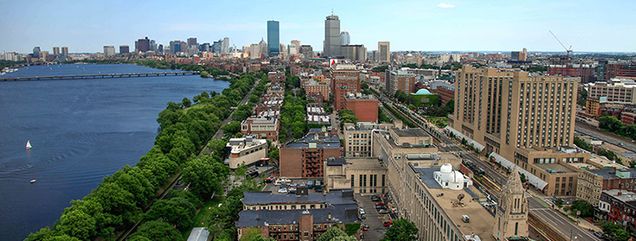
As climate change accelerates, the United States will face unprecedented challenges in the years ahead, from elevated levels of air and water pollution to extreme weather events such as heatwaves and storm surges. We need a workforce equipped with both technical and policy expertise to solve these complex challenges and to plan for more sustainable communities, particularly among populations most impacted by environmental change.
Learn how universities, the private sector, and communities are addressing climate change through solutions-oriented graduate education and workforce training that combines science, management, policy, communication, and governance fields, and what Congress can do to support these efforts.
OPENING REMARKS
Congresswoman Suzanne Bonamici (D-OR)
MODERATOR
Melissa Varga, Science Network Community & Partnerships Manager, Center for Science and Democracy at the Union of Concerned Scientists (UCS)
PRESENTATIONS & RESOURCES
Shawn Jones, Head of Energy Storage Development, BlueWave Solar
Dr. Pamela Templer, Director & Yasmin Romitti, PhD Student - Boston University URBAN Program
The BRINK | Building a Diverse, Strong Climate Workforce
WEBINAR VIDEO