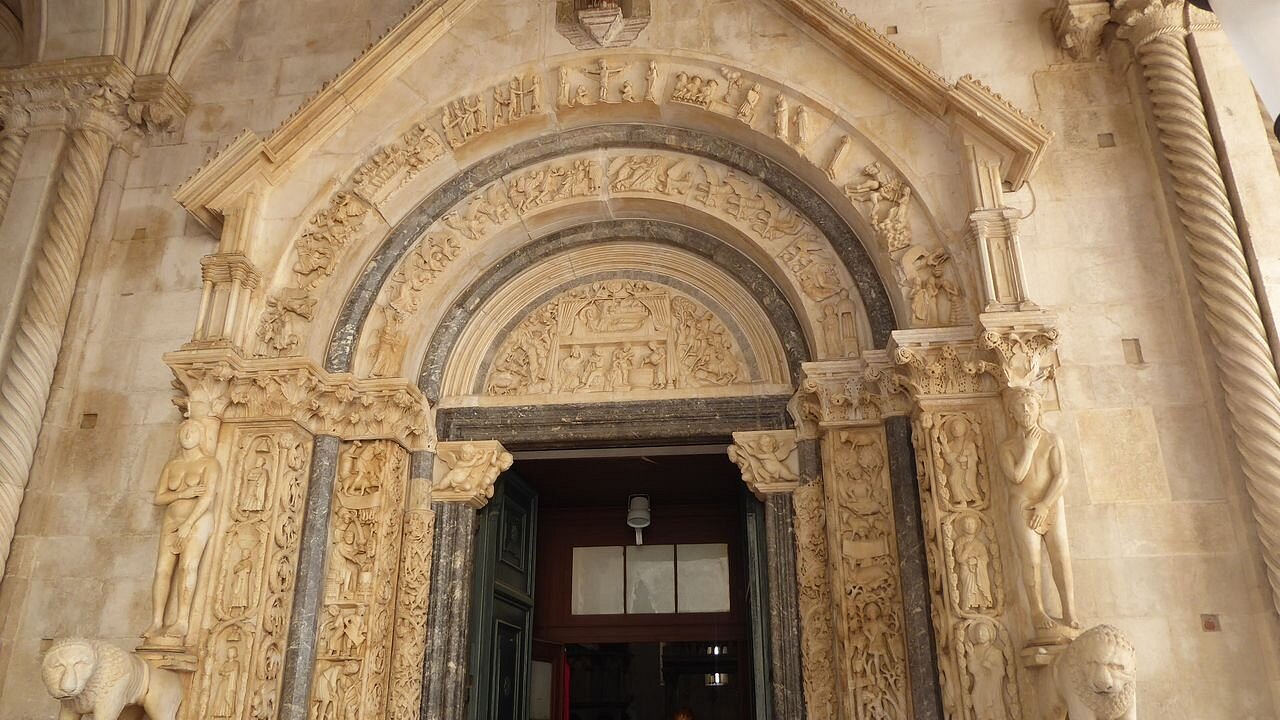
CURA Fellows 2026-2027
Meet CURA’s 2026-2027 Religion and Global Affairs Fellows! Each year, CURA’s Religion and World Affairs Fellowship program brings together an interdisciplinary community of Boston-area graduate students and faculty. Once selected, CURA Fellows gather on the Boston University campus for bimonthly colloquium sessions throughout the academic school year to workshop papers around a particular topic.

About the Fellows
-

Tianyi Bai
Tianyi Bai (they/them/tā) is a PhD candidate in Sociocultural Anthropology at Boston University. They are interested in transgender and queer studies, with a particular focus on Chinese trans/queer lifeways. Their current dissertation project focuses on two fieldsites, one NGO-like group navigating state recognition through a rights-based framework and a queer Christian church rejecting intelligibility and imagining different ways to live together in difference. This project bridges ethnography and trans/queer theories through the lens of time by looking into how different temporal frameworks scaffold material realities of belonging.
-
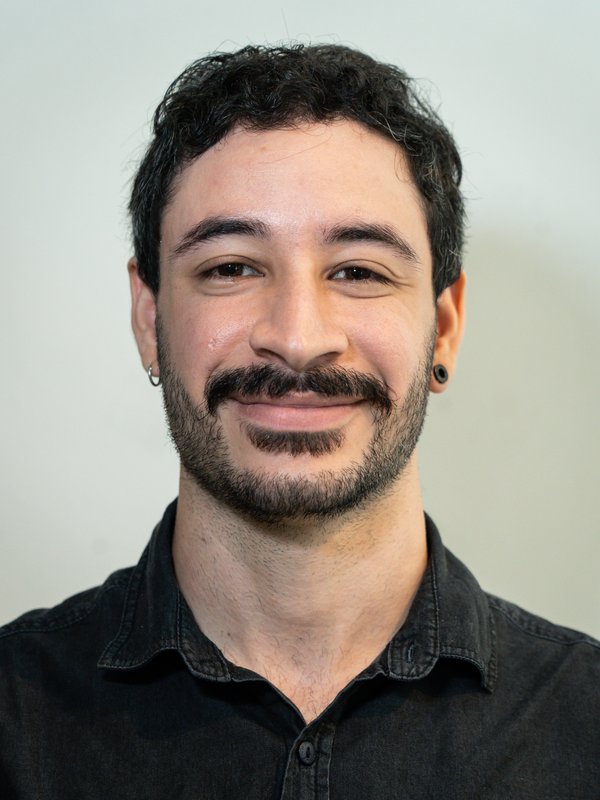
Danillo Rafael Batista
Danillo Rafael Batista is a PhD candidate in Political Science at the Federal University of Pernambuco (UFPE), Brazil, and a visiting researcher at Boston University. His research focuses on the Brazilian evangelical parliamentary caucus, examining the relationship between religious identity, legislative behavior, and electoral bases through mixed methods. He holds a Master’s degree in Political Science (Democracy and Institutions) and a B.A. in International Relations, both from UFPE. Danillo collaborates with the Métodos em Pauta initiative, which promotes causal inference and methodological rigor in the Social Sciences.
-

Nicole Collins
Nicole Collins is a PhD student at Brown University, where she studies transgender religiosity in the contemporary US. She is specifically interested in trans and nonbinary converts to Judaism, and how they navigate both gender transition and religious conversion, as well as other overarching themes such as modernity, embodiment, assimilation, Zionism, and Jewish continuity. She received her BA from Carleton College and her MTS from Harvard Divinity School. She also founded and runs Queer Religion Boston, a map-based project that attempts to chronicle the history of LGBTQ+ communities and religion in greater Boston.
-

Begüm Ergün
Begüm Ergün is a PhD Candidate in Sociocultural Anthropology at Boston University and a migration activist whose research investigates the somatic and spiritual afterlives of displacement among Syrian communities in Turkey. Her work explores how cascading catastrophes—from geopolitical violence to earthquakes—are lived as embodied realities by analyzing how marginalized populations in Istanbul’s precarious peripheries utilize agentive faith to survive profound loss and state abandonment. By conceptualizing everyday homemaking as a deeply therapeutic spatial practice, Begüm’s dissertation examines the ecologies of care that allow displaced groups to forge heterodox practices of world-building from the ruins of the city. Methodologically, she integrates person-centered interviews with participatory visual ethnography to move beyond standard trauma narratives and document the material struggles of urban survival. This commitment is exemplified in her forthcoming ethnographic documentary, Hands of Exile: Making a Home with Foodways, which captures the intersection of suffering, healing, and culinary heritage among Syrian women striving to make unlivable urban environments inhabitable.
-

Warren S Goldstein
goldstein@criticaltheoryofreligion.org
Warren S. Goldstein, Executive Director of the Center for Critical Research on Religion (criticaltheoryofreligion.org), is the Editor of Critical Research on Religion (SAGE Publications) and Book Series Editor of Studies in Critical Research on Religion (Brill Academic Publishers and Haymarket Books). He is broadly interested in the development of a critical theoretical frameworks in the study of religion as a whole.
-

Phillip Haberkern
Phil Haberkern is an associate professor of history and religion at Boston University, where he has taught since 2011. He is a scholar of late medieval and early modern religious history, with a geographical focus on central Europe. His first book, Patron Saint and Prophet: Jan Hus in the Bohemian and German Reformations, appeared with Oxford UP in 2016, and he is currently writing a book on ecclesiastical historiography in the sixteenth century. Phil is also interested in radical religious change and identity formation, cultures of memorialization, and the experience of exile in early modern culture.
-

Lior Hamovitz
I am a Political Science PhD candidate at Boston University and CSSN Scholar, specializing in political theory. My research centers on understanding climate injustices through the lenses of kinship and loss. This work combines feminist theories of care, qualitative analysis of ecological jurisprudence in Latin America, the interdisciplinary study of environmental justice, and Indigenous epistemologies.
-

Robert W. Hefner
Robert W. Hefner is professor of anthropology and global studies at the Pardee School of Global Affairs and the Department of Anthropology at Boston University. Hefner has directed some 22 research projects and organized 16 international conferences. He has authored or edited twenty five books. His most recent books include Islam and Citizenship in Indonesia: Democracy and the Quest for an Inclusive Public Ethics (Routledge, January 2024) and (October 2026) a co-edited volume, Indonesia’s Humanitarian Islam Movement: Origins, Development, and Global Impact (with Holland C. Taylor, Timothy Shah, and Thomas G. Dinam. He is currently (2021-2026) president of the American Institute for Indonesian Studies (AIFIS). During 2009-2010 he served as president of the American Association for Asian Studies.
-

Shanie Kalikow
Shanie Kalikow is completing Master’s degrees in Philosophy and Jewish Studies at the University of Amsterdam with a focus on the relationship between Jewish religious affiliation and anarchist and socialist political movements. With this focus, their historical research has taken them from the provocative ‘hagodes’ of London’s Jewish Anarchist East Side in the late nineteenth century to the Yiddish-language, anti-religious periodicals of Kiev’s post-Jewish communists in the nineteen-thrities. Alongside the radical relations to orthodoxies of time and place that they study, Shanie endeavors to support deviant relations to the status quo in the present through artistic and organizing practices. In addition to their studies, Shanie has worked in Economic Empowerment work at non-profit organizations since graduating with their Bachelor’s degree in Religious Studies from Pitzer College.
-

Iqra Saleem Khan
Iqra Saleem Khan is an SJD candidate at Harvard Law School whose work sits at the intersection of religion, law, and empire in South Asia. Her dissertation examines how Muslim communities under British colonial rule, and later in independent Pakistan, made the defense of Islamic law a matter of communal honor and survival, following this religious-legal vocabulary from the personal-status debates of the late colonial period to the country’s blasphemy law.
-

Yasir Kuoti
Yasir Kuoti is a Ph.D. student in the Department of Political Science at Boston University, specializing in international relations and comparative politics, with a regional focus on the Middle East. He earned his B.A. in international studies from the University of Wisconsin at Stevens Point (magna cum laude) and his M.A. in international affairs from Marquette University. In the long term, Yasir aims to pursue an academic career centered on teaching, research, and contributing to scholarly and policy debates on Middle East politics, U.S. Middle East policy, religion and politics, identity and ethnic politics, and political violence. He is also committed to mentoring the next generation of scholars from disadvantaged or minority backgrounds, drawing on his own experience as a first-generation student of Middle Eastern descent.
-

Sarah Lewinger
Sarah Lewinger is a sixth-year PhD candidate in Sociocultural Anthropology. Focusing on performance poetry and literary communities, her research explores how urban Ugandan youth create full, meaningful lives and expansive social identities amid conditions of political repression and downward mobility. Her dissertation examines how ambiguity – as both a communicative practice and an existential condition – enables creative and political possibilities in spaces the state would prefer to manage or silence.
-

Candace Lukasik
Candace Lukasik is a Yang Visiting Scholar in World Christianity at Harvard Divinity School. Beginning in August 2027, she will be an Assistant Professor of Anthropology at the University of Arkansas. Previously, she was Assistant Professor of Religion and Faculty Affiliate in Anthropology and Middle Eastern Cultures at Mississippi State University. She is the author of Martyrs and Migrants: Coptic Christians and the Persecution Politics of US Empire (NYU Press, 2025; winner of the Alixa Naff Prize in Migration Studies) and co-editor of Anthropologies of Orthodox Christianity: Theology, Politics, Ethics (Fordham University Press, 2025). Her research explores Middle Eastern Christianity and the transnational politics of violence, migration, race, and indigeneity in the Middle East, specifically Egypt and Iraq, and its US diasporas.
-

David Patel
David Siddhartha Patel’s research focuses on religious authority, social order, identity, and state-building in the contemporary Middle East. His recent book, Order Out of Chaos: Islam, Information, and the Rise and Fall of Social Orders in Iraq (Cornell University Press, 2022), examines the role of mosques and clerical networks in generating order after state collapse and is based upon independent field research he conducted in Basra.
-

Sarah Riccardi-Swartz
s.riccardi-swartz@northeastern.edu
Sarah Riccardi-Swartz is Assistant Professor of Religion and Anthropology at Northeastern University, where she is also a faculty affiliate in the Women’s, Gender, and Sexuality Studies Program. She is the author of Between Heaven and Russia: Religious Conversion and Political Apostasy in Appalachia (Fordham University Press, 2022), co-editor of Anthropologies of Orthodox Christianity: Theology, Politics, Ethics (Fordham University Press, 2025), and co-author of Orthodox Christianity in America: An Introduction (Routledge Press, 2027)
-

Matthew Steele
mfs.dartmouthcollege2006@gmail.com
“Matthew Steele is a scholar of Islamic law and society in Africa. His research is interdisciplinary, pairing the close study of legal texts with historical ethnography of their reception in West and North Africa. It spans the early modern and post-colonial periods in which Islamic legal thought flourished in centers of learning from Sudan to Mauritania. Drawing from legal manuals, commentaries, poems, and polemics significant to that development, Matthew examines how African societies developed traditions of law and authority distinct within the Islamic World. His current book project reconsiders Islamic law and modernity through a study of Sudan’s Mālikī school of jurisprudence. It argues that the school’s scholars resisted colonial efforts to appropriate Sudan’s existing traditions of Islamic law and education by counterintuitively recasting modernist discourse in support of Mālikī doctrine. Matthew is currently a Research Associate at Yale University’s MacMillan Center for International and holds a Ph.D. from Harvard University, an M.A. from Dartmouth College, and a B.A. from Swarthmore College. “
-

Jekonia Tarigan
jekonia.tarigan@mail.ugm.ac.id
Jekonia Tarigan is an Adjunct Lecturer and Researcher on the Faculty of Literature and Culture at Papua University, Indonesia. Dr. Tarigan is interested in interreligious studies especially in the intersection with indigenous and ecological studies in Indonesian context.