Boston University Scholar, a Former British Ambassador to Cuba, on the Island Country’s Challenges
As oil blockade continues, BU’s Pardee School of Global Affairs’ Paul Hare says Cuba and Venezuela are “indissolubly linked”

Long lines at gas stations and sometimes no gas at all are part of life for Cubans today. Photo by AP Photo/Ramon Espinosa
Boston University Scholar, a Former British Ambassador to Cuba, on the Island Country’s Challenges
As oil blockade continues, BU’s Pardee School of Global Affairs’ Paul Hare says Cuba and Venezuela are “indissolubly linked”
Current conflicts between the United States and Venezuela and between the United States and Cuba are all part of the same story, says Paul Webster Hare, a Boston University international relations scholar who formerly served as British ambassador to Cuba.
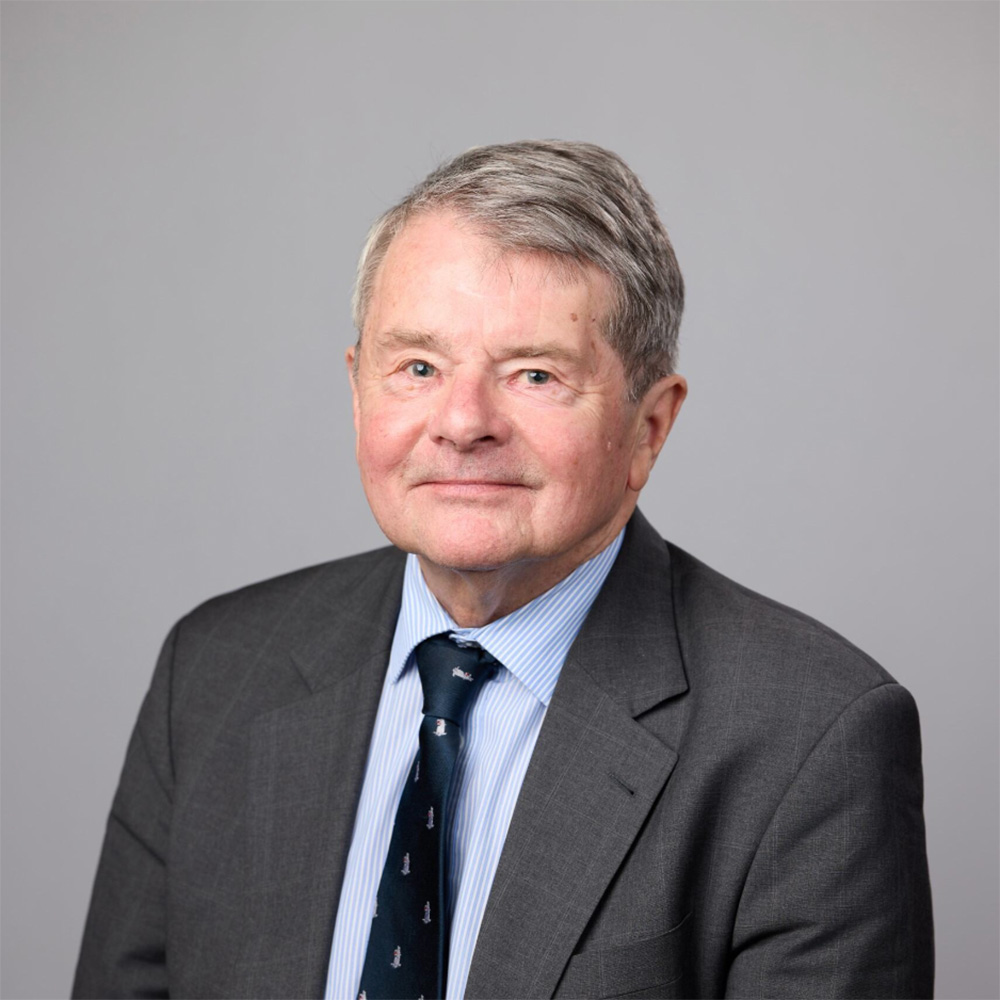
“I don’t think you can just talk about the US and Cuba without talking about what’s happened with Venezuela,” says Hare, a master lecturer in international relations at the Frederick S. Pardee School of Global Studies. He says Cuba and Venezuela “have become indissolubly linked since about 2002.”
Hare served as the British ambassador to Cuba from 2001 to 2004 and was Deputy Head of Mission in Venezuela. At Pardee, he teaches classes that include Arms Control, Public Diplomacy, Diplomacy and Negotiations, and Latin America Today. His research and commentary now focus on the role of the United States in the Caribbean, particularly Cuba and Venezuela. He coedited the Palgrave Handbook of Diplomatic Reform and Innovation (Springer, 2023).
Venezuela, under former President Hugo Chávez and his successor, Nicolás Maduro, supported Cuba’s communist regime with economic and material help, including oil. The Trump Administration raided Venezuela and arrested Maduro in January on drug trafficking charges, while blocking oil and other aid to Cuba.
The result, says Hare, is an economic and social crisis Cuba has not seen since the 1990s, after the collapse of the Soviet Union. US administration officials hope it will bring about a regime change after more than 65 years.
Q&A
with Paul Hare
BU Today: How would you describe the situation unfolding in Cuba right now?
It is desperate. People there are desperate for food, obviously oil, gasoline for cars. All sorts of basic needs, like medicines. You have to pay for everything now in dollars. The economy is on the brink of collapse. That’s why so many people have left.
Neither side wants a humanitarian disaster, with thousands of Cubans fleeing, on tires and makeshift boats as they used to do, if the situation becomes much worse. This is why it’s so important in my view that Trump adopts a much more proactive attitude to Cubans than he has for Venezuelans.
BU Today: Cubans have been through hardship before, in what they call “the special period,” after the Soviet Union collapsed. How is this different?
Fidel Castro realized very quickly that he needed to find new allies and new sources of income. So that was when he opened up to the EU, to Canada, in the early 1990s for new investment, to tourism which he had despised, and to the Cuban Americans, who he’d previously thought of as traitors. And then along came Venezuela. In the late 1990s or early 2000s, Venezuela became, in many respects, the new Soviet Union for Cuba.
Unlike the special period, there doesn’t seem to be any real opportunity for Cuba to change course and bring in new investment from other countries. What is interesting is countries like Mexico and Brazil, in particular, and Colombia, who all have, at the moment, leftist leaders. And Trump is saying to them, you’re not allowed to sell your oil to Cuba. I would be surprised if the Brazilians and the Mexicans will accept that major infringement on their sovereignty in the long run.
BU Today: Do you think the situation is dire enough that it’s going to mean any kind of change there, or just more hardship for the Cuban people?
More and more hardship. It’s different now in Cuba because there is no organized opposition on the island, really. The people who want change are apathetic. The alternative is always to leave, and this is what they’ve done. There is little prospect of an uprising. I spoke to an ambassador there recently, who said anybody under 40, if you ask them what they want out of life, basically all they want is to leave. And the old people, of course, cannot; there’s still a kind of social welfare network they need.
There’s a lot of scope for the Americans to build a new relationship with Cuba. The reason for [President] Obama’s policies, the deal he made in 2014, was not that he agreed with all the repression and the one-party state, but that our policy of regime change simply wasn’t working. That’s what he said.
BU Today: I’ve read that there’s a sort of generational change happening with the Cuban Americans in Florida, and a new generation may be more flexible.
Definitely. The younger generation are in touch every day with their families on the island. They’re still sending remittances. So the young people may prefer the American lifestyle, but if there was a possibility, I think a lot of them would go back and build a life there.
BU Today: What could be there for Cubans if relations change?
There should be enormous opportunities in building up tourism. There’s only one 18-hole golf course in the whole of Cuba, which is 800 miles long. There are 35 in the Dominican Republic. They need all sorts of varied tourism. Agriculture—anything grows there. They used to have wonderful cattle, beef grazing, and sugarcane, of course, [but] it’s largely almost collapsed and they actually import sugar, which is astonishing.
The communications, obviously the energy infrastructure, need a total makeover, so… I would be looking for something from the US government, a sort of Marshall Plan for Cuba. We’ve been enemies, adversaries now for 69 years. We need to really get involved again as we used to be—American business used to be a dominant presence in Cuba.
You could work with Brazil and Mexico and others to come in and have new foreign investment and create a stable self-supporting country, which Cuba has never been under communism.
You could work with Brazil and Mexico and others to come in and have new foreign investment and create a stable self-supporting country, which Cuba has never been under communism.
BU Today: What do your students think? What is the discussion in class?
Clearly, many of them don’t want the United States to become the new colonial power. They don’t want the Latin American community to see the US as basically, you know, imposing its own controls.