Two Boston University Bioengineers Win Prestigious Sloan Research Fellowships

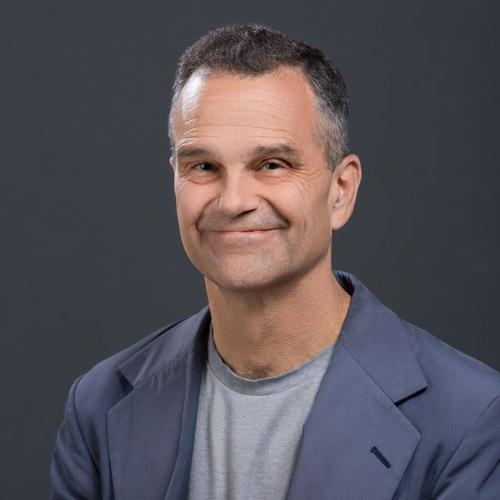
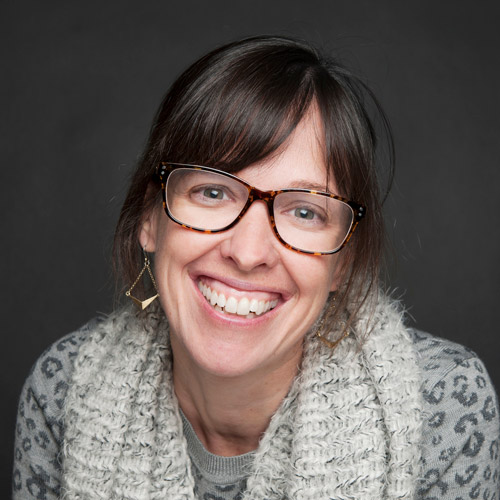
The research of Brian DePasquale (left) offers hope to people who are paralyzed, while Michael Economo’s research sheds new light on ALS—work that earned both Sloan Research Fellowships.
Two Boston University Bioengineers Win Prestigious Sloan Research Fellowships
Brian DePasquale and Michael Economo honored for cutting-edge biomedical research that promises hope and benefits for patients
The mathematics done by Boston University’s Brian DePasquale promises tangible help for injury patients. An assistant professor of biomedical engineering at BU’s College of Engineering, he develops mathematical models to characterize how neurons in the brain generate movements, decisions, and perceptions of the world.
“His research holds significant potential to impact human health,” wrote Mary Dunlop, an ENG professor and vice chair of biomedical engineering. She said DePasquale’s work could one day help improve devices that translate brain signals into commands for operating robotic limbs, computers, and other technology for people who are paralyzed.
Her comments came in a nomination letter that helped DePasquale become one of two BU scholars to win 2026 Sloan Research Fellowships. The other recipient, Michael Economo (ENG’12), also an assistant professor of biomedical engineering, builds tools to observe the brain and studies how the brain plans and controls movement—work that, among other findings, has gleaned new information about amyotrophic lateral sclerosis, or ALS (Lou Gehrig’s disease).
The Alfred P. Sloan Foundation gave 126 fellowships this year to early-career researchers from 44 institutions in the United States and Canada; the list was selected from more than 1,000 nominations. The prestigious honor (59 fellows have gone on to win Nobel Prizes) has been awarded annually since 1955 to researchers “whose creativity, innovation, and research accomplishments make them stand out as the next generation of leaders,” in the foundation’s words.
“It is gratifying to see two of our College of Engineering faculty earn such a prestigious award. The Sloan Research Fellowship is the latest in a string of well-deserved honors for both of them,” says Elise Morgan, ENG dean and Maysarah K. Sukkar Professor of Engineering Design and Innovation. “In different and innovative ways, Mike and Brian are both working at the intersection of neuroscience and computational science. Not only is their research broadening our understanding of how humans and other animals perceive and move about the world, but also it might someday help restore that freedom of movement to people who have lost it.”
Each fellow receives $75,000 over two years to advance their work. Both BU recipients say their grants will pave avenues of investigation into the mysteries of the brain that wouldn’t be possible otherwise.
“The focus of my research has moved toward developing AI models of how humans and other organisms perceive odors,” DePasquale says, “a direction that could catalyze profound technology developments in the future.”
With the grant, he will seek to learn “how chemical structure can produce the unique perceptions of smell that bring color to human life—but that also enable deadly animals, like mosquitoes, to spread disease.”
DePasquale says many of his role models have won Sloan fellowships, from personal mentors to legendary scientists like mathematician John Nash, pioneering theoretical physicist Richard Feynman, and renowned mathematician Terence Tao.
“A Sloan fellowship brings me an immense sense of pride,” DePasquale says. “It feels surreal to be on a list of names that includes these figures.”
Economo’s lab studies signals generated by the brain during movements—“the signals that endow us with our ability to carry out rich, complex behaviors with speed and dexterity,” he says.
One key discovery of his work, he says, was that a “major highway” from the brain’s behavior control hub to the body’s movement centers, once considered a single pathway, “is actually two separate channels,” each of which carries different types of movement-related signals. The discovery provided insights into ALS, under the conditions of which this pathway degenerates, he says.
“It is always gratifying when the quality of your work is recognized,” Economo says. “I take it as recognition of my entire research group. I am lucky to work with a really terrific group of graduate students, postdocs, techs, and undergrads.”
In her nomination letter for Economo, Dunlop noted the collaborations he has with colleagues across the University testify to “the sheer breadth of the expertise he possesses both within and beyond neuroscience.” She added, “The number of ‘arrows in his quiver’ is paralleled by few investigators at any career stage.”