Meet PEARL, a Mobile Research Lab Studying Oysters and Their Habitats
BU researcher and her family customized a van to study how oysters filter water pollutants—and took science on the road
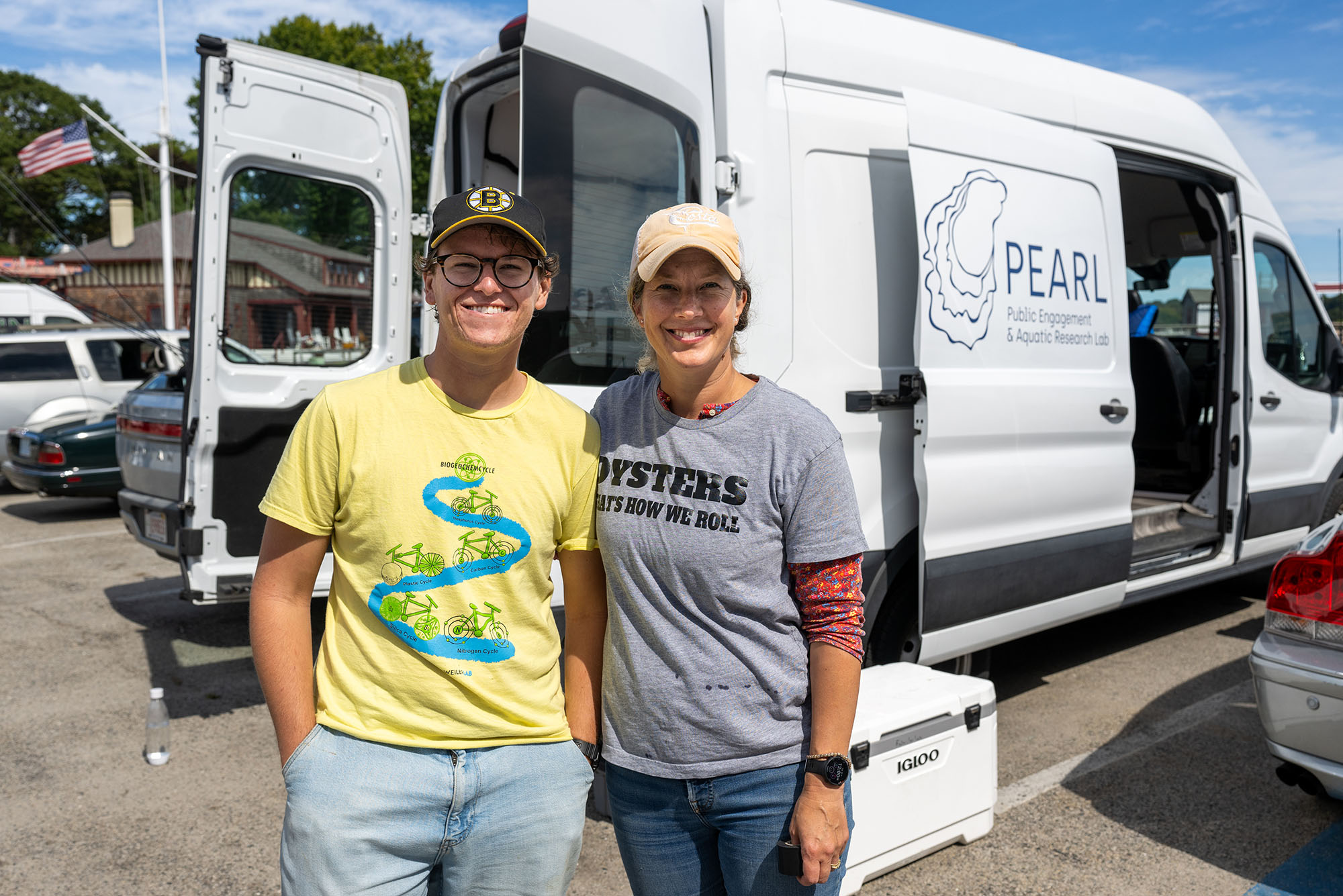
Boston University marine scientist Robinson “Wally” Fulweiler (right) and research technician Drew Bouchie (CAS’24) with their mobile oyster research van, PEARL, in Duxbury, Mass.
Meet PEARL, a Mobile Research Lab Studying Oysters and Their Habitats
BU researcher and her family customized a van to study how oysters filter water pollutants—and took science on the road
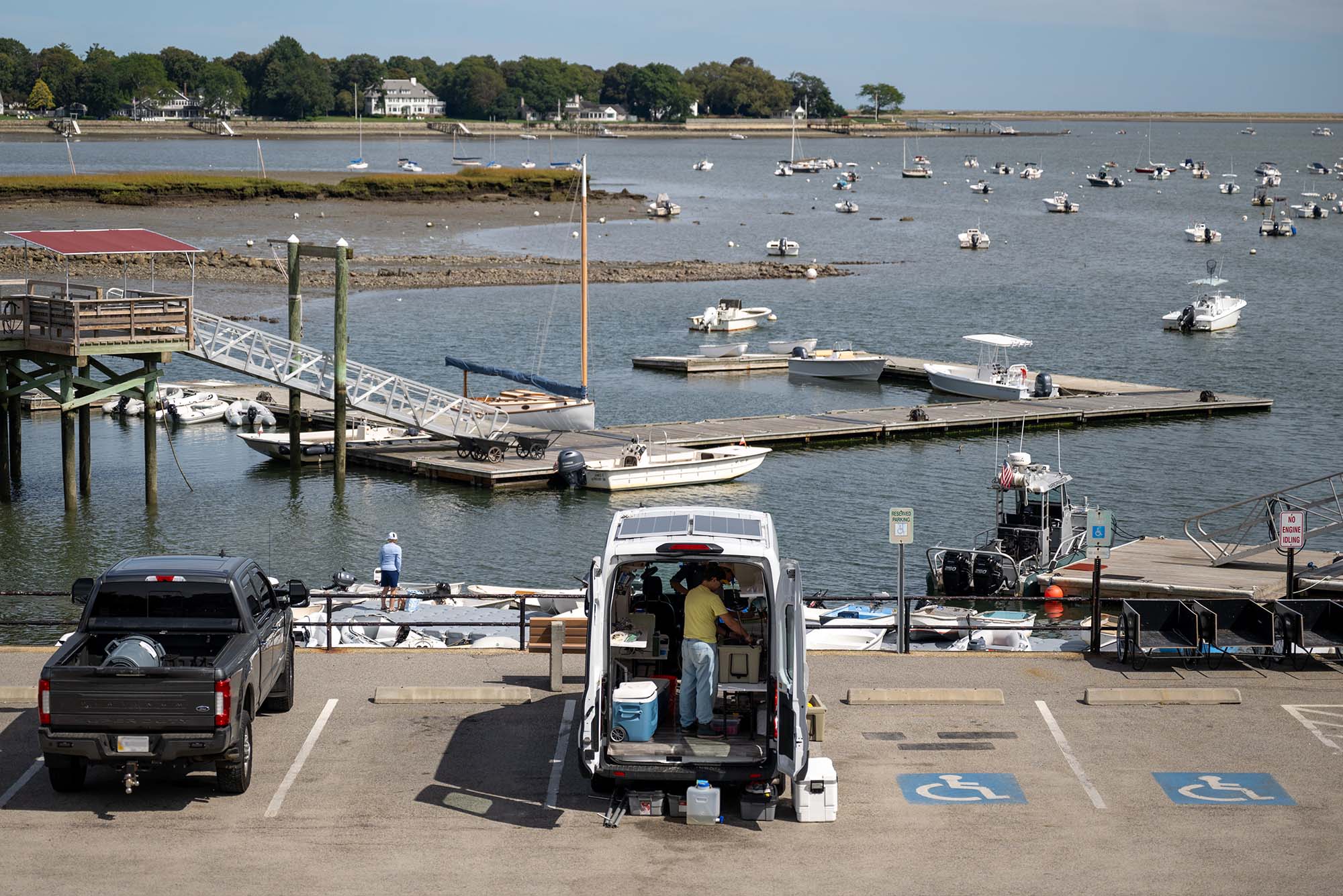
Up and down the East Coast, a white van called PEARL—the Public Engagement and Aquatic Research Lab—has been parking along shorelines of bays, marinas, and sounds. Inside, Boston University marine scientist Robinson “Wally” Fulweiler and research technician Drew Bouchie (CAS’24) are busy at work. With large tubs of saltwater, tables bolted into the floor, and shelves full of test tubes and sensors, the van has been customized to act as a mobile research laboratory.
Specifically, PEARL was created to study a beloved marine bivalve: oysters, and the role they play in circulating nutrients, filtering out pollutants, and keeping marine ecosystems in balance.
Just by breathing, oysters naturally filter water—an estimated 50 gallons a day from a single adult oyster. This includes removing one of the most problematic and challenging pollutants: excess nitrogen that ends up in marine environments from sewage, runoff, and fertilizer. Fulweiler is particularly interested in how oysters remove nitrogen that is otherwise a challenge to clean up.
“Oysters are a really powerful tool,” says Fulweiler, a BU College of Arts & Sciences professor of Earth and environment and of biology. “Oyster aquaculture improves water quality, plus it has great economic benefits.”
Even though oysters on the half shell are a common treat, Fulweiler says there is little data about what oysters do to water quality before they end up on our plates. Her research with PEARL, funded by the Nature Conservancy until the end of this year, has allowed her and Bouchie to sample and analyze oysters, sediment, and saltwater from multiple locations on the East Coast, from Long Island to Martha’s Vineyard to Great Bay, N.H. Along the way, they have been collaborating with local water quality managers, restoration specialists, and researchers. Plus, doing science out in the fresh, salty air has also led to curious passersby stopping by the van to ask about the team’s activities.
“That’s been the most rewarding part, the community engagement,” says Bouchie. “Making our lab visible to the public makes our work important, even before we have results or analyze the data. It’s fulfilling already.”
A Custom-Made Oyster Van
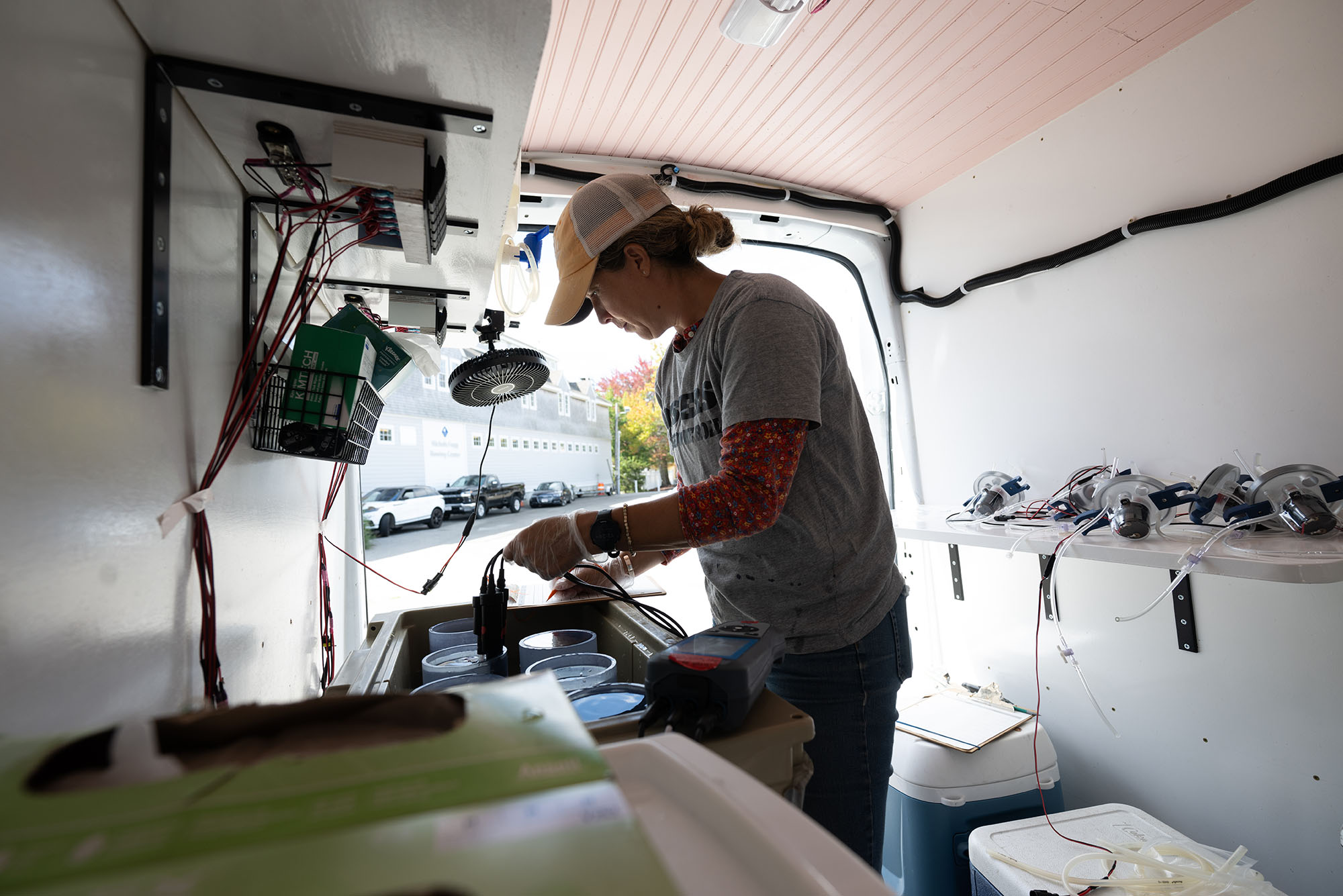
Each research trip with PEARL begins with collecting samples. Recently, on a crisp, sunny day in Duxbury, Mass., Fulweiler and Bouchie took a boat—with long-term partners from the Real Oyster Cult—to an oyster farm to get sediment cores, water, and oysters. Those cores are carefully transported back to the van, where they’re placed in an insulated container to maintain proper temperature. They begin measurements right away—nitrogen concentrations, oxygen and nitrogen gas levels, acidity, salinity, and temperature. Then, the cores are sealed shut inside the container for a couple of hours, called the incubation period. The water inside the container is gently stirred by a small motor-powered arm, keeping the water circulating like it would be in the sea.
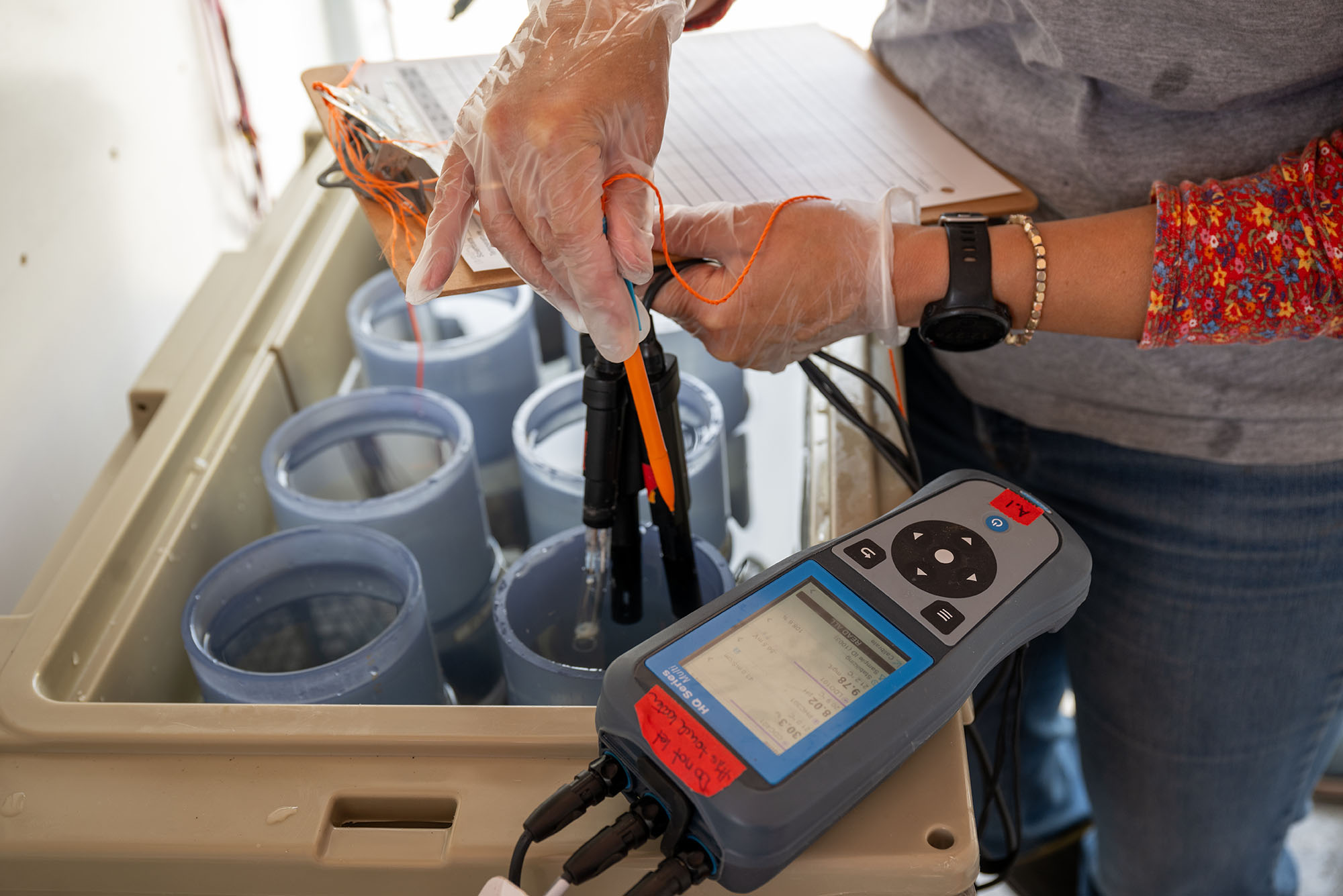

During incubation, more nitrogen samples are collected to measure denitrification—a naturally occurring, microbe-driven process that removes excess nitrogen, helping to improve water quality. Measuring denitrification allows the researchers to see “how the oysters change the chemistry of the water,” says Bouchie.
The electronic components, like the water-stirring arms, are powered by a solar array on the van’s roof that charges a battery neatly stowed in a cabinet behind the driver’s seat. It’s customizations like that—and the painted light pink interior roof—that remind anyone peering inside the van that PEARL was retrofitted for science by hand. For Fulweiler, creating PEARL was a passion project that involved the help of her husband and two children.
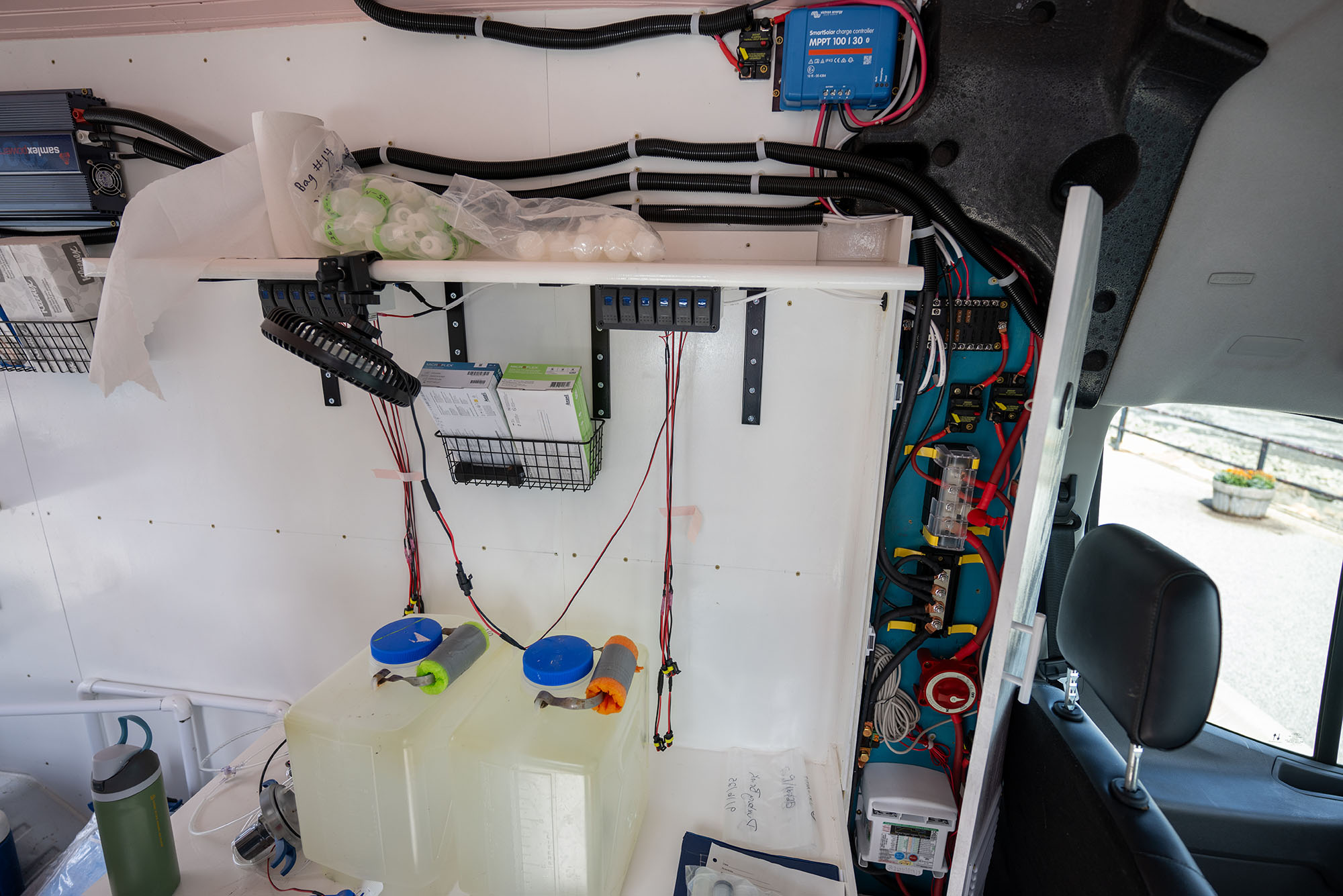
“This was a family affair,” says Fulweiler. She purchased the van in the summer of 2023. Together with her husband, they turned the empty van into a working laboratory. Her two children, now six and eight years old, painted the interior walls. Fulweiler’s mom even joined for an early field trip. After a few months of practicing, Bouchie came onboard in fall 2024 and now leads PEARL-associated research. They’ll keep sampling and running the lab through the fall and winter, and into next summer.
An Oyster-Filled Future
Fulweiler’s long-term vision is to quantify how much oysters accelerate denitrification. Nitrates and other nitrogen compounds like ammonia are naturally present in the environment, but enter waterways in excess because of human activities, like fertilizing gardens and sewage runoff. Without denitrification, nitrogen compounds will cause algal blooms that suffocate marine life and can be dangerous for swimmers. Oysters, along with nitrogen-converting microbes in the sediments, are essential players in cycling nitrogen, by changing harmful pollutants in the water into nitrogen in the air—which makes up the majority of Earth’s atmosphere.
“It’s really important to know how much nitrogen is going into these systems, and how to mitigate it,” Fulweiler says.
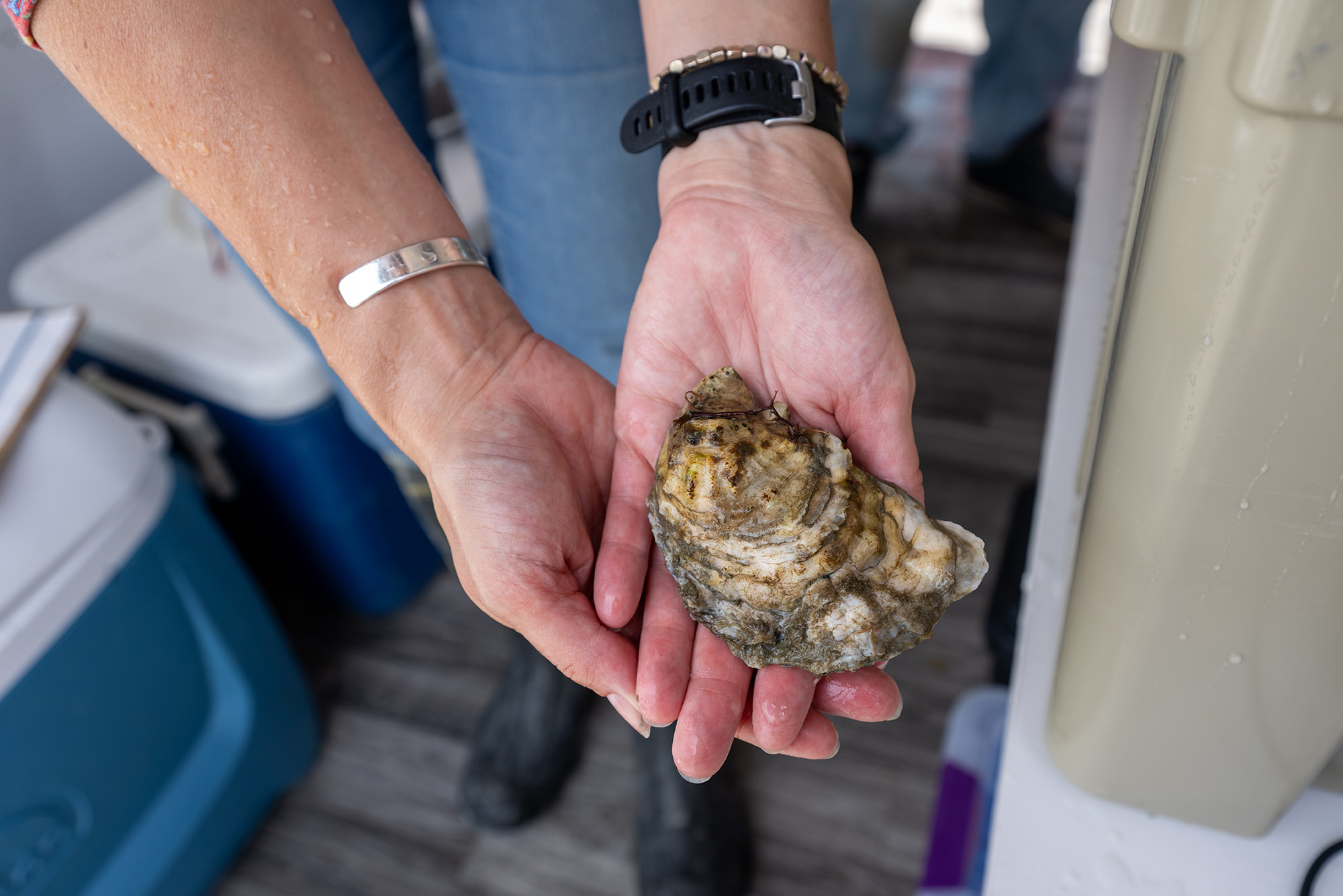
In the long run, and with more funding, the team has dreams to drive PEARL even further than New Hampshire and Long Island—possibly road-tripping down the entire Eastern Seaboard to collect as much data as possible. Once they’ve amassed enough data to synthesize, they hope to relate physical characteristics of the oysters—like length, width, and height—to their nitrogen cycling capacities. That information, and details about how much nitrogen is entering and cycling out of the water, can inform conservation and restoration efforts in coastal communities dealing with the effects of excess nitrogen.
“The primary goal is to help figure out nitrogen budgets for communities,” Fulweiler says. “And the only way we can do that is to get more data.”
In the meantime, the researchers are eager to keep engaging with oyster farmers, local communities, and the science-curious members of the public who poke their heads into PEARL and the world of oyster science.