Past Awardees Type II
Mary Erskine Type II Grant Awardees
(Faculty applying for Type II awards may request copies of past awardee’s full proposals. Faculty may also request a proposal preparation mentor. Contact us for more information.)
2010-2011
 Asst. Professor Dana Bauer
College of Arts and Sciences, Department of Geography and Environment
“Effects of Land Use Policies on Land Use Change in Exurban Communities”
Since the early 1950s, there has been migration from urban centers to suburban areas and beyond. The largest growth in development is now occurring outside the suburban ring, in exurban communities. The transformation of natural areas to land dominated by human use, however, results in loss or degradation of wildlife habitat as well as changes to local and regional climate and biogeochemical cycles. Thus, exurban areas have increasingly become zones of conflict as conservation and development compete for the same finite land resources.
The proposed research will develop a land use change model that can be used to simulate the effects of various land use policies on land use outcomes which have broader ecological and biogeochemical impacts. The project is innovative in its integration of human decision-making within a larger coupled natural human system that links economic components with components from the STEM disciplines (life sciences and geosciences), providing a mechanism for investigating dependencies and feedbacks.
The project will involve the compilation of a robust time-series, parcel-level data set, including land-use policies governing individual parcels over time, for the Greater Boston Metropolitan Area, with an initial focus on exurban communities and development of a modeling framework that can be used to simulate future land use change for baseline and alternative land use policy scenarios.
The project will allow the PI to work with an extended network that has formed within the greater Boston area as part of the NSF ULTRA-ex “Metabolism of Boston” project. The project will fun the PI for some summer effort as well as both a graduate student and an undergraduate student during the summer.
 Asst. Professor Robinson Fulweiler
College of Arts and Sciences, Department of Earth Sciences
“No More Black Box: Linking the Microbial Community to Biogeochemical Processes in Coastal Wetlands”
As a society we are familiar with the curve illustrating the increase of atmospheric carbon dioxide over the last hundred or so years. But few know that over that same time period we have doubled the amount of N in the biosphere. This increase has lead to a series of, mostly, negative changes. Well known examples include increased phytoplankton blooms, increased low oxygen events, fish kills, and even loss of biodiversity.
There is a bacterial process, called denitrification, which converts usable forms of nitrogen to unusable forms. It is therefore a natural cleansing process which can remove man-made nitrogen (such as fertilizers) from the environment. Denitrification is a ubiquitous process found in both terrestrial and aquatic systems.
The purpose of this proposal is to link specific wetland biogeochemical processes with the responsible microbial community thus connecting the ecosystem function with the microbial ecosystem. Specifically, we will establish laboratory microcosms of terrestrial wetland soils. Each microcosm will undergo two serial perturbations – the first will increase temperature and CO2 and the second will also perturb nitrogen. We will then perform biogeochemical measurements and 16s rDNA profiling on every microcosm at a number of points during the perturbation.
This project will be a major new direction for the PI and link her to the Galagan laboratory in Biomedical Engineering here at Boston University. The bulk of the funding for the project will be spent in lab materials and sample processing. Some funding for an undergraduate is included.
 Assoc. Professor Elise Morgan

College of Engineering, Department of Mechanical Engineering
“Control of Cell and Tissue Fate through Mechanical Stimulation of Skeletal Healing”
Mechanical forces are a potent modulator of healing of bone and cartilage injuries. Recent evidence points to two mechanical stimuli, shear strain and interstitial fluid flow, as key regulators of skeletal healing. However, the mechanisms by which these stimuli are sensed by cells and transduced to the chemical signals that ultimately direct healing have not been identified.
Some of the proposed work requires expertise outside of the PI’s research areas, and thus this project will serve to initiate a new collaboration. By seeding this collaboration and catalyzing a new research direction, this project will significantly enhance both the PI’s professional network and her scholarship.
Funds will be used to cover the cost of lab materials, partially fund a graduate students, and partial summer salary for the PI.
 Professor Emma Previato
College of Arts and Sciences, Department of Mathematics
“New Applications of Partial Di erential Equations”
Partial Differential Equations (PDEs) model every type of motion, in every realm of life. Indeed, thie field is active and rife with challenging problems, highly interdisciplinary and, more subtly, `intermathematical’, necessitating sophisticated tools from diverse areas (applied mathematics, analysis on infnite-dimensional spaces, non-commutative algebraic geometry, e.g.), whose practitioners are trained in completely different languages.
The physics/chemistry/materials science knowledge of thermonuclear fusion is at present modeled by certain PDEs (Grad-Shafranov, Landau damping, non-linear gyrokinetic equation, Vlasov-Boltzmann). These equations arise from some beautiful geometric constraints (toroidal form of equilibria in a magnetic eld, e.g., where magnetic field lines move around the torus in a helical shape) the goal being, through magnetic confinement of plasmas (…) the fusion of two isotopes of hydrogen, deuterium and tritium, to form an isotope of helium, an alpha particle, and a neutron”. These equations are non-integrable.
The propose research will first analyze the type of equations currently in use, possibly to create couplings or simplifed versions that may bring them to amenable form. Second the potential for imposing symmetries that may give geometric structure to the class of solutions will be considered. Finally new kinds of asymptotic expansions will be used to study the solutions.
This research will allow the PI to begin networking with researchers in chemistry; high-energy, mechanics and fluid dynamics physics; and environmental studies. A Proseminar series will enable a practitioner visitor once a month either from the BU community or from outside of BU. Finally, a new interdisciplinary course focused on mathematics role in sustainability will be developed. The funds will be used to partially support a graduate student, to employ undergraduates to help with the course development, and to host visitors as part of the Proseminar.
2009-2010

Dr. Sucharita Gopal
Professor in the Department of Geography and Environment
Dr. Sucharita Gopal was awarded a grant for her proposal entitled “M&M’s of Estimating Carbon footprint of Boston”
The proposed research agenda is to develop a methodological framework to comprehensively measure, model and map (M&M’s) Boston’s carbon footprint. It will lay the foundation for measuring, mapping and analyzing socioeconomic drivers, especially related to transportation and energy use in various urban buildings at a parcel spatial scale. The ultimate aim is to reduce the city’s carbon footprint and strive for a greener Boston. The work involves two new collaborations for PI Gopal with Joe Ferreira at MIT, and Nathan Phillips, Department of Geography and Environment, Boston University. Professor Ferreira is Professor of Urban Planning and Operations Research and is involved in modeling sustainable landuse and transportation planning. Nathan Phillips is a biogeographer who is interested in urban forests and their role in carbon sequestration. The work will also incorporate policy perspectives from non-profit agencies (Dan worth, Executive Director, National Association of Environmental Law Societies, Jason Delambre, Carbon & Sustainable Energy Consultant) and the Boston Mayor’s office.
The following are the outcomes from the project that will take place over Spring and Summer 2010. Funds are requested for supporting 2 graduate students and buying equipment.
- Development of a methodology for measuring, modeling, and mapping the carbon sources and potential sinks in Boston related to socio-economic drivers and anthropogenic factors;
- Methods of visualizing the carbon sources and sinks that can be interpreted by policy makers and other stakeholders.
- Preparing a larger proposal for future NSF call on carbon related topic or ULTRA.

Dr. Tereasa Brainerd
Associate Professor in the Department of Astronomy
Dr. Tereasa Brainerd was awarded a grant for her proposal entitled “Locating Isolated Weak Galaxy Lenses in the Sloan Digital Sky Survey”
This research seeks to determine whether or not the dark matter halos of observed galaxies agree with the predictions of Cold Dark Matter. In order to trace (i.e., “map”) the gravitational potentials of dark matter structures such as the dark matter halos of galaxies, one needs a tracer that one can actually see. Over the past 15 years, gravitational lensing has become the premier tool for mapping dark matter. Gravitational lensing is the bending of light rays around massive objects, predicted by Einstein’s theory of General Relativity. Through gravitational lensing one is using the photons emitted by distant galaxies to directly trace the gravitational potential of the lens.
The way to make the problem “clean” and straightforward is to identify a set of truly isolated lens galaxies in a large data set. If the lenses are truly isolated, the multiple lensing problem faced by the previous investigations disappears. Here we will use the 7th public data release of the Sloan Digital Sky Survey (SDSS) to identify a suite of truly isolated weak galaxy lenses. The SDSS is a large imaging and spectroscopic survey that covers roughly one quarter of the Northern sky. The data are easily accessible via the web1, and the PI has a great deal of experience working with the SDSS. At the completeness limit of the survey, the SDSS currently contains 764,216 galaxies with known redshifts. Stellar masses for these galaxies are also publicly– available. These are the objects that we will use to identify isolated weak galaxy lenses.
The proposed investigation will consist of work that is necessary to make a sound, convincing case to the National Science Foundation (NSF) that the shapes of the dark matter halos of galaxies can be measured directly with weak gravitational lensing. Work completed in Summer 2010 will be used as the basis of a full proposal to the NSF that will be submitted on or before November 15, 2010 (the official deadline for AST proposals next year).

Dr. Leslie Brody
Professor in the Department of Psychology
Dr. Leslie Brody was awarded a grant for her proposal entitled “Gender Roles in Women with HIV in Relation to Treatment Adherence and Health Outcomes”
This research will provide a basis for developing interventions aimed at changing gender roles to improve treatment adherence and lower morbidity and mortality rates in women with HIV. The proposed project involves networking with researchers who are experienced in studying HIV via a collaboration with investigators at the Chicago and Brooklyn sites of the Women’s Interagency HIV Study (WIHS), an NIH funded longitudinal cohort study of over 1,500 women with HIV. The characteristics of the study participants are as follows: half live below the federally defined poverty level; 27% self-identify as Latina or Hispanic, 58% as African American, and 15% as white or other. The study has six national sites, including Washington, D.C.; Brooklyn, NY; the Bronx, N.Y.; Chicago; San Francisco; and Los Angeles. The expertise, mentorship, and collaboration of investigators from these WIHS sites will enable the PI to extend her previous work centered on studying the psychosocial factors that contribute to gender differences in emotional expression and begin to apply basic social science research on gender roles to the health problems of women with HIV.
The Mary Erskine grant would be used to support myself and a graduate student as well as to fund travel expenses during the summer of 2010. The summer work will focus on (a)developing a manual to code gender role variables from autobiographical narratives; (b)analyzing pilot data on gender roles, treatment adherence, and health outcomes that will have been collected from 50 women at that point; and (c)travelling to Chicago and Brooklyn to establish data collection and data management procedures.
2008-2009
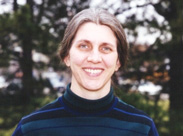
Prof. Ulla Hansen
College of Arts and Sciences, Department of Biology
“Relevance of transcription factor LSF to metastatic melanoma: initiation of translational studies.” The funding will provide summer support for a female graduate student and an undergraduate student as well as some laboratory suppliesSummary:
LSF is a transcription factor that is ubiquitously present in mammalian cells. [A transcription factor is a protein that binds DNA in regions around genes and determines whether or not they are expressed.] We have shown that when resting, or quiescent, cells are stimulated to enter the cell cycle, LSF activates genes prior to cells entering DNA replication (e.g. Tyms, which encodes thymidylate synthase, the rate-limiting enzyme for de novo synthesis of thymidylate triphosphate). LSF is therefore essential for progression through the cell cycle. The alterations in LSF activities from quiescence through DNA replication that result in specific activation of LSF prior to cells entering the replication phase are not due to changes in levels of either LSF mRNA or protein. Instead, we have shown that LSF protein activity is tightly regulated by post-translational modification during these transitions, in particular protein phosphorylation.
Given that LSF is normally required for progression of cells into DNA replication, we anticipated that, if dysregulated, it might function as an oncogene. Recently, multiple clinically oriented collaborators obtained data in support of this view, in that elevated levels of LSF mRNA are observed in subsets of late stage cancers. Further, some of the data suggest that LSF may contribute to chemoresistance. This proposal aims to determine whether or not inhibition of LSF activity, using several techniques and reagents available in my laboratory, can blunt the cell proliferation, transformation, or chemoresistance properties of specific types of cancer cells. Cell responses will be assayed both in vitro, under varying tissue culture conditions, and in vivo using mouse models. The significance for therapeutic intervention in human disease could be high, as such late stage cancers can be particularly difficult to treat.
Overall, this proposal comprises two related goals, one scientific and the other career-related. First, these experiments would enable a new scientific direction in my laboratory regarding the relationship between the transcription factor LSF and development of later stages of oncogenesis and/or chemoresistance, as indicated above. Secondly, the award would facilitate a career transition, by establishing the necessary connections and credentials for launching into translational research. Success in developing this new direction necessitates not only acquisition of preliminary data to support the notion that this new scientific direction will be successful, but also demonstrated relationships with clinical collaborators which will be solidified during the course of this study.

Assoc. Prof. Rosina Georgiadis
College of Arts and Sciences, Department of Chemistry
“A new collaborative seed project to investigate nanoparticle protein interactions.” The funding will provide partial support for a female graduate student, lab supplies, and travel.Summary:This proposal describes a multidisciplinary research and education program to develop new methods and fundamental understanding of how semiconductor nanocrystals (NCs) interact with proteins in biological systems. This represents a new direction in research for the Principal Investigator (Georgiadis) at Boston University and will serve to “seed” a new collaboration with the Hollingsworth group at Los Alamos National Laboratories (LANL). The goal of the seed project is to obtain preliminary data. Initial experiments will be performed with commercial NCs as well as some gift samples from the Hollingsworth lab which are well-characterized NCs, synthesized at LANL, and characterized at the appropriate conditions.
- The ultimate goal of this work is to achieve a systematic mapping of fundamental NC-protein interactions. Interactions will be measured with a set of prevalent proteins in biologically relevant aqueous solutions pH 7.4. Because a host of interrelated NC material properties and proteins will influence NC-protein interactions, high throughput methods are needed. Angle-scanning surface plasmon resonance imaging (SPR imaging) spectroscopy, developed in the Georgiadis laboratory with NSF funding, will be used to simultaneously perform between 16-25 independent kinetic and equilibrium measurements of NCprotein interactions. The power of SPR imaging is that it can measure protein association to and dissociation from the NC in the presence or absence of photoexcitation at energies higher than the NC semiconductor bandgap. Another new collaboration with the Elliott laboratory (Boston University), which has extensive expertise in protein film voltammetry, will enable combining SPR imaging with electrochemistry experiments to mediate redox activity by modulating electrochemical potential. SPR imaging will be used to measure stoichiometry and equilibrium constants at surfaces, and results will be compared with solution-phase measurements. As protein aggregation or fragmentation is likely, standard biochemical methods will be used to assess patterns in conjunction with protein assays to determine protein activity and stability, especially for immobilized proteins.Despite the increasing awareness of possible environmental health and safety issues, little is understood of principles and characteristics relevant to the toxicity of semiconductor NCs in biological systems. Semiconductor NCs, or quantum dots, represent some of the most exciting new nanoparticle materials for applications ranging from energy, medicine, and catalysis, to communications and information storage. However, with their increased band gap compared to the corresponding bulk materials, they function as strong oxidizing and/or reducing agents. Their small size allows them to pass into living cells. Biological interactions of NC will depend strongly on size,
surface chemistry, and composition, charge, and hydrophobicity, leading to a large number of variables. Given the large variability in NCs and in proteins, progress toward a generalizable model of NC-protein interactions is needed and is the goal of this discovery research project.The goal of this work is to measure, for the first time, the interaction of a set of carefully selected NCs with a number of judiciously chosen proteins, including on and off rates for NC protein association and dissociation, using SPR imaging and solution phase measurements. This “seed” project will provide invaluable preliminary data for collaborative grant proposals to NSF, EPA, NIST, NIH, and DOD.
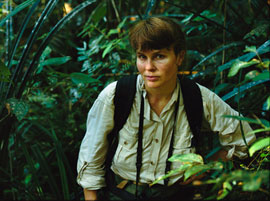
Assoc. Prof. Cheryl Knott
- College of Arts and Sciences, Department of Anthropology
“Establishing networking relationships and family travel support to enable research on wild orangutans in Indonesia.” The funding will be used to cover travel expenses for the PI and multiple collaborators. In addition, the funding will pay for travel and childcare expenses for the PI’s children.
Summary:
My work as a biological anthropologist involves uncovering the forces that shaped human evolution through study of our closest living relatives—the great apes. My fieldwork is specifically focused on wild orangutans which have many features particularly relevant to this area of inquiry. In order to study wild orangutans I maintain a large great ape research site in Gunung Palung National Park on the island of Borneo. This proposal focuses on two major new projects that I am now beginning on wild orangutans in Indonesia. These projects require significant new investments in building up networking relationships and collaborations with Western and Indonesian scientists. New theoretical and practical considerations make investments in these relationships especially critical at this juncture.
The first is a change in our theoretical approach to studying the behavioral and physiological ecology of wild populations of animals. Increasingly, there is a recognition that there are significant population-level differences in animal responses. Thus, it is not sufficient to study one population in order to answer pertinent biological questions about animal responses to the environment. Instead there is a recognition that cross-site comparisons provide ‘natural experiments’ in which hypotheses regarding the influence of environmental circumstances on behavior and physiology of wild populations can be tested. My new endeavors take advantage of this through cross-site collaborative projects. These, however, impose new challenges as these collaborations require significant time investments in visiting other field sites and working out the specific collaborative details needed to make the project succeed at each site.
The second major development which requires new networking investments is significant changes in the laws and regulations in Indonesia regarding the work of foreign scientists. When I first began my work in Indonesia in 1992 permission to conduct research was granted by the Indonesian Institute of Sciences and required a lengthy 6 month vetting process through various Indonesian governmental agencies. Proposal approval also included permission to collect the urine samples I needed for hormonal analysis, fecal samples for DNA analysis and plant specimens needed for nutritional analysis and I was able to bring these specimens to laboratories in the US for analysis. However, with a changing political climate in Indonesia (and it should be noted in other developing countries as well), the process is now much more involved. Separate permits are needed for sample collection, transport within country, and transport out of Indonesia. This is a lengthy process that requires significant new sponsorships from Indonesian institutions and scientists who can facilitate the process. A major component of this is the requirement to support Indonesian scientists to bring samples to the US in order to be trained in these techniques and to be part of the analysis. These new regulations will ultimately improve the capacity of Indonesian scientists to conduct research, but impose considerable new practical challenges on foreign scientists. Thus, this proposal focuses on my need to build up my professional network in Indonesia through support of new research collaborations with Western and Indonesian scientists. Support for the field and academic training of Indonesian students and scientists is required for me to obtain research permission from the Indonesian government. Likewise bringing urine, fecal and plant samples to the US for analysis is now only possible if I support Indonesian students or scientists to physically bring the samples to the US and then support their training and participation in the laboratory analysis.
Specialized childcare to support research and networking activities: As a field biologist working in Indonesia, as well as a mother of small children, there are significant challenges I face in being able to build up these relationships that are essential to the success of my research. Because of my husband’s work as a wildlife photographer in remote areas of the world, and a lack of other family support for extended periods, I will need to bring my children (ages 5 and 8) with me to Indonesia. I will also need to hire an Indonesian nanny to assist with childcare support of the children in order for me to meet with the individuals described above. Family obligations are one of the major impediments to women successfully carrying out field work in Indonesia where face-to-face contact with collaborators is essential. Thus support in this area would greatly increase my ability to forge the relationships necessary for the success of these projects.