
By Students, For Students
Community Profiles

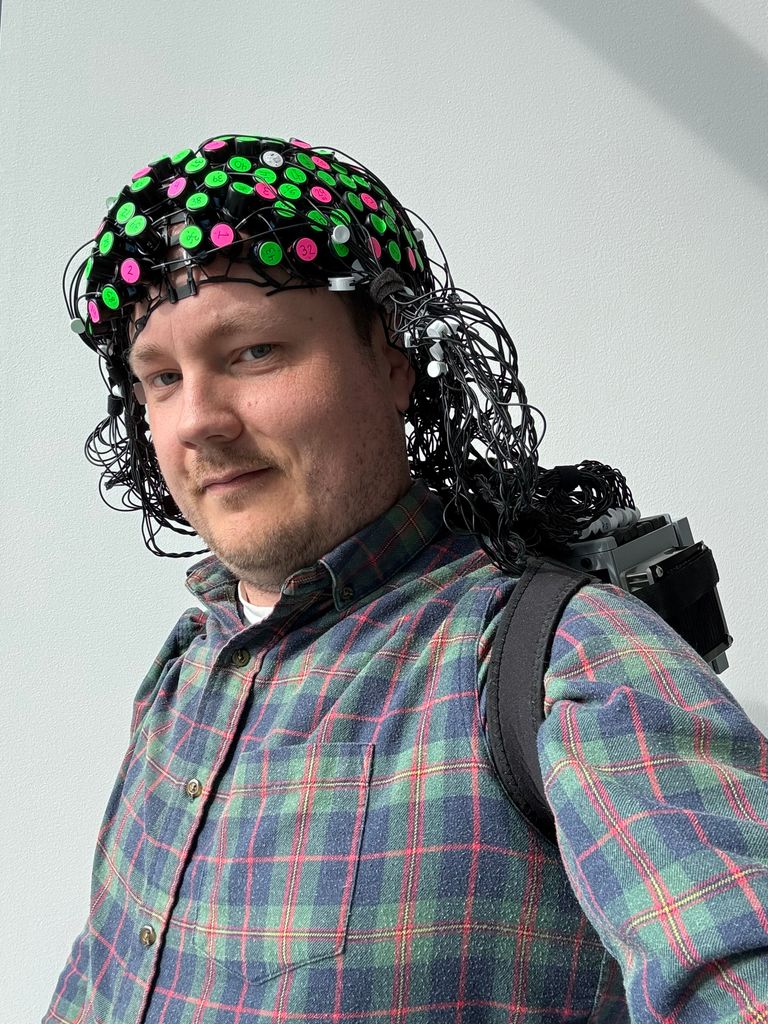
Bernhard Zimmermann, the Man Behind the NINJA: One of BU’s Most Used fNIRS Devices
By Danny Giancioppo | Photos provided by Bernhard Zimmermann The NinjaNIRS, or NINJA, is a wearable fNIRS helmet that has thrust the field of neuroscience into new heights, and which almost all Boston University graduate students affiliated with neuroscience subjects have come across in their research. In essence, this fNIRS innovation has allowed subjects’ whole heads […]

Lea Stith: Translating Brain Signals into Research Solutions
By Jack Osmond From Alzheimer’s disease and Highly Superior Autobiographical Memory to attention and spatial navigation, Lea Stith’s research on memory is hard to forget. Working in translational neuroscience, Stith uncovers insights about the brain to bridge neuroscience research and real-world applications. Her interest in understanding the mind goes as far back as middle school, when she […]

Adolescence Is Not Simply a Period of Vulnerability, but a Window of Opportunity: New Insights into Adolescent Emotion from Dr. Heidi Meyer
Assistant Professor Heidi Meyer, Psychological & Brain Sciences, explores how safety learning shapes the adolescent brain

Found in Translation: Darren Roblyer’s Path From Hands-On Research to Research In-Hand
Darren Roblyer pioneers discoveries not only in translational biophotonics, but also through new voices and programming opportunities

Megan Bell of the Stangl Lab Featured in ENG Student Spotlight
Megan Bell always had a clear interest in biomedical engineering, but not necessarily the specific direction she would pursue.

Building Connections: Travis Rotterman Uses the Spinal Cord as a Bridge into the Human World
Assistant Professor Travis Rotterman studies CNS function and malfunction in rodents to understand human systems. By Danny Giancioppo, Photo by Jackie Ricciardi, Figures provided by the Rotterman Group Growing up working on a farm, the lab might seem a lifetime away. The world may instead be centered around strenuous physical effort, community, and––of course––small-town sports. […]

Building Mini-Brains, Advancing Big Ideas: How Kate Herrema Uses Organoids to Model Neurodevelopment
by Jack Osmond Whether in her home state of Michigan, during her high school years in Virginia, or in the city of Boston, Kate Herrema has always had an aptitude for science and math. But it wasn't until she took a psychology class in high school that she discovered her interest in neuroscience. “I remember […]