Neuro Experience Undergraduate Research Opportunity Program (NEUROP) Aims to Open Research Opportunities for Undergraduates Interested in Laboratory Work
By Danny Giancioppo
As an undergraduate, it isn’t always easy to access research opportunities. Thanks to the work of Neurophotonics Center Director David Boas and an undergraduate-turned-research-scientist, both students and faculty will soon have access to such an optimized method: Neuro* Experience Undergraduate Research Opportunity Program (NEUROP), matching ideal undergraduate researchers with their preferred research experiences.
Early into research scientist Emily Long’s career as an undergraduate in the Bio Optical & Acoustic Spectroscopy (BOAS) lab, she and her PI found resources lacking for Boston University undergraduates interested in finding ideal research opportunities in preferred faculty labs. From this need emerged the Neuro* Experience Undergraduate Research Opportunity Program (NEUROP), which Long has helped run during its pilot stage.
“Before NEUROP came along, BU really didn’t have a good system to point undergrads to where [they] should go if you want to get involved in research,” Long explains. She goes on to say that Neurophotonics Center Director David Boas sought to address this issue by having Long create an inquiry form meant to recruit undergraduates interested in lab work. While it served as a database for interested students, it also helped graduate students and faculty looking for assistants.
“One thing that may make people not willing to recruit undergrads,” Long explains, in addition to financial burdens, is the “time-consuming training process you have to go through. Some undergrads just disappear mid-way of training them. That really discourages PIs from recruiting them, because it’s essentially a wasted resource.”
By comparison, NEUROP benefits not only the undergraduate researcher by placing them in their preferred lab or field, but the faculty and graduate students as well, having a list of pre-approved, disciplined students who may assist them. In other words, a win-win.
So, while typical Undergraduate Research Opportunities Programs (UROP) provide ample motivation to pursue research through financial support, NEUROP assists with the “heavy lifting,” guiding students through the preparatory stages of research in addition to some of the UROP benefits.
If an undergrad is interested, they are expected to fill in an inquiry application form for the program. From there, participants go through an in-person orientation meeting, and are expected thereafter to complete four sets of training: two SciShield courses, and two SCC courses.
However, NEUROP is not a guaranteed program. Not all faculty have opportunities to host undergraduate students, and funding remains a key factor; but if an undergraduate completes the NEUROP program they will be top candidates for lab placement when an opening arrives.
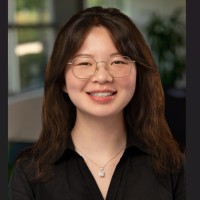
One such undergraduate has been Kathleen Guo, a senior biomedical engineering (BME) student who spent time in the BOAS lab after completing the necessary NEUROP training. On a pre-med track, Guo explains that NEUROP helped her familiarize herself with Boston University’s Shared Computing Cluster (SCC) webpage, as well as landing her a position in a BU lab to develop her research skills on an advanced level.
“It was greatly beneficial to gain a bit of background knowledge before my mentor taught me how to use [sites like SCC] in my own projects,” Guo explains.
At the Neurophotonics Center, the goal is to recruit more undergraduates each year for the NEUROP program, starting in the Fall 2026 semester. Even if students are not able to be immediately placed in a faculty lab, the goal is that, with the proper training, they will be more readily available when a slot opens up. By getting some of the more entry-level training out of the way, undergraduates will have the work ethic and mindset needed to jump into lab work, and faculty will be more eager to find opportunities for them when resources are available.
“We do the first step of filtering,” Long says. “If students are able to pass all the steps and expectations we set in [NEUROP], we think they’re less likely to disappear in the middle of the training.”
“The main goals of NEUROP were to connect motivated undergraduates with labs they’re interested in and to develop foundational laboratory skills such as lab culture, safety, ethics and IRB awareness, and data management,” Guo adds, explaining that NEUROP offered more personalized guidance to her than a standard UROP experience, and that with it, she feels more prepared to make a difference in faculty-run laboratories. “The NEUROP program assisted me in finding a research opportunity [for] a subject I’m interested in. I’ve cold emailed many professors about joining their labs before this as I’ve always been interested in doing undergraduate research, [and] I thought that the NEUROP program streamlined the processes: doing research about the lab, familiarizing myself with basic lab skills, and getting into contact with the PI.”