News
Sarah Hammerschlag on Susan Taubes und Echoes of Heidegger
Title: Resisting Redemption: Susan Taubes and the Imagination of No Future
Abstract: The lecture traces Susan Taubes’s path from her BA thesis on Heidegger to her writing of fiction and considers this transition in light of her relationship to the political theology of Jacob Taubes.
 Bio: Sarah Hammerschlag is John Nuveen Professor of Religion and Literature, Philosophy of Religions and History of Judaism at the University of Chicago Divinity School. Her research has focused on Judaism in the post-World War II French intellectual scene, a field that puts her at the crossroads of numerous disciplines and scholarly approaches including philosophy, literary studies, and intellectual history. She is the author of The Figural Jew: Politics and Identity in Postwar French Thought (University of Chicago Press, 2010) and Broken Tablets: Levinas, Derrida and the Literary Afterlife of Religion (Columbia University Press, 2016) and the editor of Modern French Jewish Thought: Writings on Religion and Politics (Brandeis University Press, 2018). The Figural Jew received an Honorable Mention for the 2012 Jordan Schnitzer Book Award, given by the Association of Jewish Scholars, and was a finalist for the AAR’s Best First Book in the History of Religions in 2011.
Zhivei “Gavin” Min on Heidegger and Pauline Eschatology
Title: Early Heidegger’s Eschatology without God: From Primitive Christian Temporality to Being-towards-Death
Abstract: While Heidegger scholarship widely views Being and Time as an appropriation of Aristotle’s practical philosophy—most radically in Franco Volpi’s thesis that this work is an ontological “translation” of the Nicomachean Ethics—Heidegger’s engagement is rather an “ontological inversion,” shifting an actuality-centered metaphysics toward an ontology centered on open-ended potentiality. Rather, his 1920/21 lectures on the phenomenology of religious life, especially his reading of Paul’s epistles, mark the secret and true birthplace of Being and Time. Early Heidegger's existential analytic can thus be seen as an eschatology without God, wherein Dasein achieves authentic potentiality-for-Being by running ahead into death, thereby breaking free from inauthentic, worldly absorption.
 Bio: Zhiwei “Gavin” Min is a fourth-year PhD candidate in the Department of Philosophy at Boston University. His research focuses on Martin Heidegger, G.W.F. Hegel, Aristotle, and biblical theology. Under the supervision of Prof. Daniel Dahlstrom, he is writing his doctoral dissertation, entitled “Heidegger’s Hegelian-Theological Structure: Dialectic, Temporality, and the Johannine–Pauline Divide,” focusing on the Influence of the New Testament on Modern German Philosophy. Min previously completed a bachelor’s degree in law, a master’s degree in sociology, and a master’s degree in philosophy. His teaching experience includes serving as an independent instructor for Introduction to Ethics, and a teaching fellow for Introduction to Philosophy, Logic and Argumentation, and Politics and Philosophy.
Dan Dahlstrom on Sein und Zeit
Title: The Project of Being and Time and the Quandary of its Religious Sources
Abstract: This paper explains the project of Being and Time, its rationale for developing a fundamental ontology and for pursuing that ontology through existential analysis. It also reviews several themes central to that analysis: the worldliness of existence and its instrumentality, conformity and selfhood, anxiety and care, resoluteness and the anticipation of death, authentic and inauthentic time. This overview makes clear that these themes have unmistakably religious sources, prompting the question of the degree of their dependence on the latter. The ensuing quandary is: has the existential analysis of Being and Time superseded its religious sources or merely disguised them?

Bio: Dan Dahlstrom is the John R. Silber Professor of Philosophy at Boston University. The author of Heidegger’s Concept of Truth (Cambridge, 2001) and The Heidegger Dictionary (revised, expanded edition, Bloomsbury, 2023), he has also published over 200 articles, edited 20 collections, and translated twelve major works by German philosophers, including Heidegger’s 1923 Marburg lectures, Introduction to Phenomenological Research. He is also co-editor of Cambridge Elements on the Philosophy of Martin Heidegger for Cambridge University Press, and a frequent invited speaker at national and international seminars and conferences on early 20th century phenomenology as well as Heidegger’s later thought.
Colin Bossen on Political Theology of American Populism
Title: “We the People:” How Populists Use Religion to Make a People
Abstract: Populist movements in the United States rest on an unresolved question implicit within the country’s Constitution: Who are “We the People”? In their efforts to answer this question populist leaders have long used religious narratives, symbols, and practices. This lecture will explore populisms both past and present to better understand why populist movements, no matter their ideology, always have a religious dimension.

Bio: Colin Bossen has served as the senior minister of the First Unitarian Universalist Church of Houston since 2018. He has a PhD in American Studies and AM in History, both from Harvard University, and an MDiv from Meadville Lombard Theological School. He is the author of The Political Theologies of Populism: the Garveyites, the Klan, and the Wobblies, 1905-1930 (Wayne State University Press 2026) and American Populism and Unitarian Universalism (Palgrave Macmillan 2026). He can be found online at colinbossen.substack.com
Benjamin Crowe on Dilthey and the Crisis of Historicism
Title: Dilthey, Religion, and the Rise of Historical Consciousness
Abstract: Dr. Crowe will discuss Dilthey's ideas about religion (esp. early Christianity) and the rise of historical consciousness, and how those ideas were important for Heidegger who developed them in his own way.
 Bio: Ben Crowe’s academic interests lie at the intersection of ethics, religion, and philosophy of society in modern German philosophy. He published two books and a monograph on Martin Heidegger’s religious thought, most recently in Cambridge University Press’s “Elements of the Philosophy of Martin Heidegger” series (Heidegger on Religion, 2025). He has previously written on the early German Romantics, F.H. Jacobi, J.G. Herder, Wilhelm Dilthey, Neo-Kantianism, and Husserl, as well as on religious naturalism in the Scottish Enlightenment. He is currently working on different aspects of Fichte’s philosophy of community, as well as on the role of skepticism in German philosophy during the 1780’s and 1790’s (with primary reference to F.H. Jacobi).
Ben Austin on Husserl and Phenomenology
Title: Origins, Echoes, and Surface Effects: Phenomenology as a Crisis of Christian Inheritance
Abstract: This lecture introduces the phenomenological tradition inaugurated by Edmund Husserl (1859-1938) with a view to its critical reconceptualization by his student, Martin Heidegger. Its title derives in part from two remarks made by the French philosopher, Gilles Deleuze. In Difference and Repetition (1968), Deleuze notes "echoes" of Thomas Aquinas in Husserl's work, and compares Heidegger, by contrast, to Duns Scotus. In Logic of Sense (1969), he instead alludes to Phenomenology's potential as a "rigorous science of surface effects." Using these characterizations as a guide, we will track Husserl's philosophical trajectory from his presentation of the phenomenological attitude and transcendental consciousness (Ideas I) to his reckoning with alterity (Cartesian Meditations) and history (The Crisis of European Sciences and Transcendental Phenomenology). Along the way, we will interrogate the widespread tendency to triangulate Phenomenology's disciplinary genesis and identity with reference to Christian (scholastic) theology on the one hand, and a universal and/or apodictic science on the other. Following recent work by Peter Sloterdijk, we will likewise consider that the polyvalent intergenerational shift (or rift) between Husserl and Heidegger (or phenomenology and existentialism), may itself be a surface effect of older underlying theological tensions concerning the legitimacy of origins and inheritances.
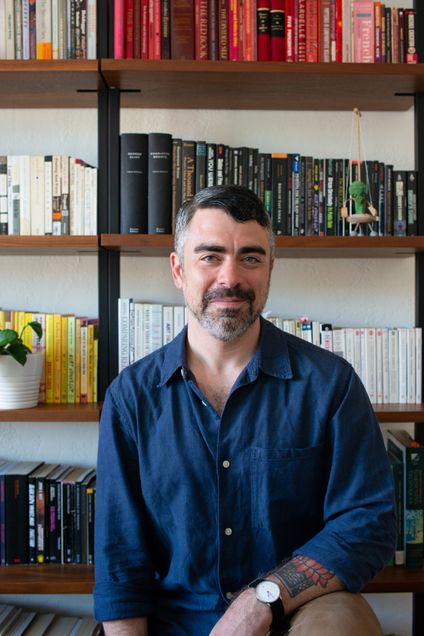 Bio: Ben Austin is an independent philosopher of religion moonlighting as a full-time non-profit administrator. His areas of academic interest include 20th Century "Continental" philosophy (phenomenology, existentialism, post-structuralism), ritual theory, media theory, digital religion, and comparative esotericisms. He holds a B.A. in International Relations and Religion from Boston University (2012), an M.Phil. in Intercultural Theology & Interreligious Studies from Trinity College Dublin (2014), and a PhD in Religion from Boston University (2025). His dissertation, supervised by Professor C. Allen Speight, takes up the post-Heideggerian theme of a pluralistic correlation between cosmological and technological activity to explicate novel problems posed by digitally "native" religious and magical practices and placing these in generative conversation with Jewish and Africana philosophical and esoteric traditions. Dr. Austin has taught courses in philosophy, religious studies, literature, and writing at Boston University as well as Bethany College in Lindsborg, KS. He is presently making the most of his "conscious uncoupling" from academia (and incipient midlife crisis) by finishing 100 books and two half marathons during 2026.
What if the Truth is Bad?

Olaluwatoni Alimi is a Klarman Postdoctoral Fellow in Classics and Philosophy at Cornell University. Alimi’s research spans ancient Roman philosophy, intellectual history, contemporary ethics and politics, and philosophy of religions. His first book, Slaves of God (Princeton University Press, 2024), explicates Augustine’s reasons for justifying slavery and argues that slavery is a central theme in his broader ethics and politics. Starting in Fall 2024, Alimi will be an Assistant Professor in Cornell’s Sage School of Philosophy.
Emotions and Moral Formation: Augustine’s Wounded Heart
 Sarah Stewart-Kroeker is the Associate Professor of Early Christian Theology at Princeton Theological Seminary. Stewart-Kroeker’s work has been largely focused on Augustine and Augustinianism, virtue ethics, and aesthetics. Her work has been published in the Journal of Religion, Augustinian Studies, Journal of Religious Ethics, and others. Her previous experience includes serving as the Jacques de Senarclens Associate Professor of Theological Ethics at the University of Geneva, where she taught classes on emotions and affectivity, forced migrations, ecumenical methodologies, and feminist ethics and theology. Her most recent book is Pilgrimage as Moral and Aesthetic Formation in Augustine’s Thought.
Word by Word: Writing, Humanity, and AI
Talbot Brewer is Professor of Philosophy at the University of Virginia. He specializes in ethics and political philosophy, with particular attention to moral psychology and Aristotelian ethics. He is the author of numerous essays, including “Virtues We Can Share: A Reading of Aristotle’s Ethics” (Ethics 115, 2005), “Savoring Time: Desire, Pleasure and Wholehearted Activity” (Ethical Theory and Moral 6, 2003), “Two Kinds of Commitments (And Two Kinds of Social Groups)” (Philosophy and Phenomenological Research 66, 2003), and “Maxims and Virtues” (The Philosophical Review 3, 2002). He has been a visiting professor in the Harvard University Philosophy Department and has been invited to present his work to audiences at a number of universities and professional conferences in North America, South America, Europe, China and the Middle East. He has authored two books, the most recent of which is The Retrieval of Ethics (Oxford University Press, 2009).
Lifegiving Hope: Virtue and Things that Matter
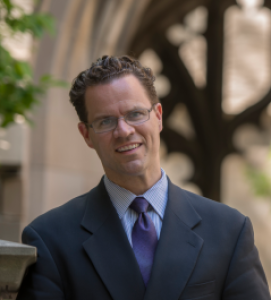
Kevin Hector (PhD, Princeton) is an expert in theology and the author of Theology Without Metaphysics and The Theological Promise of Modernism: Faith and the Conditions of Mineness. Additionally, Hector’s research is part of a collaborative grant, “ “Collaborative Inquiries in Christian Theological Anthropology,” funded by the Templeton Foundation. The Naomi Shenstone Donnelley Professor of Theology and of the Philosophy of Religions at the University of Chicago Divinity School, he writes about interpretative questions in theology and philosophy, cultural issues, and how to best understand faith commitments.