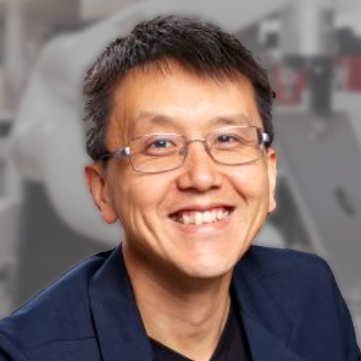
Wilson Wong, PhD
Professor, BME, College of Engineering
Wilson Wong is a professor of biomedical engineering. The overarching goal of his lab for the past decade has been to develop ways to control mammalian cell functions through engineering, biological network design, molecular biology, and chemical biology for medical applications, such as CAR T cell therapy. The lab’s work can be broadly characterized into four different levels of regulation: receptor signaling, post-transcription, transcription, and DNA. Receptor engineering allows the lab to control how cells communicate with each other, either through cell surface or soluble ligands. Transcription and post-transcription regulation enables it to program the transcriptome by modulating coding and non-coding RNAs. DNA level control allows it to perform ultra-complex cellular computations that approach the complexity and sophistication found in natural systems. The lab developed orthogonal systems at each level, allowing it to regulate multiple genes and signaling independently. The systems can be either regulated by FDA-approved drugs or light, and they are extensively optimized for robustness. To determine their clinical potential, they evaluated their performance in mice and/or in primary human immune cells. Together, the collection affords unprecedented control over mammalian cell function.
- People
- Faculty Affiliate