| 10:00 am |
ProbPipe Technical Workshop with Jonathan Huggins |
+ |
|
Talk Details
This session will be a hands-on deep dive into ProbPipe, the Focused Research Program’s open-source platform for scalable, trustworthy probabilistic forecasting.
Key Topics:
Unified interfaces for combining statistical, ML, and mechanistic models.
Automated uncertainty tracking and distribution conversion.
Speaker Bio

Jonathan Huggins
Jonathan Huggins is an Assistant Professor in the Department of Mathematics & Statistics and founding member of Faculty of Computing & Data Sciences at Boston University. He is also a Data Science Faculty Fellow and an affiliated faculty member of the Department of Computer Science and the BU Program in Bioinformatics. Prior to joining BU, he was a Postdoctoral Research Fellow in the Department of Biostatistics at Harvard. He completed his Ph.D. in Computer Science at the Massachusetts Institute of Technology in 2018. Previously, he received a B.A. in Mathematics from Columbia University and an S.M. in Computer Science from the Massachusetts Institute of Technology. His research centers on the development of fast, trustworthy machine learning and AI methods that balance the need for computational efficiency and the desire for statistical optimality with the inherent imperfections that come from real-world problems, large datasets, and complex models. His current applied work is focused on methods to enable more effective scientific discovery from high-throughput and multi-modal genomic data.
|
| 12:00 – 1:00 pm | Networking Lunch + Poster Session |
| 1:00 pm |
Keynote: “Better Predictions for Better Policy for Biodiversity Protection” with Mark Urban |
+ |
|
Talk Details
Forecasting ecological dynamics and patterns is becoming increasingly valued and needed for policymaking, but substantial challenges remain. To advance better predictions, I argue that the field needs to make progress in validating, testing, and comparing models, improving models by incorporating mechanisms (or not), and collecting the data needed to parameterize complex models. Currently, most global biodiversity policies are retrospective, looking backward rather than forward. Early demonstrations of successful predictions that lead to better conservation outcomes will be needed to change opinions and incorporate predictions into biodiversity policies. In addition, I argue for an international body tasked with coordinating global biodiversity research objectives and funding. Following in the footsteps of the climate community, I am optimistic that we can make rapid progress in the coming years to address the biodiversity crisis.
Speaker Bio
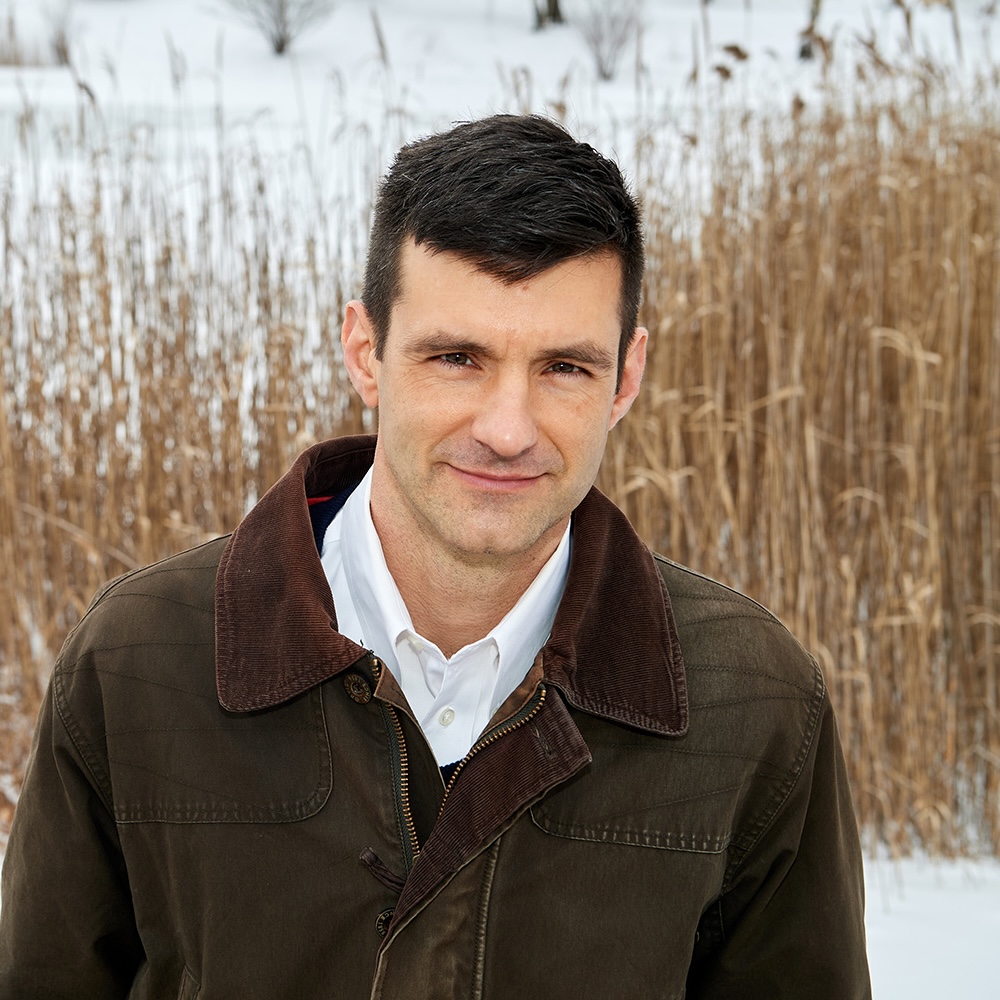
Mark Urban
Mark C. Urban is an award-winning professor of ecology and evolutionary biology at the University of Connecticut, founder and director of the Center of Biological Risk, co-leader of the Evome Institute, co-leader of the Eco Code working group of GEO BON, and a global expert on climate change impacts on nature and evolutionary ecology. An avid field biologist, Mark takes every opportunity to get out in the field to learn about the diversity of life and threats to it. He routinely spends time in ponds, lakes, and streams in regions ranging from New England to the North Slope of Alaska. He founded and currently directs the Center of Biological Risk, the first center devoted to forecasting complex risks to society mediated by ecosystems. He has authored over 100 scientific articles, appearing in top journals such as Science, Proceedings of the National Academy of Sciences, and Nature Climate Change and has been cited more than 20,000 times. By integrating ecology, evolution, and genomics, his work has uncovered new principles that routinely challenge existing ideas, including the spatial scale of adaptation, the importance of adaptation in ecology, and highlighting the joint ecological and evolutionary responses to global change. Most recently, his work has focused on designing global efforts to estimate and mitigate extinction risks from climate change to biodiversity.
His work on climate change impacts on species extinctions was highlighted as one of the top scientific discoveries of 2015 by Discover Magazine and in The Royal Society’s update to the 5th IPCC report. His research has been covered by news outlets around the world including The New York Times, NPR, CBS, CNN, BBC, Associated Press, Washington Post, The Guardian, and National Geographic. He has consulted on stories about climate change appearing in National Geographic, Sir David Attenborough’s documentary Climate Change – The Facts, and the television series, Years of Living Dangerously. His opinion pieces have appeared in The New York Times, The Guardian, and Science. Since 2015, he has led an annual contingent of UConn students, faculty, and staff to the United Nation’s summit on climate change. He leads a graduate training program on environmental risks and teaches courses in ecology, evolutionary ecology, and global change biology. Mark has given more than 100 presentations on his work, including TEDx and the Association for the Advancement of Arts and Sciences. He was awarded both the Young Investigator and Presidential awards from the American Society of Naturalists, was the Arden chair of ecology and evolutionary biology and a Leverhulme visiting professor, has twice been named an ISI Highly Cited Researcher, and is a fellow of the Connecticut Academy of Science and Engineering.
|
| 1:40 pm |
Coastal and Marine Ecosystems with Sasha Kramer |
+ |
|
Talk Details
Talk abstract coming soon.
Speaker Bio
Speaker photo and bio coming soon.
|
| 1:55 pm |
“Beyond Predictions: Building Actionable Forecasts” with Tracy Fanara |
+ |
|
Talk Details
Environmental forecasting is advancing rapidly, fueled by expanding observations, improved Earth system models, artificial intelligence, and new statistical and computational approaches. But producing a more accurate prediction is only part of the challenge. A forecast becomes valuable when it provides the right information, at the right spatial and temporal scales, in a form that supports real-world decisions.
Drawing from experiences in coastal and ecological forecasting, harmful algal bloom prediction and communication, NOAA modeling efforts, and the American Meteorological Society’s work on the future of ecological forecasting, this presentation explores how we can move from predicting environmental conditions to building forecasting systems that people can actually use. Examples from coastal hazards, water quality, harmful algal blooms, and weather and water prediction will highlight persistent challenges—including fragmented observations and models, gaps between research and operations, uncertainty communication, and the need to involve users earlier in forecast development.
Looking forward, environmental forecasting offers an opportunity to connect advances in statistics, data science, artificial intelligence, observations, and process-based modeling with the scientists, communities, agencies, and industries making decisions every day. The future of forecasting turns predictions into actionable intelligence..
Speaker Bio

Tracy Fanara
Dr. Tracy Fanara is an environmental engineer, research scientist, and award-winning science communicator, bridging weather, water, and ecology through research and storytelling. She holds a B.S., M.E., and Ph.D. in Environmental Engineering from the University of Florida.
After a decade of engineering design, Fanara also held scientific and leadership roles at NOAA and Mote Marine Laboratory, where her work spanned coastal modeling, hydrology, harmful algal blooms, ecological forecasting and monitoring, community science, and environmental health. She now serves as Director of Community Engagement and Science Communication for NOAA’s Earth Prediction Innovation Center (EPIC), CEO of Inspector Planet; a Technical Lead at Weston and Sampson and COO of Project ENKI, an initiative focused on transforming flood data and forecasts into actionable information for communities.
Tracy serves as Chair of the American Meteorological Society Committee on Ecological Forecasting in effort to bridge weather, climate and ecological forecasting communities. Through Inspector Planet, she develops policy, works with congressional representatives and science organizations, develops environmental education and communication programs, STEM camps, curricula, and hands-on experiences that connect students and communities with real-world Earth system science.
As a television presenter and contributor, Fanara uses storytelling to connect weather events and environmental hazards to the larger Earth systems driving them. She has been recognized by numerous organizations, universities, and media outlets for her work in science communication and STEM engagement, including The Weather Channel, Xylem YSI, The Observer, IF/THEN and #IfThenSheCan, Project Inspire, and the National Science Leaders of America.
|
| 2:15 pm |
Coastal and Marine Ecosystems with Cameron Thompson |
+ |
|
Talk Details
Talk abstract coming soon.
Speaker Bio
Speaker photo and bio coming soon.
|
| 2:35 pm – 2:50 pm | Break |
| 2:50 pm |
Keynote: “Collaborative probabilistic outbreak forecasting to support public health decision-making” with Nick Reich |
+ |
|
Talk Details
Talk abstract coming soon.
Speaker Bio

Nick Reich
Nick Reich is a Professor of Biostatistics at the University of Massachusetts – Amherst School of Public Health and Health Sciences. His research group, the Reich Lab (https://reichlab.io), focuses on developing statistical models and open-source software to support public health response during infectious disease outbreaks. Dr. Reich is a co-Principal Investigator of a CDC-funded Insight Net Center of Implementation, and also directs an Influenza National Forecasting Center of Excellence. He co-founded and led the US COVID-19 Forecast Hub, an international modeling consortium that collected short-term forecasts of covid trends and generated ensemble forecasts that became the official public forecast disseminated by CDC during the pandemic.
|
| 3:30 pm |
Infectious Disease Thrust: “Environmental Determinants of Infectious Diseases and Forecasting” with Kayoko Shioda |
+ |
|
Talk Details
Environmental conditions can shape infectious disease transmission in complex and geographically heterogeneous ways, creating opportunities for disease forecasting when these relationships are well characterized. Our Infectious Disease Thrust is examining these relationships across multiple systems, including climate-driven dengue forecasting in Indonesia and globally, the effects of climate on animal ownership and management, ecological drivers of Eastern Equine Encephalitis virus, and projections of enteric disease burden based on environmental factors. These projects aim to improve our understanding of how environmental change influences infectious disease risk and to translate that knowledge into more actionable forecasting and preparedness tools.
Speaker Bio

Kayoko Shioda
Kayoko Shioda, PhD, DVM, MPH, is an Assistant Professor of Global Health at the Boston University School of Public Health (BUSPH) as well as a Research Core Director at the Center on Emerging Infectious Diseases (CEID). She is an infectious disease epidemiologist whose research integrates epidemiologic data, causal inference, and mechanistic transmission modeling to understand infectious disease dynamics and evaluate intervention strategies. Her work spans vaccine evaluation, infectious disease forecasting, and the effects of environmental and ecological factors on disease transmission across diverse settings.
|
| 3:45 pm |
“From El Niño to Dengue: Climate Forecasts as Early Warning for Vector-Borne Disease” with Kris Karnauskas |
+ |
|
Talk Details
Forecasts of disease risk are only as good as our understanding of the environmental drivers behind them. On collaborative climate and health research teams, I am usually the physical climate scientist: my role is to help identify which parts of the climate system matter for a given health outcome, the broader physical mechanisms linking them to predictable climate phenomena (such as El Niño), and how far ahead that predictability can be turned into useful warning. This talk begins with that approach and surveys projects applying it to malaria in southeastern Africa, West Nile virus in the United States, and enteric diseases worldwide, among others. I then focus on a new study in collaboration with BU of how dengue in Indonesia responds to El Niño. Using 18 years of surveillance data, we find that the strength and timing of the response vary widely across the archipelago, with lags from near zero to five months. This diversity reflects both the regional climate dynamics linking El Niño to temperature and rainfall and the epidemiological factors linking those anomalies to cases. Because El Niño is predictable months in advance, this heterogeneity is an opportunity: each region’s characteristic lag converts climate forecast skill into spatially resolved early warning.
Speaker Bio

Kris Karnauskas
Kris Karnauskas is a Fellow of the Cooperative Institute for Research in Environmental Sciences (CIRES) and an Associate Professor in the Department of Atmospheric and Oceanic Sciences (ATOC) at the University of Colorado Boulder, with secondary faculty appointments in the CU School of Medicine and the Colorado School of Public Health. Prior to joining the CU Boulder faculty in 2015, Kris spent six years on the faculty of the Woods Hole Oceanographic Institution (WHOI) and the MIT-WHOI Joint Program in Oceanography (also teaching at Boston College) followed by sabbatical at the Institut Pierre Simon Laplace (IPSL) in Paris, France through a Research Fellowship from the Alfred P. Sloan Foundation. During the spring of 2022, Kris was on sabbatical at Harvard University’s Center for the Environment. Kris completed his B.S. at the University of Wisconsin-Madison and Ph.D. at the University of Maryland-College Park, both in Atmospheric and Oceanic Sciences, followed by a postdoctoral fellowship in Ocean and Climate Physics at the Lamont-Doherty Earth Observatory of Columbia University. Kris currently serves as Editor-in-Chief of Geophysical Research Letters and co-chairs the Joint US CLIVAR/NIH Working Group on Climate & Health, and recently served on the Scientific Steering Committee (SSC) of the U.S. Climate Variability and Predictability Program (US CLIVAR). Kris was the recipient of the 2017 AGU Ocean Sciences Early Career Award and the 2024 AGU Atmospheric Sciences Turco Lectureship.
|
| 4:05 pm | Break |
| 4:20 pm |
Methods/CI with Jonathan Huggins |
+ |
|
Talk Details
Talk abstract coming soon.
Speaker Bio
Speaker photo and bio coming soon.
|
| 4:35 pm |
Methods/CI with Dan Sheldon |
+ |
|
Talk Details
Talk abstract coming soon.
Speaker Bio
Speaker photo and bio coming soon.
|
| 4:55 pm |
Urban with Jennifer Bhatnagar |
+ |
|
Talk Details
Talk abstract coming soon.
Speaker Bio
Speaker photo and bio coming soon.
|
| 5:10 pm |
Urban with TBD |
+ |
|
Talk Details
Talk abstract coming soon.
Speaker Bio
Speaker photo and bio coming soon.
|
5:30 pm – 7:00 pm | Symposium Group Dinner
Finalizing collaborations and charting the next phase of BU Environmental Forecasting leadership.
|


