News
Massachusetts US Attorney Rachael Rollins Tells LAW Grads, This Is “the Fight of Our Lives”
The law is a noble profession, don’t be afraid to fail, and get in the game, she said.
Baccalaureate Speaker Marylou Sudders (CAS’76, SSW’78, Hon.’22) Reflects on Pandemic’s Lessons
Massachusetts Secretary of Health & Human Services commended BU’s role in pandemic response.
Commencement: a Moment of Pride and Achievement for These First-Gen Students
Graduating E-board members of First-Generation Low Income Partnership (FLIP) reflect on their journeys and the legacy they leave.
Equity in Science, NIJ Director, Population Health
BU IN DC
Naomi Caselli of Wheelock College of Education & Human Development gave the graduate commencement address at Gallaudet University on May 13th.
Associate Provost for Computing & Data Sciences Azer Bestavros attended a virtual meeting of the National Science Foundation’s Computer & Information Science & Engineering Advisory Committee, of which he is a member, on May 16th and 17th.
Julie Wickstrom of Financial Assistance discussed federal student aid with Congressional staff during Higher Education Loan Coalition meetings on Capitol Hill on May 16th and 17th.
Kevin Outterson of the School of Law and CARB-X spoke at a Capitol Hill panel discussion about antibiotic resistant infections hosted by the Partnership to Fight Infectious Diseases on May 18th.
OSTP DIRECTOR URGES INCLUSIVE RESEARCH METHODS
Acting Director of the White House Office of Science and Technology Policy (OSTP) Alondra Nelson spoke about co-producing knowledge with communities as a means to promote federal research equity during an address to the National Academies of Sciences, Engineering, and Medicine on May 12th. Dr. Nelson explained that co-production puts diverse communities at the center of a research project, with scholars meaningfully considering a community's knowledge and expertise and inviting members of the community to be intimately involved in a project and its outcomes. Nelson indicated that co-production is critical to carrying out President Joe Biden's goals of addressing societal grand challenges, such as climate change and addressing racial inequities. She also fielded questions on the need to make scientific data more understandable and usable as well as the importance of addressing certain communities’ mistrust in the government.
BUZZ BITS...
- The National Aeronautics and Space Administration (NASA) is requesting input on NASA's draft Moon to Mars objectives. Stakeholders can provide feedback on NASA's scientific plans related to exploration, planetary and lunar science, heliophysics, biology and physics, and astrophysics. Comments are due by May 31st.
- Earlier this month, President Joe Biden appointed Dr. Nancy La Vigne as director of the National Institute of Justice, the research arm of the U.S. Department of Justice. Dr. La Vigne is a criminal justice policy expert who has worked at a number of think tanks.
- Senior leaders from the National Institutes of Health (NIH) testified before the Senate Appropriations Committee on Tuesday to discuss the President's fiscal year 2023 budget request for NIH. Lawmakers of both parties expressed concern with the Administration's proposal to invest heavily in the new Advanced Research Projects Agency-Health while maintaining a flat budget for NIH.
EVENTS NEWS YOU CAN USE
The Hariri Institute for Computing and Computation Science & Engineering is hosting a day-long workshop on June 6th for researchers to explore how systems science and simulation modeling can be used to advance public health and reduce health inequities. Speakers include Dr. Kellina Craig-Hendersen, Deputy Assistant Director for the Social, Behavioral and Economic Sciences Directorate at the National Science Foundation, who will discuss the importance of the social sciences in adopting these methods. The BU community is invited to join researchers from around the country to investigate the barriers preventing wide-spread adopting of simulation methods in population health and how they can be addressed.
Can We Prevent Antibiotic Resistance?
Antibiotics are losing effectiveness—and millions are dying as a result. CARB-X, a BU-based partnership that aims to solve antimicrobial resistance, has been given up to $370 million in new funding from the US government and charitable foundation Wellcome.
NIH & NSF Budgets, Students with Disabilities, NSF Advisory Committees
CONGRESS EXAMINES NIH, NSF BUDGETS
The House Appropriations Committee invited officials from the National Institutes of Health (NIH) and the National Science Foundation (NSF) to testify about the Biden Administration's proposed budget for each agency on Wednesday. Lawmakers expressed concerns that the President had requested a $4 billion increase for the new Advanced Research Projects Agency - Health (ARPA-H), while only requesting a minimal increase for the NIH. Members of the committee asked NSF Director Sethuraman Panchanathan about the agency's research security protocols, its programs to expand participation in federal research, and how the NSF partners with industry. The annual hearings are a key part of how Congress determines agency budgets and priorities for the following fiscal year, which begins on October 1st.
BUZZ BITS...
- The U.S. Senate confirmed Dr. Asmeret Berhe as director of the U.S. Department of Energy Office of Science. Dr. Berhe is a soil biogeochemist and a professor at the University of California, Merced.
- On Tuesday, the National Institutes of Health (NIH) announced an update to its sexual harassment policy. NIH grantees will now be required to report when grant personnel have been disciplined as the result of a sexual harassment investigation. The new policy, which goes into effect on July 8th, was mandated by Congress and puts the agency in line with similar policies from the National Science Foundation and NASA.
- The U.S. Department of Education announced last week it will solicit public comments and hold listening sessions on strengthening and protecting federal rights for students with disabilities. The Department plans to update the regulations that accompany Section 504 of the Rehabilitation Act of 1973, the landmark disability legislation that has not been significantly updated since 1977.
NSF SEEKS ADVISORY COMMITTEE NOMINATIONS
The National Science Foundation (NSF) recently issued a request for people to serve on its scientific advisory committees, which provide advice on the research agenda and policies of each of its directorates. Serving on federal scientific advisory committees gives investigators the opportunity to help shape future research, innovation, and education agendas for the nation. College of Engineering Dean Kenneth Lutchen and Associate Provost of the Faculty of Computing & Data Sciences Azer Bestavros are among the BU faculty who have served on NSF advisory committees. BU Federal Relations can assist faculty who want to put together a nomination package.
Bob Woodward, Autism in Girls, Astronaut Bob Hines
ON THE CHARLES RIVER
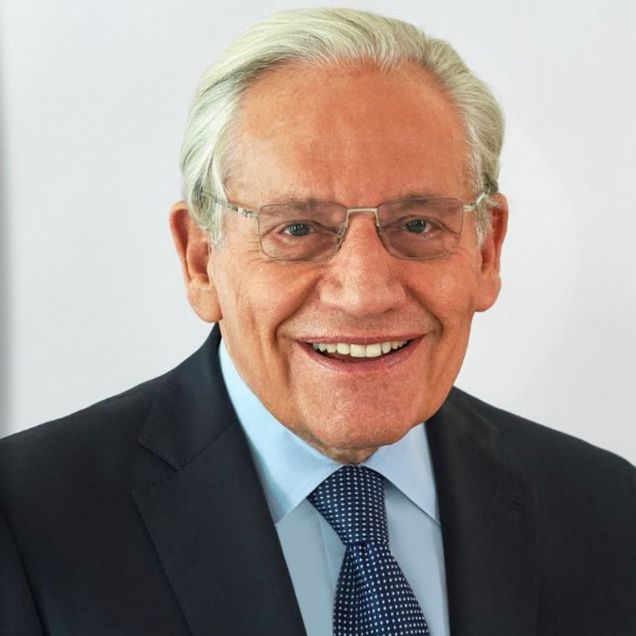
Pulitzer Prize-Winning Journalist and Author Bob Woodward Will Be BU’s Commencement Speaker
Investigative journalist Bob Woodward, Massachusetts Secretary of Health and Human Services Marylou Sudders (CAS’76, SSW’78), acclaimed documentary filmmaker Frederick Wiseman, and international human rights and racial discrimination expert Gay J. McDougall will be among the honorary degree recipients on May 22nd.
See who's coming to Commencement
RESEARCH HIGHLIGHT
Why Do So Many Autistic Girls Go Undiagnosed?
BU researchers discuss genetics, societal factors, and "masking" as factors that could contribute to autism being diagnosed three or four times more often in boys than in girls. Their work is supported by the Institute of Education Sciences at the U.S. Department of Education.
NOTABLE ALUMNI

BU Alum Robert Hines Is on a Mission—to the International Space Station
NASA pilot Bob Hines (ENG '97) is one of four crew members who launched from the Kennedy Space Center on April 27th for a stay on the International Space Station.
THOUGHT LEADERS
In Case You Missed It...
Linda McClain of the BU School of Law explains what it would mean for lawmakers to codify Roe v. Wade into law in The Conversation... Kevin Outterson of the BU School of Law and CARB-X will speak at a Capitol Hill event on the urgently mounting challenges of antimicrobial resistance on May 18th... Kathryn Rodgers of the BU School of Public Health warns that PFAS chemicals are showing up in stain and water-resistant children's products in The Conversation... Robert Tsai asks what rights could unravel next in POLITICO... Andrew Stokes of the BU School of Medicine shares his research that the true death toll from the COVID-19 pandemic is substantially higher than official counts with The Boston Globe.
Squishing Superbugs
Join BU LAW Professor Kevin Outterson for a Capitol Hill conversation about the challenges of antibiotic resistance on May 18th, 2022.
Close Up: Mayor Wu Visits BU Data Sciences Building
BU’s under-construction Center for Computing & Data Sciences had a special visitor last Wednesday: Boston Mayor Michelle Wu, who was given an individual tour from Robert A. Brown, BU president.
NASA & NSF, Large Federal Grants, Education Research
BU IN DC
College of Communication Dean Mariette DiChristina spoke on a panel during a National Academies of Sciences, Engineering, and Medicine workshop on improving public understanding of engineering on April 21st.
Sanaz Mobasseri of the Questrom School of Business spoke at a meeting of the National Academies of Sciences, Engineering, and Medicine's Committee on Advancing Antiracism, Diversity, Equity, and Inclusion in STEM Organizations on April 22nd.
NASA AND NSF ASK CONGRESS TO BOLSTER BUDGETS
National Aeronautics and Space Administration (NASA) Administrator Bill Nelson and National Science Foundation (NSF) Director Sethuraman Panchanathan appeared before a Senate spending panel on Tuesday to discuss the Biden Administration's proposed budgets for NASA and NSF in fiscal year 2023. Nelson highlighted the proposed increase in NASA's Space Technology research and development portfolio, NASA's role in addressing climate change, and the agency's plans to catalyze a diverse community of students and professionals in space science. Dr. Panchanathan highlighted NSF's new Technology, Innovation and Partnerships directorate, which will initially focus on advanced manufacturing, advanced wireless networks, artificial intelligence, biotechnology, microelectronics and semiconductors, and quantum information science. He also discussed NSF's plans to broaden participation in NSF-supported science. Senators asked about inappropriate foreign influence in American science and how the agencies were engaging scientists in states with less-developed research infrastructure.
FIND FUNDING FOR LARGE-SCALE RESEARCH
Are you looking for funding to establish a research center or support large-scale research collaborations? Federal Relations recently posted an updated compendium from Lewis-Burke Associates that analyzes the federal resources available to support large research centers. The document provides detailed information on current funding competitions at the National Science Foundation, the National Institutes of Health, the Department of Defense, the Department of Energy, and the National Aeronautics and Space Administration, as well as future opportunities that are currently under development.
GRANTS NEWS YOU CAN USE
The Office of Elementary and Secondary Education within the U.S. Department of Education is inviting applications for the Education Innovation and Research (EIR) program. The EIR program supports efforts to create, implement, and evaluate innovative, evidence-based solutions to academic challenges facing high-need students. The EIR program has three tracks: Early-Phase, Mid-Phase, and Expansion. Each track requires a different level of prior evidence of effectiveness and level of scale. During the implementation of an EIR project, grantees are encouraged to develop evidence of effectiveness and new strategies to improve student achievement and attainment. Applicants and grantees are also asked to develop organizational plans on how the project would continue through implementation after federal funding ends.
See the notice inviting applications