The Microbe Wiki Project
Teaching Science Through Storytelling
Teaching Science Through Storytelling
Every semester, Associate Professor of Biology Jennifer Bhatnagar challenges her BI311 Microbiology students to create a microbe wiki page—an online encyclopedia featuring hundreds of student-written entries on different microorganisms.
The assignment requires students to translate complex microbiology concepts into clear, accessible, and engaging language suitable for a middle school audience.

“For science, I think it’s really important that we connect more with the public,” Bhatnagar says. “We lift that barrier for people so they can understand scientifically what’s happening without needing that specialized training in molecular biology.”
But as the number of wiki entries has grown, so has the challenge of editing them all. So Bhatnagar teamed up with David Shawn, master lecturer and associate director for Writing in the Disciplines (WID), part of the CAS Writing Program. Together, they recruited Simpson Undergraduate Writing Fellows in biology to help students sharpen their communication skills.
The Writing in the Disciplines program is a resource for students and faculty, offering comprehensive writing plans for courses and peer tutoring through Simpson Writing Fellowships. Fellows work within their own majors, guiding peers to become stronger communicators and improving discipline-specific writing. They serve as a bridge between instructor and student—providing feedback to professors and hands-on support to classmates.

“You might think of the fellowships as kind of on the ground resource for students to provide direct support,” Shawn says. “By having these roles, by being that kind of media mediator, fellows are able to highlight things for faculty and for the department that they wouldn’t otherwise see.”
WID is funded by a grant from alumna Jennifer Simpson (CAS’00), a member of the CAS Dean’s Advisory Board, through her foundation, Psalm 103. Since 2018, the program has expanded from fellowships in history of art and architecture, sociology, and neuroscience to supporting 20 students across 11 departments.
This increase represents a growing demand for strong science communication and professional writing skills, Shawn says. A recent CAS faculty survey revealed that 75 percent of respondents wanted department-based writing tutoring.
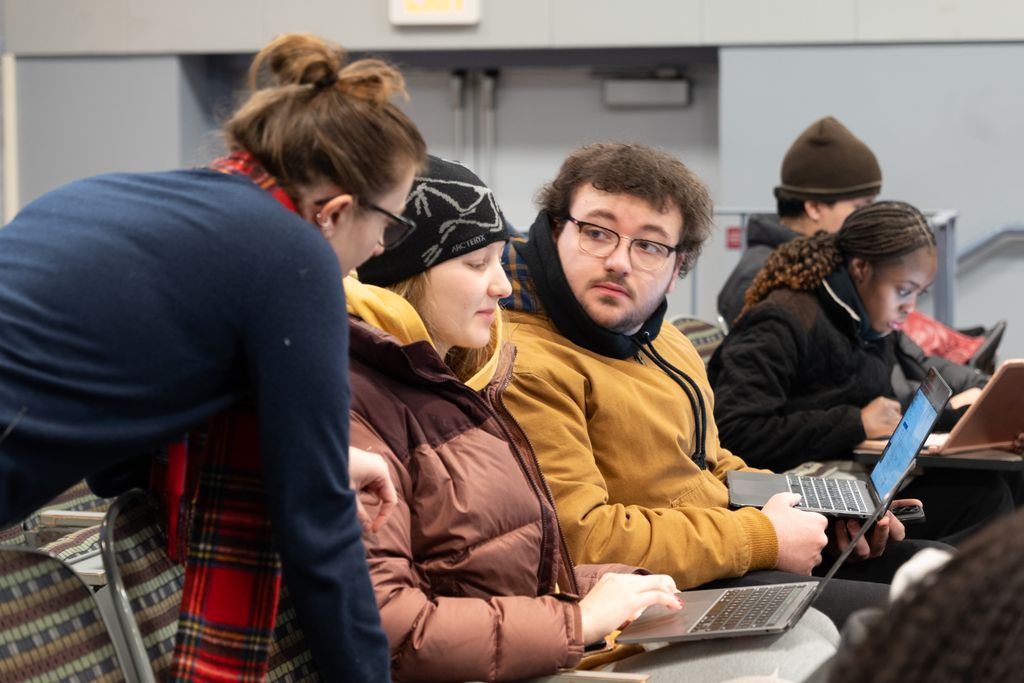
In its pilot semester, Bhatnagar’s course employs two fellows: Anna Royse (CAS’27) and Megan Suttell (CAS’26). They focus exclusively on the microbe wiki project. Suttell, who previously took BI311 and works in Bhatnagar’s lab, brings a unique student perspective to the role.

“When I think about why I’m interested in science, I’m drawn to the idea of conducting research and sharing knowledge with a broader community,” Suttell says. “It’s essential to understand how to communicate not only within your field but with people who might be less familiar with the subject.”
At the end of the semester, the wiki projects go live online, offering the public a window into the microbial world. For Bhatnagar, the assignment is more than a writing exercise—it’s a test of true understanding.
“If you can explain something to somebody, that means you really understand it,” Bhatnagar says. “And a lot of what we’re doing in this wiki project is teaching.”
