Hit the Beach with these CAS Summer Reads
Faculty, staff, and students share their picks
Faculty, staff, and students share their picks
As heat wave after heat wave hits Boston, CAS faculty and staff are hitting the beach. From fantasy fiction to gothic horror, science nonfiction to poetry, their recent reads span and merge genres. Faculty, staff, and students have all shared their summer favorites—so, whether you’re looking to delve into history, escape from said heat wave, or even consider your place in the world through the more existential picks, hopefully you’ll find something new.

Yuri Corrigan, Associate Professor of Russian & Comparative Literature
Piranesi by Susanna Clarke
Susanna Clarke has an amazing ability to make stories out of images that deepen the more you reflect on them. Her Jonathan Strange and Mr. Norrell is probably more of a winter book, but Piranesi is slim and suspenseful – okay for beaches. One beautiful thing about this novel is its mystery; you can inhabit it and love it without really knowing what it’s about. I think it might be a meditation on where we go when we read, or when we think, or create – on whether the most resonant ideas and stories of our collective imaginations might exist somewhere in an alternate time-space. But it manages to think about these things in the form of a highly readable mystery-fantasy novel, about kidnapping and amnesia, a house full of ocean waves, and a police investigation.
 Juliet Floyd, Borden Parker Bowne Professor of Philosophy and Director of BU Center for the Humanities
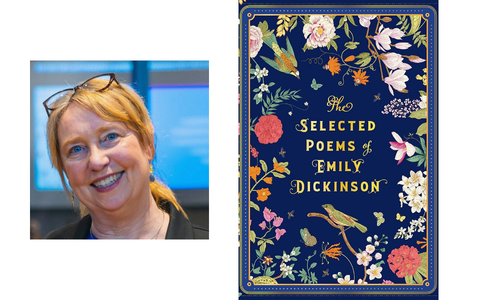
The poetry of Emily Dickinson
My summer reading is about the importance of lingering and enjoying nature. I enjoy at least one Emily Dickinson poem a day: she is one of the world’s great poets, she never lets me down. In every single poem lie so many beautiful layers, turns, observations, paradoxes: it is endless what one can learn from her and endless what she shows poetry can do. My latest favorite is “After great pain, a formal feeling comes…”: perfect for a philosopher of logic like me who loves poetry, and not irrelevant, to my mind, for our lives in a world of AI.
 Sunil Sharma, Professor of Persianate & Comparative Literature
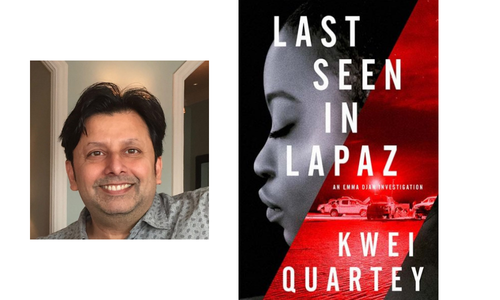
Last Seen in Lapaz by Kwei Quartey
I discovered this author last year and have been trying to read everything he writes. Quartey is celebrated as a crime fiction writer but is much more than that. Set in West and North Africa, this particular story is a gritty account of intertwined lives that are caught in a complex web of sex trafficking, people smuggling, love, and murder. Quartey is a master of the realistic and sympathetic portrayal of characters and striking depiction of places. The detective in the series, Emma Djan, is a far cry from Miss Marple, but just as smart. The fourth and last book in this series is due to be published in late summer, which I am awaiting eagerly.
 Kurt Cavender, Managing Director, BU Center for the Humanities
Distant Star by Roberto Bolaño
I’ve just recently finished Roberto Bolaño’s novel Distant Star. It’s an expanded retelling of one of the fictional biographical entries in his earlier novel Nazi Literature in the Americas, and concerns the career of a poet and military pilot in Pinochet’s Chile, the atrocities he commits in the name of his radical poetic vision, and the reluctant efforts of another Chilean poet to track him down many years later. One of Bolaño’s enduring concerns as a novelist was the basic compatibility between high literary culture and fascism, the ease with which modern society accommodates itself to cruelty and viciousness when they are presented as sufficiently sophisticated and cultured. A poet himself, Bolaño writes with grace and economy, and never loses sight of either the political or the aesthetic stakes of his narrative. Literature and art will not save you, he tells us, which might be a good thing for us humanists to be reminded of occasionally. But, he also suggests, that does not mean they are not worth pursuing anyway.
 Alice Tseng, Associate Dean of the Faculty for the Humanities
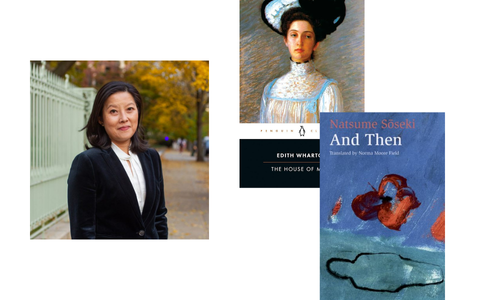
The House of Mirth by Edith Wharton and Sore kara (And Then) by Natsume Sōseki
In the summer I like to reread old favorites, such as Edith Wharton’s The House of Mirth (originally published 1905) and Natsume Sōseki’s Sore kara (And Then) (originally published 1909). Both feature protagonists whose existence is buoyed by the norms and expectations of their elite families, yet they venture to break loose, ultimately to their own detriment. As an architectural historian, I also appreciate the nuances of spatial settings that help set the mood: a great country house, a bachelor’s rooms, a sprawling garden, the serpentine urban streets. Although Wharton and Sōseki write from different perspectives and cultural environments at the start of the twentieth century, these two novels have more in common than one might realize at first glance, namely the keen insight into the strictures of gender and social normativity of the time.
 Chen Yang, Professor of Electrical and Computer Engineering and of Chemistry
The Song of the Cell: An Exploration of Medicine and the New Human by Siddhartha Mukherjee
Another masterpiece from the extraordinary author and Pulitzer winner Dr. Siddhartha Mukherjee. It takes us through an evolution of discoveries since 1600, understanding the fundamental functional unit of humans — cells — and how modern medicine utilizes such understanding to create new therapies with enormous courage and patience. For anyone who is in science, biology, or medicine, you will find deeply connected. For anyone who is not in science, Dr. Mukerjee delivers his stories with great prose in a mystery page-turner manner. It is an excellent beach read — I couldn’t sit still when I first read this on an airplane.
 Brian Walsh, Master Lecturer in CAS Writing Program and Assistant Director of the Core Curriculum
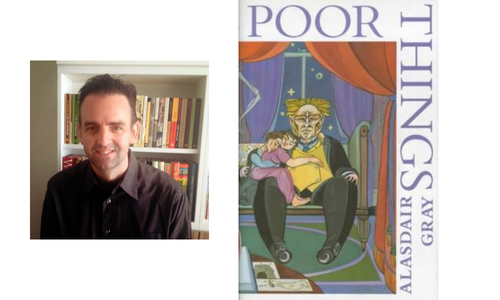
Poor Things by Alisdair Gray
Alasdair Gray’s 1992 novel, the basis for the recent, Oscar-winning film adaption, is a strange, beguiling book that will delight fans of experimental fiction, while not alienating those with more mainstream tastes. Gray aligns his novel with the “found manuscript” tradition of Don Quixote, presenting himself as an editor who has collected the documents that make up this Frankenstein-inspired story of a possibly mad scientist, his naïve apprentice, and the woman he claims to have created. Poor Things abounds with sharp insight into the often brutal realities of colonialism, modern capitalism, and patriarchy without, remarkably, ever being dull, preachy, or depressing. The prose is witty and stylish, and the book is decorated with a range of intriguing illustrations and different typefaces. Gray skillfully creates a nesting doll narrative, told through various voices, and delivers a mysterious but satisfying ending that will shock those who only know the film.
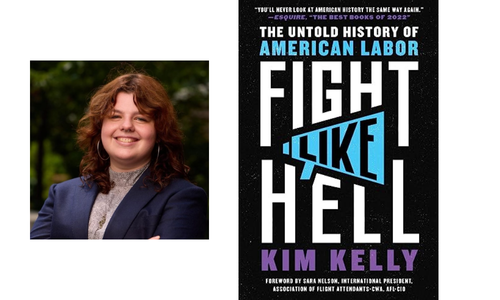 Devin Rauscher (CAS’26), History
Fight Like Hell: The Untold History of American Labor by Kim Kelly
Fight Like Hell paints a wide picture of labor organizing throughout the history of the United States intermixed with Kelly’s own experience as a union member and journalist. At less than 500 pages, the book does not go deep into any of the histories it shares; rather, it presents a digestible summary that relates to contemporary labor organizing, emphasized by conversation with today’s workers. I found the writing style engaging and informative, and because it is so relatively brief, Fight Like Hell is a perfect summer read to bridge the spring and fall semesters.
Have a favorite beach read? Share the name, author, and why you recommend the title here.