What Comes After Fire?
How one Boston University scientist—and an unlikely partnership in California’s wine country—is helping uncover what forests need to survive in a warming world
How one Boston University scientist—and an unlikely partnership in California’s wine country—is helping uncover what forests need to survive in a warming world
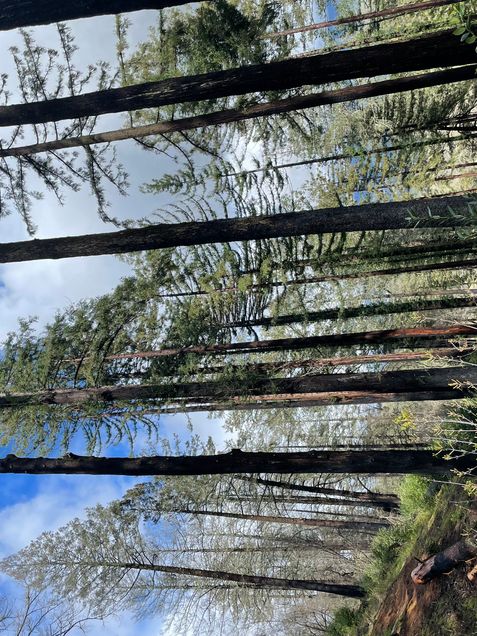
Jennifer Bhatnagar spent the summer of 2023 traversing barren hillsides blackened by wildfire in northern California. She walked through devastated properties, examined the hot soil beneath her feet, collected samples, and asked questions.

“There were black trees everywhere, little resprouting of trees, little new vegetation,” says Bhatnagar, associate professor of biology and director of Boston University’s Biogeoscience Graduate Program. “I remember wondering how a forest could re-establish in such a place.”
Bhatnagar, who studies microorganisms, had traveled west after an invitation from Napa Valley landowners Frank Naeymi-Rad and Theresa Kepic, a health informatics executive and retired physician, respectively. The pair were interested in understanding the ecology of their properties and exploring whether truffles might be cultivated there.
But a conversation about mushrooms grew into something much bigger. Over the past three years, with support from Naeymi-Rad and Kepic’s Ecotechnology and Landscape Restoration Research Fund, Bhatnagar’s team has explored how wildfire, urbanization, and ecological restoration shape forest recovery in northern California—and how forests can become more resilient in a future where severe wildfires are increasingly common.
 Looking Beneath the Surface
Long before she began studying wildfire, Bhatnagar was fascinated by what lies beneath the forest floor. Her research centers on soil microbiomes: complex communities of bacteria and fungi that recycle nutrients, support plant health, and help determine how forests respond to environmental change.
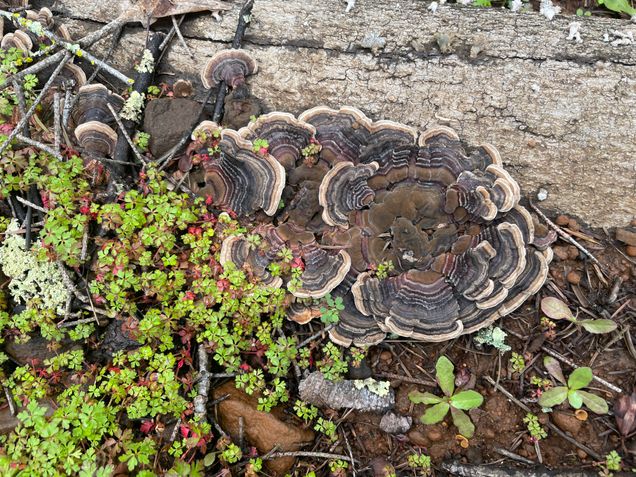
“They’re the hidden engineers of the forest,” she says.
Bhatnagar studied forest microbiomes in northern California as a graduate student. But wildfire itself had never been the focus of her research until she met Naeymi-Rad and Kepic.
That connection came through Bhatnagar’s husband, who met Naeymi-Rad through the alumni community of the Illinois Institute of Technology (IIT). In a conversation in 2021, Naeymi-Rad mentioned that he and his wife, both Midwesterners, had purchased 18.5 acres in Napa and were exploring whether truffles might be cultivated there. They were also eager to understand how to steward the land responsibly. That’s where Bhatnagar came in.

“We would ask a gardener, ‘What can you grow here? Why is this happening?’ They would say, ‘You can grow anything in California.’ But we were really trying to understand why,” Kepic says. “When Jenny came with her husband, we began to talk about what had happened. We had thought about edibles to grow in the forest, and then she’s looking at things in a different view—what’s below the ground in great detail.”
As Bhatnagar walked the properties, her questions extended far beyond fungi. Why were some areas recovering more quickly than others? Why were bay and maple trees regrowing, but oaks and redwoods were not? Why was one burnt area suddenly covered with non-native grass? And, perhaps most importantly, what kinds of restoration would help these landscapes thrive decades into the future?
“Visiting northern California and just walking through the burns, we learn so much about the ecology of the place,” Bhatnagar says. “That is where the scientific inspiration comes from.”

Before digging in, Bhatnagar spent months meeting with people whose lives and livelihoods depended on the land. She consulted fire officials, restoration practitioners, land managers, landscape architects, fellow researchers, students, and residents.

“They helped us design the plant community there, considering interest, use, climate change, maintenance, and aesthetics,” she says. “They taught me things I could never learn from a written report. It was a community effort.”
Residents had clear preferences for what they wanted to regrow on the land, Bhatnagar says, and community priorities did not always align with conventional restoration practices. They wanted native oaks and redwoods—not pines or firs—and favored species that were both fire resistant and culturally meaningful.
“That changed how we thought about the science,” she says. “We had to rethink how to test some scientific theories of forest recovery, using species that the community wanted.”
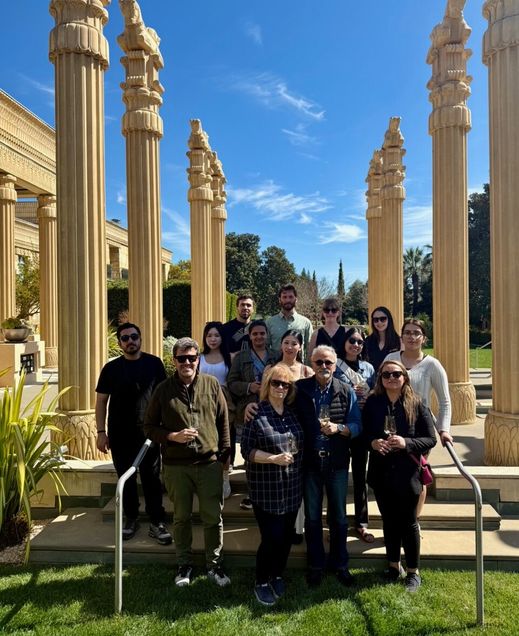
As the project evolved, Kepic and Naeymi-Rad introduced Bhatnagar to landscape architect María Villalobos Hernandez, associate professor and director of the IIT Master of Landscape Architecture and Urbanism program. Hernandez encouraged the team to think beyond forest recovery alone, asking not just how forests respond to wildfire, but also how post-fire landscapes can foster both ecological and human resilience. Together, they began translating ecological research into restoration strategies for more resilient landscapes.
That approach also reflected Kepic’s long-held belief that environmental and human health are deeply connected.
“The food-as-medicine concept has always been important to Theresa,” Naeymi-Rad says. “We started thinking about the Earth as a patient.”

Today, Bhatnagar’s team is pursuing two interconnected lines of research.

One asks how urban development influences recovery after wildfire. As roads, neighborhoods, and infrastructure spread into natural landscapes, forests become fragmented. Those areas are often hotter, drier, and more polluted than intact forests, changing conditions both above and below ground.
“We’re interested to know how lands recover from wildfire when there are houses and streets and population,” Bhatnagar says. “Our hypothesis is that being urban makes it harder to recover. You don’t have as much water in your soil. You have higher temperatures in your soil. You have higher pollution.”
Bhatnagar’s second line of research explores how people can actively restore forests after wildfire.

Inspired in part by conversations with Kepic about the Miyawaki method of forestry developed in Japan, Bhatnagar’s team established a series of densely planted “mini forests”—4-square-meter plots—using native California species. They have since planted thousands thousands of acorns alongside other native plants selected for their ecological resilience, cultural significance, and ability to thrive in a hotter, drier climate.
Bhatnagar’s team regularly returns to monitor vegetation, collect environmental DNA, analyze soil microbes, and measure how different restoration strategies influence recovery over time. They are joined by students from Hernández’s landscape architecture program at the Illinois Institute of Technology, as well as students from Pacific Union College, the Culinary Institute of America, and local high schools. Together, they are turning the restoration sites into living classrooms for research, design, and hands-on learning.

Over the past three years, Naeymi-Rad and Kepic have contributed more than $278,000 to support fieldwork, graduate student training, and long-term monitoring. They hope their properties will continue serving as living classrooms where students work alongside scientists, test ideas in the field, and translate research into real-world solutions.
“Our properties are laboratories for students,” Naeymi-Rad says. “Seeing those students out in the field, asking questions and making discoveries, is incredibly exciting. That’s been our gift—to empower scientists to build the curriculum of the next generation.”
For Bhatnagar and her collaborators, the work is far from finished. Each visit raises new questions—and new possibilities for living with fire in a warming world.
“We are still learning—there is so much we don’t know,” she says.