A Call to Leave the Hagia Sophia As Is
Great article (“Sacred Wisdom,” Fall 2014). As a Muslim and Istanbul lover, I’d like to add a few things. I am a regular mosque-goer and describe myself as a strong believer in the Islamic faith. As part of my belief, I also support the propagation of mosques and masjids. I will not comment on the political aspects of this article, but looking at the lousy conditions of many mosques across Turkey, one must be seriously blind to believe the government is trying to open up more space for believers by turning Hagia Sophia into a mosque. There are so many hidden mosques, churches, and synagogues in Istanbul that I wish were brought to light and emphasize our multifaceted culture and tolerance, let alone converting Hagia Sophia. I hope our government will realize the value Hagia Sophia is delivering worldwide and leave this great edifice as is.
Bülent Keleş (SMG’04)
Istanbul, Turkey
No Magic Pill
Very interesting read (“When Good Fat Goes Bad,” Fall 2014), but, unfortunately, people are getting away from the basic, simple lives we had two to three decades ago. Things have become very commercial. Big players are marketing junk food, which people walking into the supermarket find easy to pick up and consume. From there, the weight-loss institutes take over: diet therapists, liposuction, weight-loss massagers, teas, capsules. No one is there to guide you to the right food. It calls for a total revolution and education from childhood. I hope someone can do it!
Parsia Sud
Mumbai, India
Sadly, I saw nothing of any studies to show whether a change in diet and exercise would have the same effect. It seems today that the chemical and pharmaceutical companies are only too happy to find profit-making chemical or pharmaceutical solutions to problems caused by them in the first place. (How much of our food and products we use on our bodies have ingredients that most of us can’t even pronounce?) We are like the experimental rats, and instead of eating foods that have not been infused with chemicals, and exercising, we are only too happy to pay for a “magic pill” solution.
Irene DelBono (LAW’91, GRS’93)
Natick, Mass.
Alum a Leader and a Gentleman
What a pleasant surprise when I saw the article in the fall issue on Arthur Haake and Ruth Stein Haake (SAR’38) (Giving, Fall 2014). Upon returning from Okinawa in 1964, I was assigned to the Officers Candidate School Staff at Quantico, Va. Colonel Haake was my commanding officer. He impressed me as a leader and a gentleman. Ruth was as busy as could be with equestrian duties and charity events. Many thanks for letting your readers know of these two fine folks.
Terrence Connor (COM’62)
Beaufort, S.C.
Praise for Benghazi Book
I have been closely following the Benghazi affair since the beginning. I saw the Bret Baier interview on Fox News of three of the men on the security team who were in Benghazi during the attack. I also had an opportunity to meet them at a briefing and book signing session in Richmond, Va. Thank you very much, Professor Zuckoff (“Zuckoff Chronicles Benghazi Attack in 13 Hours, Fall 2014), for writing this book and telling the real story of what happened that tragic night.
George l. Getchell (ENG’54)
Beaverdam, Va.
Trusting Yelp?
I know this response to the article “Yelp Reviews: Can You Trust Them?” (Fall 2014) is not timely. But I can tell you that Yelp reviews are not accurate or impartial and it is not due to the businesses that are trying to promote themselves. It is due to Yelp’s business practices. We had an incident with an unbalanced customer who wanted to use her credit in my store for an item four times her credit value. When we refused her request she wrote a scathing and untrue review of our business. When we tried to contact Yelp to take it down, we were asked repeatedly to advertise with them. When other customers wrote positive reviews, Yelp refused to upload those reviews and again responded by asking me to advertise with them. There was no customer service except to get you to advertise with them. They claim they use logarithms to screen reviews. Their review selections are closer to blackmailing and bullying.
Patricia Thoma (SMG’81)
Kula, Hawaii
When CLA Became CAS
Shortly after John Silber was named president of BU he gave a “vision” talk to the faculty of the college known at the time as the College of Liberal Arts (CLA). He later asked me how it had gone. I replied that it went over well enough until he referred to the school as A&S (Arts and Sciences). That was the name of the college at the University of Texas, where he had been dean prior to coming to BU. Using the wrong name suggests that you are perhaps not on top of the agenda, I added. He said he would get it right the next time. But in fact he did not. So I corrected him again. Being John Silber, he thought for a minute and instructed me to solve the problem by changing the name of CLA to Arts & Sciences. And I did. It is probably a better name and more nationally used. But as I think back over my career, I am proud to have been dean of CLA (1973–74) at BU and I wish Dean Virginia Sapiro (“Virginia Sapiro Will Step Down as Dean of Arts & Sciences,” Fall 2014) all good after her service as dean of A&S. She did a quite splendid job. Good luck to all my BU friends (and, since I have a BU honorary doctorate, my fellow alumni).
Stephen Joel Trachtenberg (Hon.’99)
President Emeritus and University Professor
The George Washington University
Disappointed with Alma Mater
It is good to read that Boston University’s endowment returned 16.7 percent in the fiscal year that ended on June 30, 2014. (“University Endowment Returns 16.7 Percent,” Fall 2014). I can only wonder how much healthier BU’s endowment could be if the investment office was not returning alumni donation checks uncashed. Donations made to BU on the condition that BU commit to divest its endowment from fossil fuel investments are being rejected and returned to sender (I am admittedly one such sender). Socially responsible investment portfolios and strategies have been shown to not provide a statistically significant return from the broader market. Let’s just hope that the rising sea levels due to global warming chronicled in the excellent “Lessons from Venice” article (Fall 2014) do not threaten downtown Boston or BU’s Comm Ave campus in our lifetimes. It is disappointing that our alma mater, which divested from South Africa corporations in opposition to apartheid in 1979 and divested from companies doing business with the Sudanese government in 2006 to protest genocide in Darfur, is failing to lead on an issue like global warming that will impact us all much closer to home. It is really disheartening when our investment office would rather invest in coal companies than accept alumni donations. I look forward to the year when my donation check to BU is not returned to sender.
Todd Thomas (MET’06)
Morrisville, Vt.
Editor’s note: Consistent with its legal obligations, it is Boston University’s policy to return—with an explanatory letter—any donation that is made subject to conditions that the University cannot honor at the time the donation is received.
Oceans Warming?
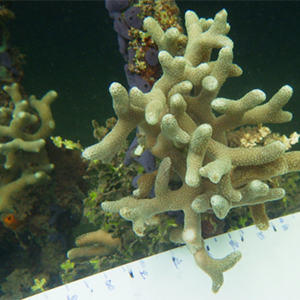
The article “The Coral Whisperer” (Fall 2014) was very nice, highlighting the need to get to know the world around us, and that even a coral can have a personality, a resilience, and a will to live, in its own manner.
However, I detect a couple of problems in the article. Global warming is listed as a hazard to the corals. Our oceans have not been warming for a number of years and recently have even been cooling a bit. Coral bleaching is a natural response by corals to temperature change, as they switch from one photosynthetic symbiont to another. Most often, if one returns three to six months later, the corals are colorful and healthy again.
In addition, ocean acidification from carbon dioxide is referred to as a threat. Seawater is a complex buffer and although carbonic acid from carbon dioxide can acidify distilled water, this weak acid cannot alter ocean pH. Photosynthetic activities are alkalizing, and, during the day, the pH of a bay or estuary can rise above the “normal” 8.1, to from 9 to 10. Carbon dioxide has been 5 to 10 times higher during most of the last 600 million years. It is not realistic to believe that these organisms do not have the physiological ability to handle the current tiny changes in atmospheric carbon dioxide concentration. Over the last 50 years, coral reefs worldwide have been thriving as they enjoy rising carbon dioxide. Actual ocean pH has remained within its normal range. As with most land plants, the limiting growth factor is often carbon dioxide availability.
The claim that a slightly less alkaline environment would hurt these organisms and dissolve the coral reefs is unfounded. With warming oceans, calcium carbonate’s solubility, less soluble in warm water than cold, would allow coral reefs to spread to higher latitudes—more coral not less. Free protons from carbonic acid cannot affect the extended equilibrium stretching from carbon dioxide to carbonic acid to carbonate to calcium carbonate deposition, as an equilibrium cannot affect itself. An outside proton source, as from hydrochloric acid, would be needed to dissolve calcium carbonate. Thus, carbon dioxide acidification of the ocean is not occurring, and it simply cannot do what is claimed.
Unfortunately, the poorly represented claims of the effects of nonexistent global warming and the effects of increased atmospheric carbon dioxide must be realistically validated by real researchers in related scientific areas before they are listed as factors in their studies. With no detectable global warming of Earth’s surface for the last 18 years and the atmosphere for 26 years, global warming “science” cannot be trusted. Responsible researchers need to protect themselves by doing due diligence before including any “climate science” in their thinking or discussions.
Sabin W. Colton 6th
Wheeling, W.Va.































I think Stephen Joel Trachtenberg must have been having a Brian Jennings moment when he claimed responsibility for changing the name of the College of Liberal Arts to the College of Arts & Sciences. The change in names did not take place until well into the 1990’s, many years after Mr. Trachtenberg had left BU. And the idea that the name of the college was changed because John Silber couldn’t remember the correct name is, to put it mildly, incredible.