Opening Up the World of Writing to Boston University’s Medical Campus Faculty

Pria Anand, an assistant professor of neurology at BU’s Chobanian & Avedisian School of Medicine and an attending neurologist at Boston Medical Center (BMC), received the prestigious PEN/E.O. Wilson Literary Science Writing Award for her debut book, The Mind Electric: A Neurologist on the Strangeness and Wonder of Our Brains. She credits taking part in BU’s Medical Campus Faculty Development & Diversity Narrative Writing Program helped her connect with the world of writing and publishing.
Opening Up the World of Writing to Boston University’s Medical Campus Faculty
Narrative Writing Program offers a way for individuals to express themselves and discuss their work
In April, Pria Anand, an assistant professor of neurology at BU’s Chobanian & Avedisian School of Medicine and an attending neurologist at Boston Medical Center (BMC), received the prestigious PEN/E.O. Wilson Literary Science Writing Award for her critically acclaimed debut book, The Mind Electric: A Neurologist on the Strangeness and Wonder of Our Brains (Washington Square Press, 2025). Her writing career was shaped, in part, by the Medical Campus Faculty Development & Diversity Narrative Writing Program.
“It helped me connect with this world of writing, editing, and publishing,” she says.
The Narrative Writing Program was launched in 2018 by Emelia Benjamin, interim associate dean for faculty development and professor of medicine and epidemiology, Sarah Wingerter, assistant professor of pediatrics at the medical school, and Christy Di Frances Remein,, now a clinical assistant professor at George Washington University School of Medicine and Health Sciences. The program is open to faculty across the Medical Campus. In 10 monthly sessions, approximately a dozen participants discuss and analyze assigned literary texts and participate in prompted writing exercises and writing workshops in which they read and discuss their works-in-progress. Originally, the group met in person, but the pandemic forced them into virtual meetings and they continue to meet online.
Benjamin considers it one of faculty development’s most popular programs. More than 100 faculty have participated over the past seven years, publishing 38 non-fiction and fiction works, from opinion pieces to books and poems.
“There was this sense of community, of people across the Medical Campus who were interested in a narrative or who had stories to tell,” Anand says. A story she shared in a writing session about an exceedingly rare type of pregnancy was subsequently published in a magazine and caught the attention of a literary agent. That helped launch her writing career.
“For many Medical Campus faculty, particularly clinicians, a lot of them are not comfortable with writing, and it actually impedes their career advancement,” says Benjamin, who has published more than 900 peer-reviewed articles.
Good for health and well-being
Writing also benefits personal health and well-being, Benjamin notes.
Medical professionals experience heartbreak, tragedies and miracles every day working in a hospital, Anand says, all of which can be grist for writing.
“You’re confronted with the whole of human experience in this claustrophobic space,” Anand says. “Writing for people who are not doctors forces you to take a step back and try to describe it—to realize what is wondrous about it, or what is strange about it.”
You’re confronted with the whole of human experience in this claustrophobic space. Writing for people who are not doctors forces you to take a step back and try to describe it—to realize what is wondrous about it, or what is strange about it.
“I’m still writing about the Boston Marathon bombing; that has not been excised from my psyche,” says narrative writing program alumna Elizabeth Mitchell, who was working in a medical tent at the finish line in 2013 when two bombs detonated, killing three people and injuring 500. A prizewinning poet and essayist, Mitchell is a clinical professor of emergency medicine with more than three decades of experience as an attending physician in BMC’s Emergency Department.
“Writing is a coping mechanism for me, much like therapy; it allows me to get some perspective and insight. But it never takes those things entirely away, those things are always with you,” she says. Benjamin notes that a lot of clinicians are increasingly feeling sidelined by politicians, hospital administration, and the insurance and healthcare industries. One of the goals of the program is to make sure people have a sense of their voice, that they feel like they can speak up.
“We can write our papers and we can get promoted. At the end of the day, we also need to affect other things,” she says. “We need to be able to talk about our science in a way that somebody not in medicine, somebody who’s got a high school education or less, can understand and not feel like we’re talking down to them.”
‘A totally different way of using my brain’
Writing is a skill that many physicians and researchers forego as they progress through their graduate education into labs, teaching, and medical practices.
Katherine Gergen Barnett, an associate professor of family medicine and vice chair of primary care innovation and transformation in the department of family medicine at the medical school, had always loved writing, but left it on the sidelines when she was going through medical training. Now an alumna of the writing program, she has had many stories and essays, both personal and advocacy-related, published in local and national outlets and is a regular guest on WGBH radio.
“It was a totally different way of using my brain. [The Narrative Writing Program] allowed me the time to come back to writing,” says Gergen Barnett, who is the daughter of the late David Gergen, adviser to four US presidents and a national political commentator.
The Narrative Writing Program came at a perfect time for her professionally: Barnett had become comfortable with the science of medicine and realized that she wanted to come back to writing to leverage her advocacy efforts for her patients and the community.
“It’s one thing for the public to hear what’s happening to the homeless in Boston, or what’s happening with food insecurity, or in the school system, as an intellectual activity,” Gergen Barnett says. “But once you share the stories of the ways that this is affecting real people in everyday life, I think that is what really gets people to care.”
Writers (and readers) in medicine
Narrative Writing Program co-director Jennifer Beard, came into the program through a different door. Now a clinical professor of global health at the School of Public Health, Beard already had a PhD in English literature when she discovered, while editing a colleague’s papers, that a public health career allowed her to connect with human experience in a way that was deep, immediate, and meaningful.
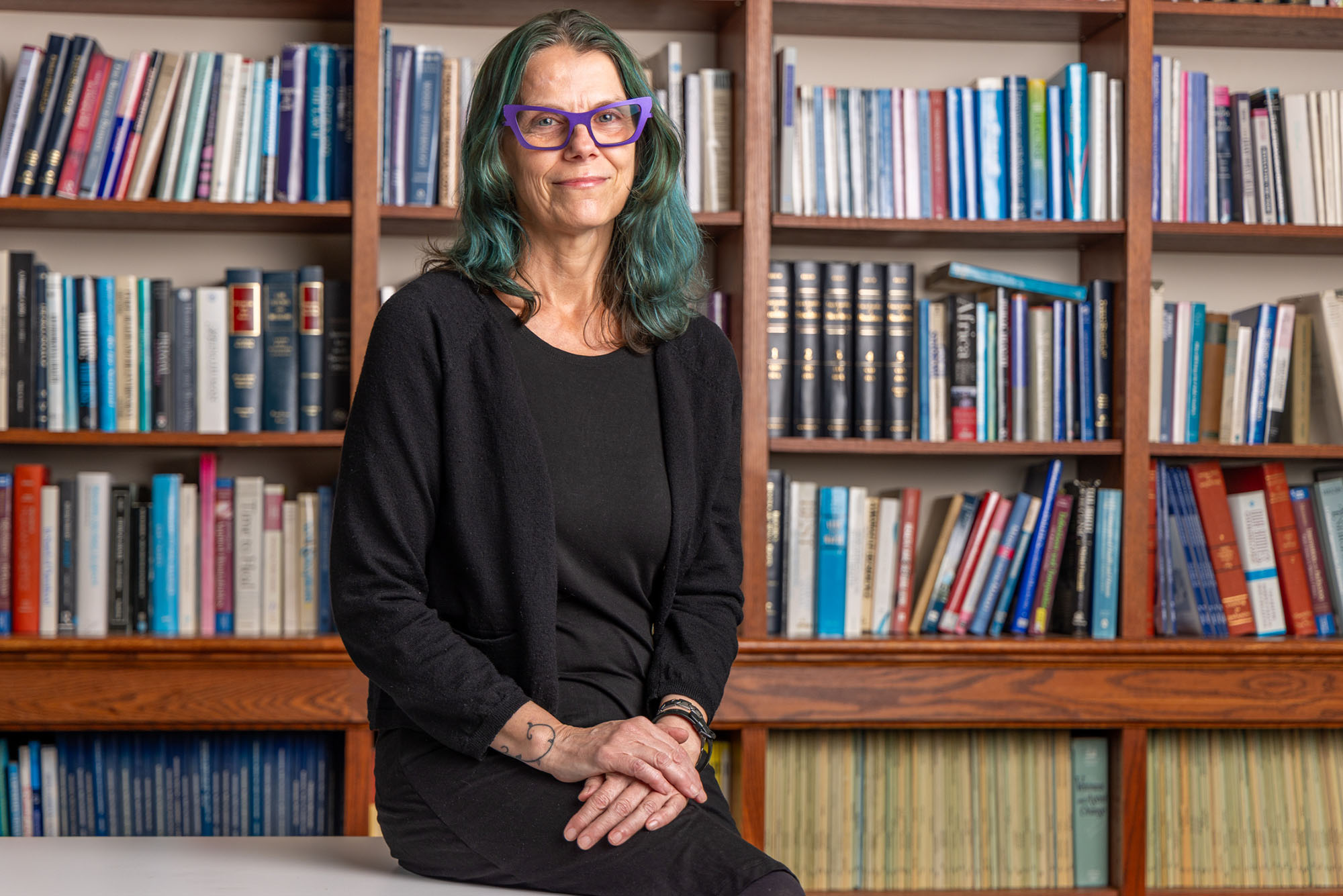
She received a Master of Public Health degree from BU and joined the SPH faculty in 2006. After years of academic writing, editing, and teaching, Beard reconnected with her interest in narrative writing as a program participant, subsequently becoming co-director with Wingerter.
“We’re providing people with a refuge and an outlet; a place where they can come and do something completely for themselves, where they can explore their creative side,” Beard says. “We’re trying to plant the seed that there is this alternative way to express yourself and to talk about who you are and about your work.”
Like Beard, program co-director Sarah Wingerter, assistant professor of pediatrics at the medical school, came from a literary background. She was a voracious reader who also wanted to be a doctor.
“I think there’s a lot of overlap between what makes someone choose a career in medicine or healthcare, and what makes someone a writer,” Wingerter says. “I think that curiosity, being a close observer of life and of people, and asking questions, was what drew me to my specialties in pediatric emergency medicine and infectious diseases.”
Wingerter gets joy, not just from writing, but from teaching it to others.
“There’s something meaningful to me seeing people who haven’t ever thought of themselves as writers, recognize that they can express themselves, that it can be a way of connecting with other people or making sense of their own experiences.”