CFA Professor’s Love Letter to Roxbury
For more than a quarter century, Leland Clarke has collected ephemera celebrating the history of his childhood home. Now, he hopes to share it with others

Leland Clarke (Wheelock’75) at his home in Randolph, Mass., with some of the approximately 1,800 pieces of ephemera he’s collected that chronicle Roxbury’s history.
CFA Professor’s Love Letter to Roxbury
For more than a quarter century, Leland Clarke has collected ephemera celebrating the history of his childhood home. Now, he hopes to share it with others
It all began with a grocery ledger.
In 2000, Leland Clarke was going through his father’s papers after he died when he came across the scrapbook, stuffed with items like newspaper clippings, old photographs, and church programs. It offered a tantalizing snapshot of Roxbury, Mass., where Clarke (Wheelock’75), now a College of Fine Arts professor of the practice of musicology and ethnomusicology, was raised.
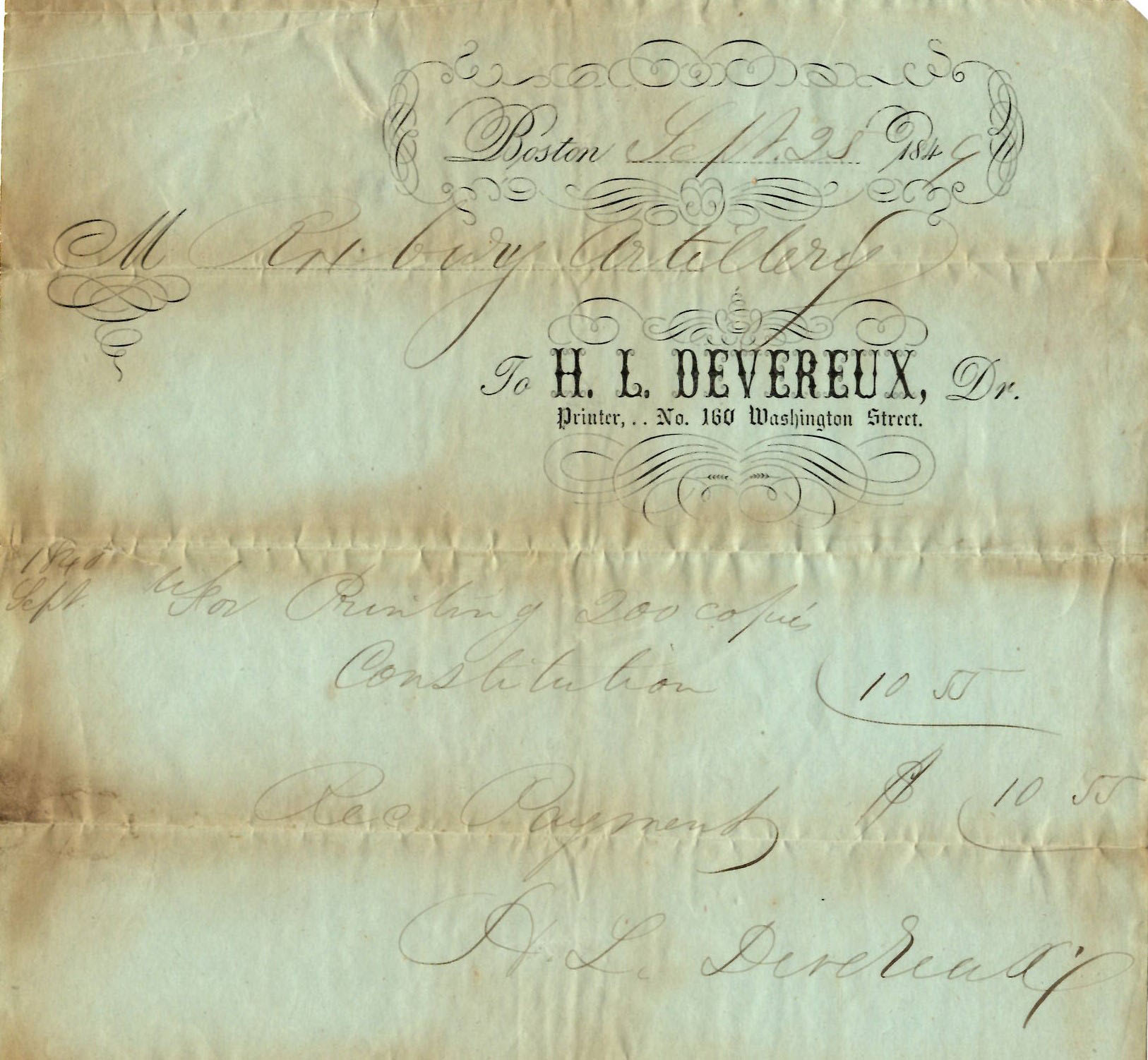
Little did he know then that the ledger would set him on a journey lasting more than a quarter of a century, a journey that has resulted in a collection that’s grown to include approximately 1,800 pieces of ephemera chronicling Roxbury’s history.
Growing up, Clarke says, he knew little of the neighborhood’s storied past, particularly as it related to Black culture. He remembers hearing German, Italian, and Swedish spoken on his block, but had no idea that Malcolm X spent his teenage years only a few streets away. When he flipped through the grocery ledger, the first thing he saw was a flyer from 1903 announcing an appearance by Booker T. Washington, the prominent Black educator, author, and lecturer, who was coming to Roxbury’s Columbus Avenue African Methodist Episcopal Church to speak.
“I thought, I have to find out more information,” Clarke says. In the course of his research, he discovered that Washington’s appearance instigated what became known as the Boston Riot of 1903, where supporters of Booker T. Washington and of William Monroe Trotter, founder of the Boston Guardian newspaper, battled over their differing beliefs about integration.
Clarke’s interest was piqued.


“As a child, I had dreamed of being an archaeologist, digging in the dirt and finding something, and I’ve never lost that desire of searching and discovery,” he says.
Clarke was determined to learn more about Roxbury’s past and the men and women who had contributed to its history, so he began attending online auctions, stopping by yard sales, and visiting used bookstores.
“Sometimes I found some really great things,” he says. “People also found out I was collecting stuff about Roxbury, and they’d say, ‘Oh, I’m clearing out my attic or my basement, do you want to come by and take a look?.”
Telling a different story
Clarke recalls that in high school, almost everything he heard about his neighborhood was negative. But as he learned more about Roxbury’s cultural past, he saw there was another story to tell.
“I realized there’s a rich history that’s not just about Roxbury. It’s a history that transcends the neighborhood’s borders,” he says. “There were men and women growing up in this area that had made and were making significant contributions to American history.”
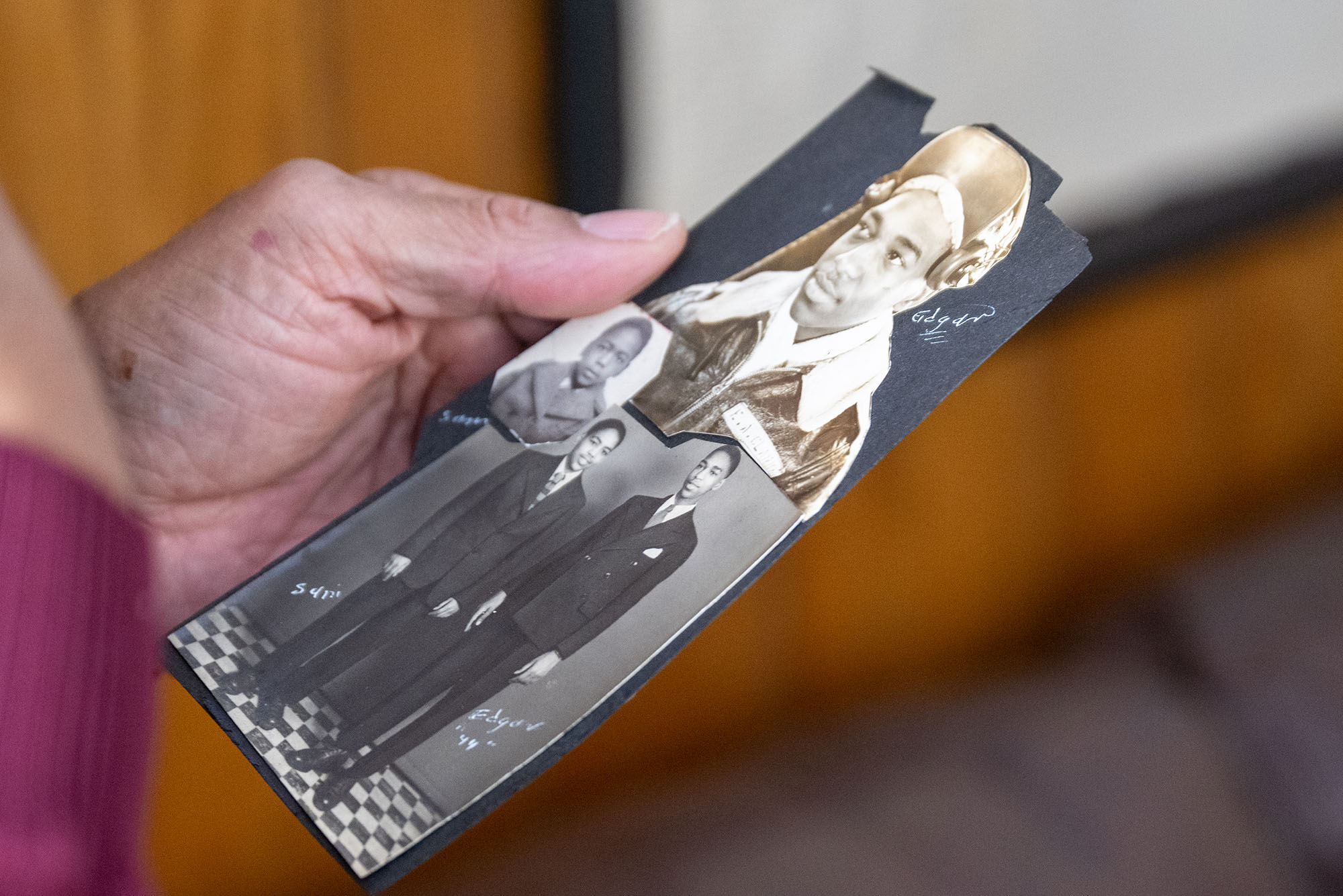
As he began to grow his collection, he came to the conclusion that he needed help identifying buildings and people in photos. He also had no idea how to catalogue it all.
“There was no roadmap. I’d just collect things and put them in a manila envelope and put it in a box and then go to the computer and make a file of what was in each box,” he recalls. He began scouring the internet for information, visiting places like the Roxbury Historical Society and the Massachusetts Historical Society and meeting with prominent local neighborhood leaders like Byron Rushing, a Massachusetts state representative and civil rights activist, and Rev. Michael Haynes, the pastor of Twelfth Baptist Church, to learn more.


At the time he started amassing his collection, Clarke was a professor of early childhood education and music at Wheelock College (prior to its 2018 merger with BU). He had recently launched a course on the cultural history of Roxbury and had enlisted his students to help identify some of the materials he‘d found.
“Sometimes it would take a month of research just to find out what was in one photo,” Clarke says.
Among his finds: a sermon delivered at the First Religious Society of Roxbury on December 11, 1783; photos of a statue of General Joseph Warren, an American Revolutionary War hero, that had once graced Roxbury’s Warren Square, but was removed to make way for a new traffic pattern (the statue is now at Roxbury Latin School in West Roxbury); a watch manufactured by the E. Howard Watch Company, which was located on Howard Street; and posters, menus, and billboards that bore witness to the neighborhood’s stores and manufacturers.

And along the way he began to discover amazing stories about the largely unknown men and women who called Roxbury home—people like Joseph Kennedy, the only African American winner in a 1931 horse derby sweepstakes, who, at the time of his jackpot win of $145,500, was working at Morgan Memorial, making $12 a week repairing baby carriages. Others included lawyer Blanche Woodson Braxton, the first Black woman admitted to the Massachusetts Bar, and William Pinkney, the first Black American to sail solo around the world.
Sharing the collection
As his collection grew, Clarke says, his original idea was to catalog it and make it accessible to historians, scholars, and researchers, but it was hard to get the word out about what he had. Several years ago, he came up with the idea of publishing the best of the material in a book. Clarke’s son-in-law introduced him to Dan Ajala Vieira, a Boston Public School teacher who was also a talented designer. The two began the laborious process of scanning everything and then organizing it all by subject matter.
Using his own money, Clarke recently put together a two-volume edition, Something Worth Saving: Forgotten People, Places, and Events That Helped Shape America, lavishly illustrated with a fraction of the material he’s amassed. And he’s now working with the Black Economic Council of Massachusetts to secure funding to publish the books and make them available to the public.

“I want these books to be part of the larger narrative of Roxbury,” Clarke says. “And I want other people to feel empowered to tell their story. My family was from Roxbury. We lived through school busing and the integration of Boston’s public schools, we experienced the riots following the assassination of Martin Luther King, Jr. [GRS’55, Hon.’59] in 1968. I want to be a part of that conversation, because I lived it. And I want people to understand that there is beauty, there is dignity, there is a rich history in Roxbury and it’s still there. It’s not a past that is now gone.”
As for the collection itself, now neatly stored in boxes in his basement in Randolph, Clarke says he’s searching for an archive or organization that will care for it and make it accessible to future generations of researchers.
And that grocery ledger that started it all? Its provenance remains a mystery, despite Clarke’s best efforts to find its original owner.
“I wasn’t meant to know who it belonged to or how my father came to receive it,” he says. “But what’s important is that it honors my father’s memory and it honors the person who put that scrapbook together.”