Brink Bites: BU Health Researchers Win Major NIH Grants; BU Device Named Among Time’s Best Inventions of 2025
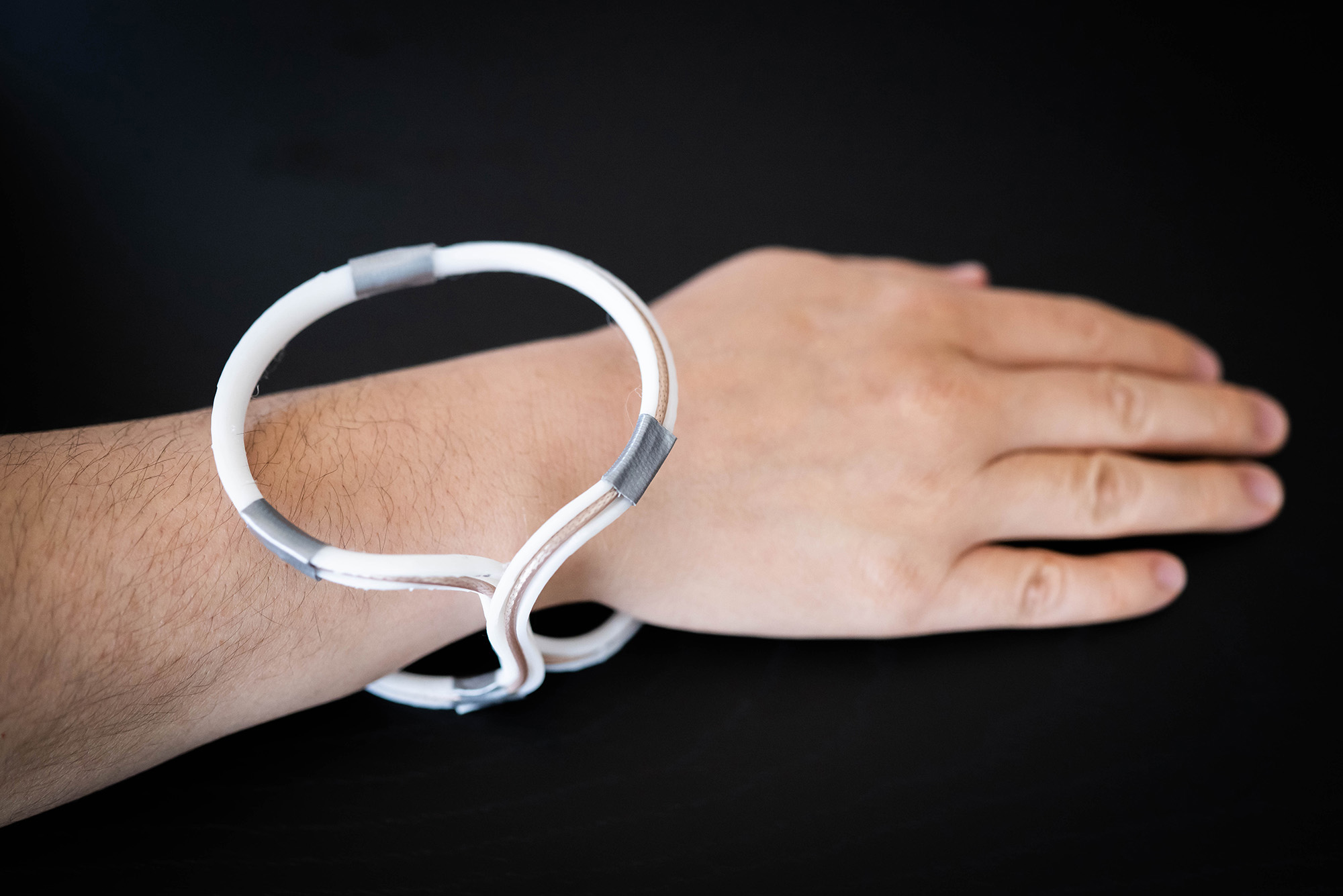
Time magazine named a BU-developed low-cost device that speeds up MRI as one of the best inventions of the year..
Brink Bites: BU Health Researchers Win Major NIH Grants; BU Device Named Among Time’s Best Inventions of 2025
Other research news, stories, and tidbits from around BU, including big funding wins, opposition to deepfakes, and studying LGBTQ+ suicide risk factors
The Brink’s latest collection of news nuggets, short stories, and other thought-provoking snippets from the world of Boston University research—including a Time invention of the year winner and a run of major grants from the National Institutes of Health and Department of Defense.
Time Names BU MRI Tech Among Best Inventions of 2025
A BU-developed low-cost device that makes magnetic resonance imaging (MRI) scans faster, cheaper, and more accurate has been named one of the best inventions of the year by Time. The team behind the device is led by Xin Zhang, an ENG Distinguished Professor of Engineering. It’s the second year running Time has recognized a BU creation in its Best Inventions list; last year, it included a skin cancer detection device powered by BU technology. “MRI scans may soon leave costly, bulky hospital machines behind,” said Time in lauding the MRI technology. “Boston University researchers have built bendable wireless coil sensors that attach to the body, weigh less than an AA battery, and cost only $50.”
Major NIH and DOD Grants for BU Health Research
Researchers across Boston University’s Charles River and Medical Campuses have won a series of major, multimillion dollar federal grants to help advance research on a range of health-related topics. Recent winning projects include:
- Advancing vibrational photothermal microscopy, a new method for analyzing cells and tissue samples. Ji-Xin Cheng, BU College of Engineering Moustakas Chair Professor in Photonics and Optoelectronics; $2.8 million, five-year grant from the National Institutes of Health’s (NIH) National Institute of General Medical Sciences.
- Using new computational experimental approaches to study gene expression. Brian Cleary, a Faculty of Computing & Data Sciences assistant professor with appointments in BU’s biomedical engineering and biology departments; $2.25 million, five-year grant from the NIH.
- Creating a BU Framingham Heart Study cardiovascular biobank to study cardiovascular disease risk factors and potential biomarkers. Jessica Fetterman, a BU Chobanian & Avedisian School of Medicine assistant professor, vascular biology, and Deepa M. Gopal, an assistant professor of cardiovascular medicine at the medical school; $7 million, five-year grant from the NIH’s National Heart, Lung, and Blood Institute.
- Studying how infant congenital heart disease and cardiac surgery impact the developing brain. Nobuyuki Ishibashi, a medical school professor of anatomy and neurobiology; $6.5 million grant from the Department of Defense’s Congressionally Directed Medical Research Programs.
- Studying the consequences of repetitive head impacts. Ann McKee, a William Fairfield Warren Distinguished Professor of Neurology and Pathology; $4.2 million, two-year grant from the NIH’s National Institute of Neurological Disorders and Stroke.
- Examining a potential treatment for age-related brain pathology. Tara Moore, a medical school professor of anatomy and neurobiology; $3.2 million, five-year grant from the NIH’s National Institute on Aging.
- Developing computational tools that will predict language recovery in people with poststroke aphasia. Archana Venkataraman, an ENG associate professor of electrical and computer engineering, and Swathi Kiran, James and Cecilia Tse Ying Professor in Neurorehabilitation at BU Sargent College of Health & Rehabilitation Sciences and director of the BU Center for Brain Recovery; $3.2 million grant from the NIH’s National Institute on Deafness and Other Communication Disorders.
Award for BU’s Ann McKee, at Forefront of Alzheimer’s and CTE Research
World-leading CTE researcher and Alzheimer’s disease expert Ann McKee has won a Zenith Fellows Award from the Alzheimer’s Association. McKee, director of BU’s Alzheimer’s Disease Research Center and CTE Center, will use the award’s $450,000 funding for a study of brain changes in chronic traumatic encephalopathy (CTE) and Alzheimer’s, both progressive brain diseases. “Understanding the changes to small blood vessels in the brain in early [Alzheimer’s] and chronic traumatic encephalopathy will help identify novel strategies to stop these diseases before they cause irreversible damage,” said McKee in a BU Chobanian & Avedisian School of Medicine press release. “Dr. McKee’s work reflects the bold, innovative science that moves us closer to breakthrough treatments and, ultimately, a future free of Alzheimer’s and other dementias,” said Heather Snyder, the Alzheimer’s Association senior vice president of medical and scientific relations.
New Project to Investigate LGBTQ+ Suicide Risk Factors
BU researchers are partnering with Boston-based community health center Fenway Health to study the factors that increase suicide ideation among members of the LGBTQ+ community, reports BU’s arts x sciences magazine. The project will include the analysis of around 1,500 patient health records and interviews with LGBTQ+ youth and young adults. “We already have a disparity in [sexual and gender minority groups], they’re much more likely to have suicidal thinking or to complete suicide. So who within that subgroup is most at risk?” said Amelia Stanton, a BU College of Arts & Sciences assistant professor of psychological and brain sciences who is coleading the project. She hopes the team will eventually pilot interventions to test better ways to reach patients most at risk of suicide.
Americans Across the Political Spectrum Want Protection from Deepfakes
A new BU survey has found big public support for protections from online deepfakes—manipulated media that uses someone’s likeness or voice without their consent. More than 80 percent of respondents backed new protections, a result that straddled the political spectrum. The survey was designed by the BU College of Communication’s Communication Research Center (CRC) and conducted by Ipsos. “As social media platforms scale back content moderation and generative AI creates realistic imitations of celebrities, creators, and journalists, disinformation is spreading faster and more widely than ever before,” said Michelle Amazeen, a COM associate professor of mass communication and CRC director, in a COM news release. “In this confusing environment, one principle has strong bipartisan support: the public overwhelmingly agrees that everyone’s voice and image should be protected from unauthorized AI-generated recreations.”
Want More BU Research or Got a Story Idea? Check out The Brink homepage every week for even more stories and videos about BU research. And if you want to tell us about your research at BU, we’d love to hear from you. Email us at thebrink@bu.edu or tell us about your story online.