Best of The Brink 2025: A Selection of BU’s 10 Most-Read, Liked, and Shared Science and Research Stories

Photos by (clockwise, from top left) iStock/aydinmutlu, iStock/Cmannphoto, Kok Ky/Cambodia’s Government Cabinet via AP, and courtesy of Firefly Aerospace
Best of The Brink 2025: A Selection of BU’s 10 Most-Read, Liked, and Shared Science and Research Stories
Boston University’s healthcare research expertise was in high demand, while stories about engineers’ moon mission and student researchers proved big hits
Stories about Boston University’s health-related research and researchers proved among the most popular articles published on The Brink in 2025. From studies of so-called Novids who continue to evade a COVID diagnosis to a look at why we remember some events more than others, almost all of our most-read stories had a health and wellness focus.
In this year’s “Best of The Brink,” we’re curating a selection from our most-read articles in 2025. We’re also celebrating those that drew big audiences beyond these pages with a rundown of the stories that won the most comments, likes, and shares on the University’s social media pages.
A Selection of Our Most-Read Stories

1
They’re the so-called “super-dodgers,” the people who’ve somehow never had a bout with SARS-CoV-2—or at least that they know of. Among those studying why some people have managed to avoid COVID-19 is Sabrina Assoumou, a BU Chobanian & Avedisian School of Medicine associate professor of medicine and the inaugural Louis W. Sullivan Professor of Medicine. She spoke with The Brink about Novids and what scientists hope to learn from them.

2
A BU study found that memories of everyday, mundane moments are more likely to stick around if they happen close to a significant event—something surprising, rewarding, or carrying an emotional punch. According to researcher Robert M. G. Reinhart, a BU College of Arts & Sciences associate professor of psychological and brain sciences, the discovery could one day be used to rescue weak memories—or even help students retain key facts before a big exam.
3
A study coled by BU public health researchers found “excess deaths”—those above projections—had surged among people aged between 25 and 44. The number one cause, according to the researchers: drug poisoning, or overdoses. Transportation- and alcohol-related deaths were major factors, too, along with homicides and natural causes.

4
When Netflix debuted a new docuseries following the Boston Red Sox, a revelation from star outfielder Jarren Duran made big headlines. During the show, he talked about his severe depression and how he had once tried to take his own life. The Brink spoke with Jaimie Gradus, a BU School of Public Health professor and associate chair of epidemiology and director of the BU Center for Trauma and Mental Health, about Duran’s revelation and the importance of talking about suicide.
5
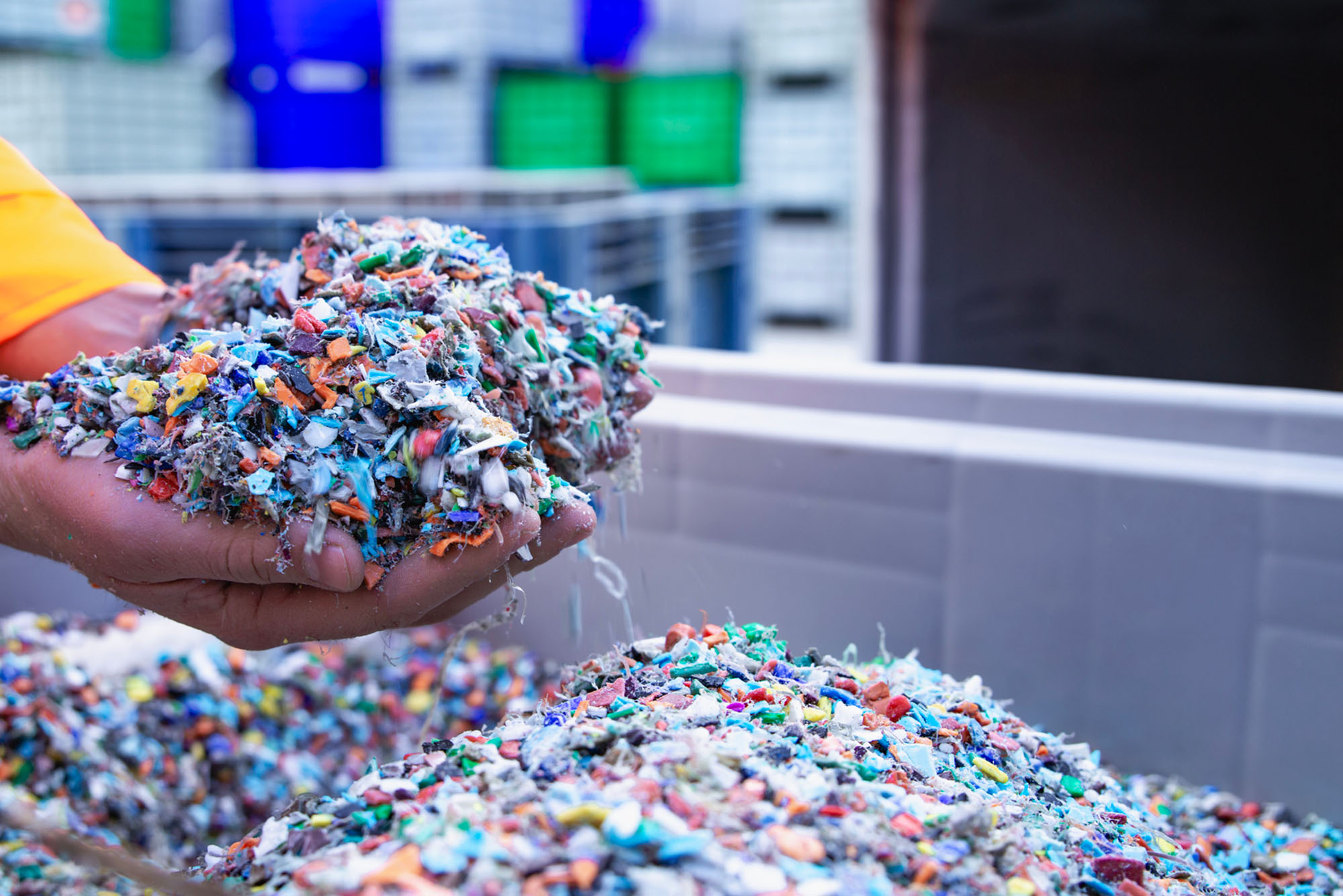
A team of BU researchers found that bacteria exposed to microplastics became resistant to multiple types of antibiotics commonly used to treat infections. In a study published in the journal Applied and Environmental Microbiology, they discovered the tiny shards of plastic provided a home for bacteria to attach to and colonize. The microplastics also supercharged a shield bacteria had created to protect them from invaders—including antibiotics designed to take them down. Close to five million deaths globally are associated with antimicrobial-resistant infections each year.
Most Liked, Shared, and Commented:
The Biggest Stories on Social Media
1
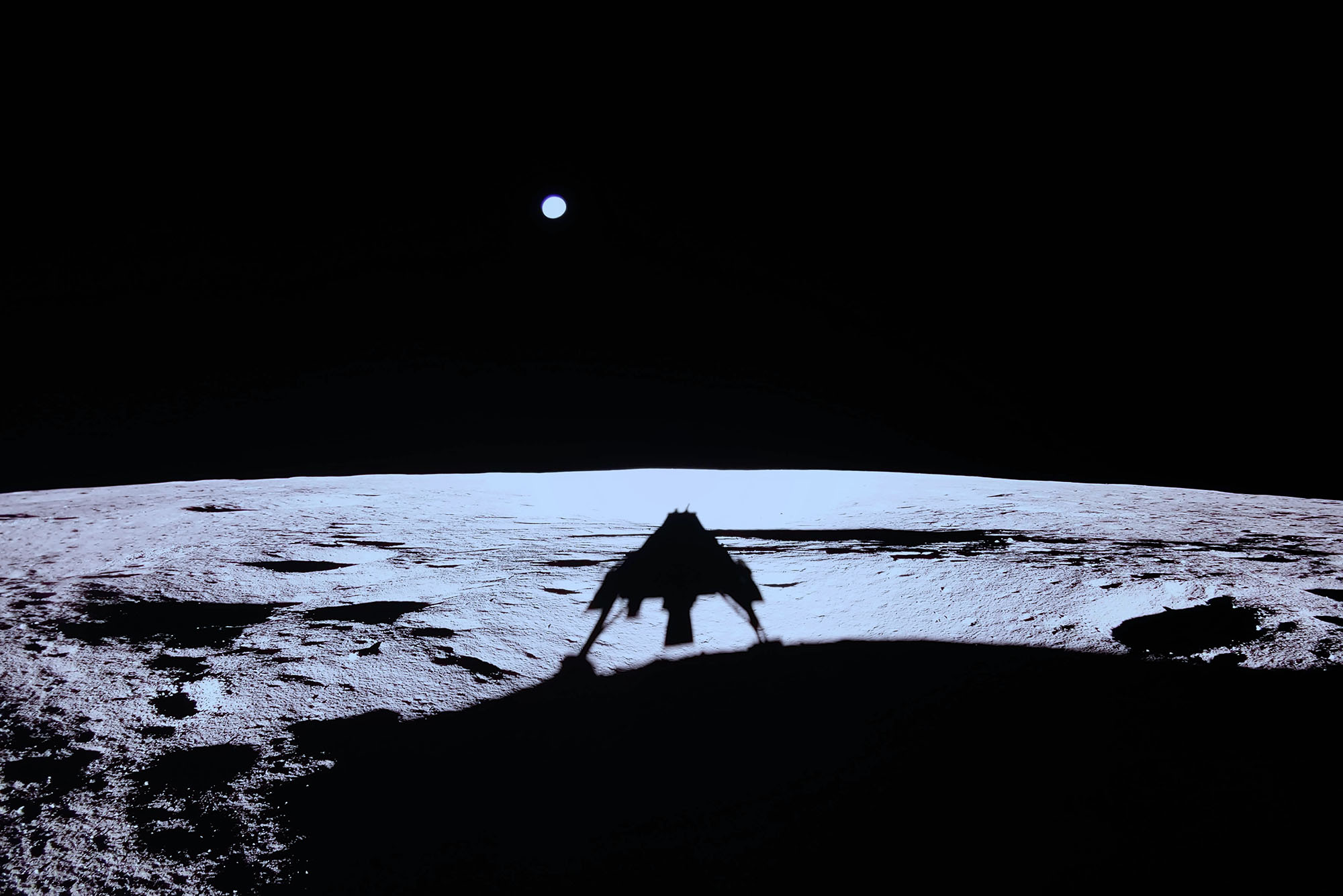
In early March, a telescope designed and built by BU engineers landed on the moon—the first device created by the University to touch down on another planetary body. The Brink followed the mission from its earliest stages, watching the team as they tested prototypes right through to the telescope’s exciting launch into space and nerve-wracking landing on the lunar surface. Our widely shared series of stories, videos, and photos culminated in a special feature and mini documentary, LEXI Goes to the Moon: A Story of Science and Adventure.

2
A BU archaeology student, Hallie Baker (CAS’25, GRS’25), helped create a database that can be used to track down stolen artifacts. She trained the Khmer Statuary Project on images from archives, art catalogs, museum databases, and private collections to automate the identification of potentially stolen Cambodian statues. According to news reports, some 4,000 stolen Cambodian pieces—artifacts dating back a millennium and more—are currently held in foreign museums and private collections.

3
Three of the top-five most-liked Brink stories on social media were about BU student researchers. One of them was Morgan Snoap (GRS’25), a PhD candidate in African art, who had the opportunity to study ancient weaving techniques in Fes, Morocco, as a Fulbright Student Researcher. She traced the history of brocade fabrics—richly decorated woven materials—and met with those keeping the tradition alive today.

4
PhD student Justin Moy is trying to crack the genetic code of muscular dystrophy, a condition with no cure. It’s a disorder he has: Moy (CDS’25,’27) was born with the specific type of muscular dystrophy—known as LAMA2-related muscular dystrophy—that he’s now studying. “My life’s goal is to cure my disease, and that’s really what drives me every day,” Moy told The Brink.

5
In September, BU announced it had appointed a familiar face to lead its $500 million research enterprise. Renowned biomedical engineer Kenneth Lutchen had been a transformative dean of BU’s College of Engineering who had also served in a number of other leadership roles, including as senior advisor to the president, strategy and innovation.
