Skip to Main Content
Boston University
  • Bostonia
  • BU Today
  • The Brink
  • University Publications

    • Bostonia
    • BU Today
    • The Brink
  • School & College Publications

    • The Record
Other Publications
BU Today
  • Sections
News, Research, Community

Sargent Rehab Counseling Programs to End

Low enrollment leads to planned phaseout by 2008
July 25, 2007
  • Jessica Ullian
Twitter Facebook
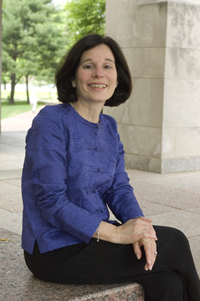
Gloria Waters, dean of Sargent College, says that the closing of the rehabilitation counseling program will free up resources for the college’s other degree programs. Photo by Vernon Doucette

After several years of low enrollment in Sargent College’s bachelor’s program in rehabilitation and human services and its master’s and clinical doctoral program in rehabilitation counseling, the University’s Board of Trustees voted to discontinue the programs at a board meeting on Tuesday, July 10. Current students will be able to complete their course work, but no new applications will be accepted, and the programs will formally end in May 2008.

“While the programs were valuable for many years, the college needs to put more resources into the programs and centers that draw more students,” explains Gloria Waters, dean of Sargent College.

“The students and alumni value the education that they received here very much,” she says. “But we now graduate so few students that as we move forward, we want to be able to make the largest impact on rehabilitation sciences that we can with the resources we have.”

Programs in rehabilitation counseling were first offered at SAR in 1973. Students and faculty in the program work closely with the BU Center for Psychiatric Rehabilitation, which focuses on providing life- and work-skills training for people with mental illness and psychiatric disabilities. Graduates often go on to work in the areas of psychiatric rehabilitation, industrial rehabilitation, disability management, or vocational evaluation. The programs became a part of the occupational therapy department in 2005 because of their small size.

There are more than 750 active alumni of the programs, but last semester only 23 undergraduates, 9 master’s students, and 3 doctoral students were enrolled. While the Sargent master’s program is one of the country’s top rehabilitation counseling programs, ranked fifth in 2006 according to U.S. News and World Report, Waters says that one reason for declining enrollment is that other highly ranked programs are offered by public universities with lower tuition, and the earning potential for rehabilitation counselors is fairly low.

She also points out that while undergraduate enrollment in the health and human services program has declined significantly over the past decade, it has grown tremendously in other Sargent programs — particularly in the health sciences department, which jumped from 180 students in 2004 to 400 students last year. “We need to reallocate resources to programs that are in greater demand,” she says.

Some alumni have expressed disappointment that the program is being discontinued, but Waters notes that both Sargent and the University will continue to train students to work in the mental health rehabilitation field. The Center for Psychiatric Rehabilitation, the primary research arm of the rehabilitation counseling department and a World Health Organization Center of Excellence, will be integrated into the SAR occupational therapy program. In addition, the field education and training programs at the School of Social Work and the Graduate Medical Sciences Program at the School of Medicine, which has been offering a master’s degree in mental health and behavioral medicine since 2002, educate students in the area of mental health.

Waters believes that the change will strengthen Sargent’s other degree programs and further the college’s potential to advance the rehabilitation field. “Although individual graduates have a huge impact on people’s lives, we felt that the impact of our program was limited due to the very small number of students who graduate from the program,” she says. “We will continue to have a major impact on the field of mental health through our occupational therapy program and the Center for Psychiatric Rehabilitation.”

Jessica Ullian can be reached at jullian@bu.edu.


Explore Related Topics:

  • Charles River Campus
  • Faculty
  • Share this story

Share

Sargent Rehab Counseling Programs to End

Share

  • Twitter
  • Facebook
  • Reddit
  • LinkedIn
  • Email

Latest from BU Today

  • Students

    Eight Boston Experiences Every BU First-Year Should Try

  • Students

    Where to Eat When You’re Hungry at BU

  • Scholarships

    Boston University’s 2026 Menino Scholars and Community Leaders Scholars Arrive Ready to Change Their World

  • 10 BU Hacks Every Terrier Should Know

  • Student Life

    Everything You Need to Know about Splash (and Why You Should Attend)

  • Film & TV

    “Tony” – Anthony Bourdain Biopic of Iconic Chef and TV Host

  • Your Guide to BU Student Discounts, Freebies, and Terrier Card Perks

  • This Weekend @ BU: September 3 to 7

  • Clubs

    Design, Build, Drive: Meet Terrier Motorsport

  • Meet Boston University’s New Provost, Colin Duckett

  • International Students

    Your First Year at BU: A Guide for International Students

  • University News

    Boston University Matriculation 2026: Welcome Class of 2030!

  • Marine Science

    Marine Science Career Accelerator Helps Student Careers

  • Campus Life

    Move-in 2026 Photo Gallery

  • Campus Life

    Video Captures the Emotion of Move-In

  • Engineering

    Research Program for Boston High School Teachers

  • Internship

    Student Interns Learn What Makes Municipal Government Work

  • Faculty

    Opening Up the World of Writing to Boston University’s Medical Campus Faculty

  • Arts & Culture

    Wheelock Family Theatre Gives High School Students a Hands-On Role in Theater Management

  • Social Media

    BU Expert on Meta’s $17.1 Billion Settlement Over Social Media Addiction Claims

Section navigation

  • Sections
  • Must Reads
  • Videos
  • Series
  • Close ups
  • Archives
  • About + Contact
Get Our Email

Explore Our Publications

Bostonia

Boston University’s Alumni Magazine

BU Today

News, Research, Community

The Brink

Pioneering Research from Boston University

  • Twitter
  • Facebook
  • Youtube
  • LinkedIn
  • Instagram
  • Weibo
  • TikTok
© Boston University. All rights reserved. www.bu.edu
© 2026 Trustees of Boston UniversityPrivacy StatementAccessibility
Boston University
Notice of Non-Discrimination: Boston University prohibits discrimination and harassment on the basis of race, color, natural or protective hairstyle, religion, sex or gender, age, national origin, ethnicity, shared ancestry and ethnic characteristics, physical or mental disability, sexual orientation, gender identity and/or expression, genetic information, pregnancy or pregnancy-related condition, military service, marital, parental, veteran status, or any other legally protected status in any and all educational programs or activities operated by Boston University. Retaliation is also prohibited. Please refer questions or concerns about Title IX, discrimination based on any other status protected by law or BU policy, or retaliation to Boston University’s Executive Director of Equal Opportunity/Title IX Coordinator, at titleix@bu.edu or (617) 358-1796. Read Boston University’s full Notice of Nondiscrimination.
Search
Boston University Masterplate
loading Cancel
Post was not sent - check your email addresses!
Email check failed, please try again
Sorry, your blog cannot share posts by email.
Sargent Rehab Counseling Programs to End
0
share this