Skip to Main Content
Boston University
  • Bostonia
  • BU Today
  • The Brink
  • University Publications

    • Bostonia
    • BU Today
    • The Brink
  • School & College Publications

    • The Record
Other Publications
BU Today
  • Sections
News, Research, Community

Life Lessons from the Dark Ages

BU philosopher says our past offers hope for future
January 16, 2007
  • Taylor McNeil
Twitter Facebook
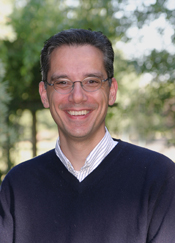
“Science is the best method that human beings have ever invented for understanding cause and effect,” says Lee McIntyre.

In the dark ages, life was nasty, brutish, and short. Since then, advances in science and medicine have led to longer, but often still brutish, lives — for proof, just check out today’s headlines. Lee McIntyre, a research fellow with BU’s Center for Philosophy and History of Science, thinks it doesn’t have to be that way. He’s convinced that just as the scientific method helped lead us out of the Dark Ages and drastically improved medicine in the last century, it could, if properly applied to the social arena, help free us from the morass of human misery. In his latest book, Dark Ages: The Case for a Science of Human Behavior (MIT Press), he tells us why that isn’t happening.

“If we really understood why people act the way we do, we could make better public policy and solve a lot of social problems,” McIntyre says. “Science is the best method that human beings have ever invented for understanding cause and effect. Otherwise, we’re just speculating, or hoping.”

Unfortunately, he says, good social science is a very rare thing. Too often it is infected with ideology, from the right and the left: researchers know the answers they want and — surprise! — find them. Take gun control, the death penalty, and immigration, he says. “You find people citing the studies that back up what politically they already want to defend, rather than looking at what the studies show. Is immigration good for the American economy? Well, it is or it isn’t,” he says. “Politicians treat it as if it were a matter of conviction or political will or ideology, that just by talking about it or wishing, they can make it come out a certain way. Not true!”

In a better world, McIntyre says, social scientists would have “a propensity for being surprised by what they find and the courage to investigate where they think the results might tell them something they don’t really want to know.” As an example of such courage, he cites Gary Kleck’s work on gun control. “Kleck’s work is inspiring,” he says. “Here’s a liberal Democrat who’s not bringing politics into the work. He’s convinced that this is an empirical field, that he should gather data without knowing in advance how it’s going to turn out, and he ends up with some startling findings.” The result: both liberals and conservatives disputed aspects of his work that didn’t accord with their views.   

A philosopher, McIntyre has been waging a lonely fight for the emergence of a science of human behavior. Most philosophers of science claim that fundamental barriers separate the social sciences from the natural sciences, although they don’t have compelling arguments. “They talk about the inability to have objective inquiry,” he says. “We don’t really have objective inquiry in the natural sciences either, and those seem to be doing pretty well.” They also believe controlled experiments in the social sciences are impossible. Look at astronomy, McIntyre retorts; we can’t perform controlled experiments in other galaxies, yet no one denies astronomy is a science.

Then there’s the argument about free will, McIntyre says, which should make predicting our behavior impossible. “Still, human behavior, for whatever reason, remains predictable,” he says. “If we have free will, we don’t seem to use it in ways that affect social science.”

In short, McIntyre isn’t interested in excuses, especially from fellow philosophers. He wants action. Mainly, he wants to see social sciences adopt the rigor of the natural sciences. “A science of human behavior can lead the way out of the current mess of unreason and tragedy that hangs over human affairs,” McIntyre writes in his book. “The application of our highest form of reason, science, to the study of our social problems is our best hope for salvation.”

Taylor McNeil can be reached at tmcneil@bu.edu.


Explore Related Topics:

  • Faculty
  • Research
  • Share this story

Share

Life Lessons from the Dark Ages

Share

  • Twitter
  • Facebook
  • Reddit
  • LinkedIn
  • Email

Latest from BU Today

  • Varsity Sports

    BU Rowing Teams Head to California for IRA National Championship Regatta This Weekend

  • Business & Law

    BU’s Online MBA Program Offers Professionals More than Business Fundamentals

  • New Appointment

    Lynne Allen Named Interim Dean of College of Fine Arts

  • Commencement 2026

    A Look Back at Commencement 2026

  • Things-to-do

    How to Spend Memorial Day Weekend in Boston

  • Student Life

    BU Grads on What Comes Next

  • University News

    As First Heat of the Season Arrives, BU Opens Cooling Stations on Charles River Campus

  • Student Life

    Terrier Travels Podcast Gives Candid Advice About Studying Abroad

  • School of Public Health

    Boston University–Trained High Schoolers Educate Lawmakers About Taxing Alcohol

  • University News

    Boston University Medical School Graduates Step into Their Futures at Annual Convocations

  • COMMENCEMENT 2026

    Boston University Celebrates the Class of 2026 at 153rd Commencement

  • Commencement 2026

    Sights and Sounds from Boston University’s Class of 2026 Commencement

  • Students

    Video: “Your Dreams Have a Lot of Power,” Says 2026 Graduate Mark Lucas

  • University News

    Following Thorough Investigation, BUPD and Other Agencies Make Arrest

  • Social Media

    Get Featured on the Jumbotron at Commencement: Use #BU2026

  • Commencement 2026

    Meet This Year’s BU Commencement Student Speaker

  • Student Life

    Brothers Graduating from College of Fine Arts School of Music Excited to Go from Ensemble to Solo

  • COMMENCEMENT 2026

    For Thousands of BU Graduate Students, Commencement Is a Step Toward a New Profession

  • University News

    Lynn O’Brien Hallstein Appointed Interim Dean of BU’s College of General Studies

  • Commencement 2026

    Photo Essay: Class of 2026, Then and Now

Section navigation

  • Sections
  • Must Reads
  • Videos
  • Series
  • Close ups
  • Archives
  • About + Contact
Get Our Email

Explore Our Publications

Bostonia

Boston University’s Alumni Magazine

BU Today

News, Research, Community

The Brink

Pioneering Research from Boston University

  • Twitter
  • Facebook
  • Youtube
  • LinkedIn
  • Instagram
  • Weibo
  • TikTok
© Boston University. All rights reserved. www.bu.edu
© 2026 Trustees of Boston UniversityPrivacy StatementAccessibility
Boston University
Notice of Non-Discrimination: Boston University prohibits discrimination and harassment on the basis of race, color, natural or protective hairstyle, religion, sex or gender, age, national origin, ethnicity, shared ancestry and ethnic characteristics, physical or mental disability, sexual orientation, gender identity and/or expression, genetic information, pregnancy or pregnancy-related condition, military service, marital, parental, veteran status, or any other legally protected status in any and all educational programs or activities operated by Boston University. Retaliation is also prohibited. Please refer questions or concerns about Title IX, discrimination based on any other status protected by law or BU policy, or retaliation to Boston University’s Executive Director of Equal Opportunity/Title IX Coordinator, at titleix@bu.edu or (617) 358-1796. Read Boston University’s full Notice of Nondiscrimination.
Search
Boston University Masterplate
loading Cancel
Post was not sent - check your email addresses!
Email check failed, please try again
Sorry, your blog cannot share posts by email.
Life Lessons from the Dark Ages
0
share this