News
What if the Truth is Bad?
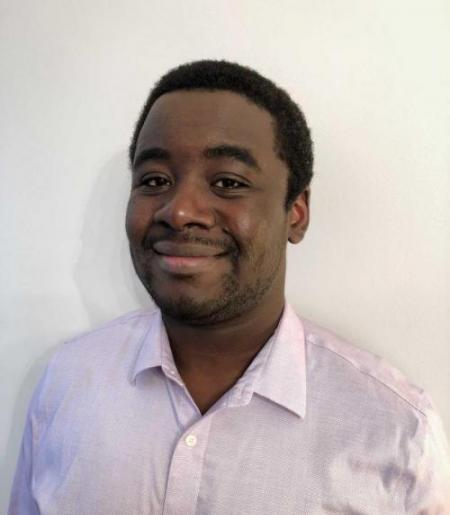
Olaluwatoni Alimi is a Klarman Postdoctoral Fellow in Classics and Philosophy at Cornell University. Alimi’s research spans ancient Roman philosophy, intellectual history, contemporary ethics and politics, and philosophy of religions. His first book, Slaves of God (Princeton University Press, 2024), explicates Augustine’s reasons for justifying slavery and argues that slavery is a central theme in his broader ethics and politics. Starting in Fall 2024, Alimi will be an Assistant Professor in Cornell’s Sage School of Philosophy.
Emotions and Moral Formation: Augustine’s Wounded Heart
 Sarah Stewart-Kroeker is the Associate Professor of Early Christian Theology at Princeton Theological Seminary. Stewart-Kroeker’s work has been largely focused on Augustine and Augustinianism, virtue ethics, and aesthetics. Her work has been published in the Journal of Religion, Augustinian Studies, Journal of Religious Ethics, and others. Her previous experience includes serving as the Jacques de Senarclens Associate Professor of Theological Ethics at the University of Geneva, where she taught classes on emotions and affectivity, forced migrations, ecumenical methodologies, and feminist ethics and theology. Her most recent book is Pilgrimage as Moral and Aesthetic Formation in Augustine’s Thought.
Word by Word: Writing, Humanity, and AI
Talbot Brewer is Professor of Philosophy at the University of Virginia. He specializes in ethics and political philosophy, with particular attention to moral psychology and Aristotelian ethics. He is the author of numerous essays, including “Virtues We Can Share: A Reading of Aristotle’s Ethics” (Ethics 115, 2005), “Savoring Time: Desire, Pleasure and Wholehearted Activity” (Ethical Theory and Moral 6, 2003), “Two Kinds of Commitments (And Two Kinds of Social Groups)” (Philosophy and Phenomenological Research 66, 2003), and “Maxims and Virtues” (The Philosophical Review 3, 2002). He has been a visiting professor in the Harvard University Philosophy Department and has been invited to present his work to audiences at a number of universities and professional conferences in North America, South America, Europe, China and the Middle East. He has authored two books, the most recent of which is The Retrieval of Ethics (Oxford University Press, 2009).
Lifegiving Hope: Virtue and Things that Matter
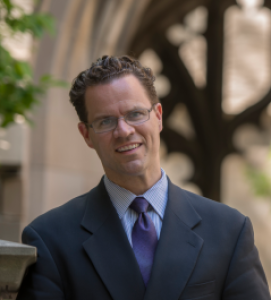
Kevin Hector (PhD, Princeton) is an expert in theology and the author of Theology Without Metaphysics and The Theological Promise of Modernism: Faith and the Conditions of Mineness. Additionally, Hector’s research is part of a collaborative grant, “ “Collaborative Inquiries in Christian Theological Anthropology,” funded by the Templeton Foundation. The Naomi Shenstone Donnelley Professor of Theology and of the Philosophy of Religions at the University of Chicago Divinity School, he writes about interpretative questions in theology and philosophy, cultural issues, and how to best understand faith commitments.
God and the Search for Happiness
 Zena Hitz (PhD, Princeton) is an expert in ancient philosophy & author of Lost in Thought, and A Philosopher Looks at the Religious Life. Hitz is also a Tutor at St. John’s College in Annapolis and the founder and president of the Catherine Project. Hitz writes for general audiences about freedom, education, happiness, the decline of our institutions, faith, hope, and love. Hitz's scholarship is in classical philosophy, especially questions about law, character, friendship, and the human good.
The End of Moral Philosophy
 Dr. Vanessa Wills is a political philosopher, ethicist, educator, and activist based in Washington, DC. She is Assistant Professor of Philosophy at The George Washington University. Her areas of specialization are moral, social, and political philosophy, nineteenth-century German philosophy (especially Karl Marx), and the philosophy of race. Her research is informed by her study of Marx's work and focuses on how economic and social arrangements can inhibit or promote the realization of values such as freedom, equality, and human development.
Liberal Learning and Love of Truth
 Dr. Jennifer Frey earned a B.A. in philosophy and medieval studies (with a classics minor) at Indiana University in Bloomington, Indiana. She earned her Ph.D. in philosophy from the University of Pittsburgh. Before teaching at the University of South Carolina, she was a junior fellow in the Society of the Liberal Arts at the University of Chicago and a Collegiate Assistant Professor of the Humanities.
Deflection, Value-Capture, and the Permanent Crisis of the Humanities
 Dr. Chad Wellmon is a Professor of German Studies, with appointments in History and Media Studies, at the University of Virginia. He is also the co-director of UVA’s New Curriculum and Principal of Brown College.
The Epistemic Commons

Dr. Hrishikesh Joshi works on issues at the intersection of philosophy, politics, and economics (PPE). He is interested in distributive justice, public choice theory, and the moral and epistemic upshots of partisanship and political polarization. Currently, he is working on a book project that applies PPE tools to analyze the ethics of speaking one’s mind. Joshi also works in ethical theory and metaethics, particularly on moral worth, personhood, and the sources of normativity. Dr. Joshi is an Assistant Professor of Philosophy at Bowling Green State University. In this video, Dr. Joshi discusses the "epistemic commons," which is the concept that what we know is intimately connected to which ideas are alive within our community.
Why Does Racial Inequality Persist?

A prominent social critic and public intellectual writing mainly on the themes of racial inequality and social policy, Dr. Glenn Loury has published more than 200 essays and reviews in journals of public affairs in the US and abroad. Loury has given the prestigious Tanner Lectures on Human Values at Stanford (2007), the James A. Moffett ‘29 Lectures in Ethics at Princeton (2003), and the DuBois Lectures in African American Studies at Harvard (2000). He is a fellow of the American Academy of Arts and Sciences and of the Econometric Society and a member of the American Philosophical Society. In this lecture, Dr. Glenn Loury asks why does racial inequality persist? An academic economist, Professor Loury has published mainly in applied microeconomic theory, game theory, industrial organization, natural resource economics, and the economics of race and inequality. The Q&A video can be accessed via this link.