Director’s Letter
Read the 2026 Annual Report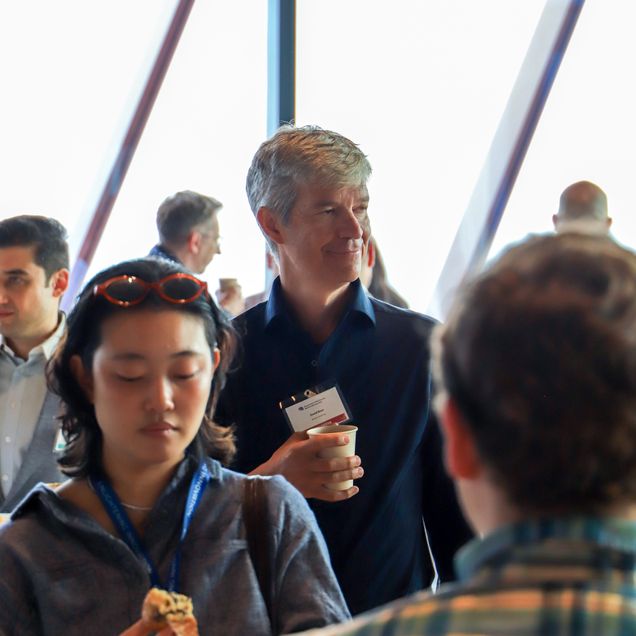
This Past Year was Another Strong One for the Neurophotonics Center (NPC)…
and the thread running through it, for me, was convergence as our faculty, students, and staff kept pairing light- based technologies with the most pressing questions in brain health, from Alzheimer’s and Parkinson’s disease to hearing loss, vision restoration, and mental health. I could not be prouder of what this community continues to accomplish.
The honors accumulated steadily. Ji-Xin Cheng was elected a Fellow of the National Academy of Inventors and later won FACSS’s 2026 Charles Mann Award, capping a stretch that also included a $2.8M NIH MIRA renewal for his vibrational photothermal microscopy program. Darren Roblyer landed two NIH R01 awards in a six-month span to develop wearable blood-pressure and scleroderma-imaging devices, before being inducted into the AIMBE College of Fellows. Brian DePasquale and Mike Economo were named 2026 Sloan Research Fellows, and Alice Cronin-Golomb was elected a AAAS Fellow for her work on aging and Parkinson’s. Irving Bigio and Siddharth Ramachandran each won major SPIE society awards, and Meg Younger received the NIH Director’s New Innovator Award for her mosquito-olfaction research. In July, Michelle Sander, Kamal Sen, and Hadi Nia were among 38 Charles River Campus faculty promoted, and Travis Rotterman earned a Career Development Professorship for his spinal-cord physiology work. I am grateful to be surrounded by such an accomplished group of colleagues.
Our 9th Annual Neurophotonics Symposium, in January 2026, drew over 250 attendees to explore “New Developments in Imaging Naturalistic, Social, and Freely Moving Behaviors,” with speakers joining us from Harvard, UT Southwestern, Max Planck, and UC Berkeley, alongside our always-lively graduate poster session. NPC faculty and trainees were also prominently on display at SPIE’s Photonics West 2026, where Bigio, Roblyer, and Sander delivered plenary talks. And the trainee-run NPC Podcast kept up its momentum, releasing episodes #4 through #10 over the course of the year, with conversations ranging from neuroethics and “the first year experience” to visiting scientists Stefan Mihalas and Jonathan Pillow.
I want to spend a moment on the strength of our trainee community, because it is, more than ever, the engine of this Center. The Neurophotonics Trainee Organization (NTO) and its five student-run committees (detailed on our NTP Community page) ran a full slate of peer-led programming this year. Under NTO president Will Cunningham and Vice President Laura Carlton, trainees kept every part of that programming going: the Neuroethics Group held a monthly seminar series that now draws members from Biomedical Engineering, Neuroscience, Philosophy, and BU Law; the Technology Talks committee ran its Neurotech Tutorials series to spread hands-on technical skills across labs; the Brain & Computer Interfaces Committee held monthly cross-disciplinary seminars; and our newly founded Professional Development group launched a “Lunch & Learn” series with industry speakers, with career panels and resume workshops still to come. This same cohort was recognized well beyond the NTO, too: three new T32 fellows joined our Research Training Program, Allie Barlowe and Tyler Hill won national fellowships, and Herrema and labmate Lea Stith were profiled for their research. I encourage everyone in our community to support and take part in what these students are building.
On the research front, several publications this year stood out for their translational reach. Anna Devor’s team published in Nature, showing how arousal-linked norepinephrine signaling reshapes dynamic functional connectivity. This is work that bridges our mouse neurophotonic measurements to human fMRI and fNIRS. Mark Howe’s lab identified a previously unrecognized “guidance” dopamine signal in the striatum, distinct from reward, with implications for Parkinson’s, addiction, and ADHD. Chen Yang and Ji-Xin Cheng advanced their photoacoustic retinal prosthesis toward human trials for age-related macular degeneration, and Kamal Sen and I continued our fNIRS-based work on the “cocktail party problem” for hearing loss.
Taken together, this was a year in which our researchers kept deepening our fundamental understanding of neural circuits and hemodynamics while translating that understanding into real clinical tools including wearable brain monitors, retinal implants, blood-pressure sensors, diagnostic imaging; all while training the next generation of neurophotonics scientists to carry this work forward. I look forward to seeing what this community builds next.
David Boas
Director, Boston University Neurophotonics Center
August 2026
Archived Letters