News
Clarissa Santoso publishes paper in Nucleic Acids Research
 MCBB PhD student Clarissa Santoso, of the Fuxman Bass lab, and colleagues recently published a paper in Nucleic Acids Research. Their article, “Comprehensive mapping of the human cytokine gene regulatory network”, presents a large-scale resource of protein-DNA interactions between transcription factors and cytokine gene promoters. In particular, Clarissa and her team identified an enrichment of nuclear receptors which can be targeted with small molecules to modulate cytokine expression in the context of disease. This resource can also be leveraged to identify novel TF-cytokine regulatory axes in immune diseases and immune cell lineage development, as nicely illustrated in their paper. Read the paper here. Congratulations, Clarissa!
Dr. Kim McCall Featured in The Brink
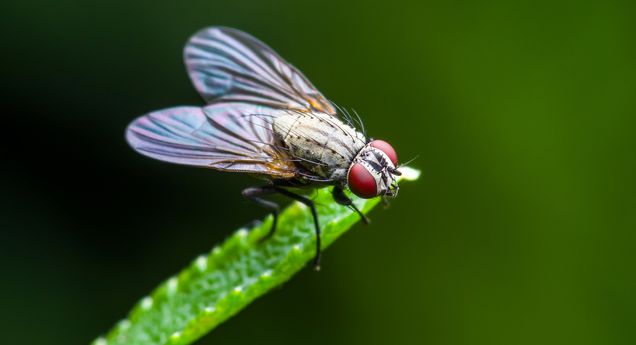
They’re the bane of summer picnics, the nemesis of busy kitchens. For most of us, flies are a seasonal annoyance, buzzing pests to be shooed, sprayed, or swatted. But to scientists, the insects are the ideal test subjects for studying a range of human diseases. What’s happening at the molecular level in their tiny bodies as they grow, age, and get sick closely mirrors what happens in ours—about 70 percent of human disease genes can also be found in flies. But they’re much less complex creatures, making it easier for researchers like Kim McCall to uncover valuable new insights into a host of chronic diseases.
McCall’s lab at Boston University is full of fruit flies. Tens of thousands of them, known as Drosophila melanogaster, are stored carefully in vials in a temperature-controlled room. McCall, a BU College of Arts & Sciences professor and chair of biology, studies Drosophila to better understand the molecular mechanisms that cause programmed cell death, particularly in the ovaries and brain. Cell death is a vital part of life in all animals, including flies and humans. It’s what enabled your body to develop in the womb—old cells making way for new ones—and what gives you a fighting chance against viruses as your body takes down infected cells. But it doesn’t always go according to plan.
Read the full Brink article here.
Dr. Muhammad Zaman Publishes New Book, Biography of Resistance
For the past eight months, the world’s attention has been focused on the deadly health crisis caused by the COVID-19 pandemic, which has already infected 30 million people and killed more than 950,000.
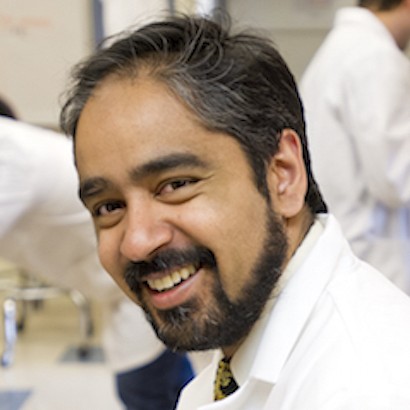
But in his gripping, highly readable new book, Biography of Resistance: The Epic Battle Between People and Pathogens (Harper Wave, 2020), Muhammad Zaman, a Boston University College of Engineering professor of biomedical engineering and of materials science and engineering, says there is an equally urgent crisis before us—drug-resistant infections.
More than 700,000 people die each year as a result of multidrug-resistant diseases, including at least 35,000 in the United States. And as Zaman, a Howard Hughes Medical Institute Professor, makes clear, the situation is getting more urgent. Without action, he writes, we are likely to face an unimaginable public health crisis: “It will be like the great plague of the Middle Ages, the influenza pandemic of 1918, the AIDS crisis of the 1990s, and the Ebola epidemic of 2014 all combined into a single threat.” A 2019 report issued by the United Nations Ad Hoc Interagency Coordination Group on Antimicrobial Resistance predicts that drug-resistant diseases could claim as many as 10 million lives a year by 2050.
Read the full article on BU Today.
Dr. Joseph Larkin Receives Innovation Career Development Professorship

Dr. Joseph Larkin received this year’s Innovation Career Development Professorship, which recognizes junior faculty whose translational research is likely to lead to future licensed technology.
Dr. Larkin’s interdisciplinary work examines how the physical and chemical environment influences microbes (in particular, bacterial biofilms), and how those microbes, in turn, engineer that environment through extracellular matrix and cell-to-cell signals to perpetuate and evolve. His research holds important practical implications for, among other things, maintaining the safety and sanitation of medical devices and water lines.
Dr. Douglas Densmore Awarded NSF Grant

Dr. Douglas Densmore and Dr. Rabia Yazicigil were awarded a $1.5M grant by the National Science Foundation for project entitled “SemiSynBio-II: Hybrid Bio-Electronic Microfluidic Memory Arrays for Large Scale Testing and Remote Deployment.” Professor Ahmad Khalil and Professor Wilson Wong of BME are also Co-PIs on the grant.
The award is for a three-year project aiming to leverage the memory of complex genetic systems in order to create smart biosensors. Bacteria or mamalia cells, living systems, will be able to “remember” things they have seen in their environment. Using these engineered cellular memory elements, Densmore and his team will create smart biosensors. By creating artificial environments using microfluidic devices, the team will then generate custom biological memory elements for those devices. The devices will be equipped with electronic technology that can detect and respond to biological changes. When these devices are in “swarms,” they can collectively act as smart biosensors in the environment.
Read the full announcement here.
Dr. Ji-Xin Cheng Receives Maximizing Investigator’s Research Award

This summer, Dr. Ji-Xin Cheng received a Maximizing Investigator’s Research Award (MIRA) for $2.9 million over five years from the National Institutes of Health (NIH) to continue his work. Investigators receive MIRAs after a successful use of the NIH’s top research grant, the R01—the MIRA is a type of extension on that grant that allows researchers to build on their work.
Read the full announcement here.
Dr. Sean Elliott Published in Nature Communications
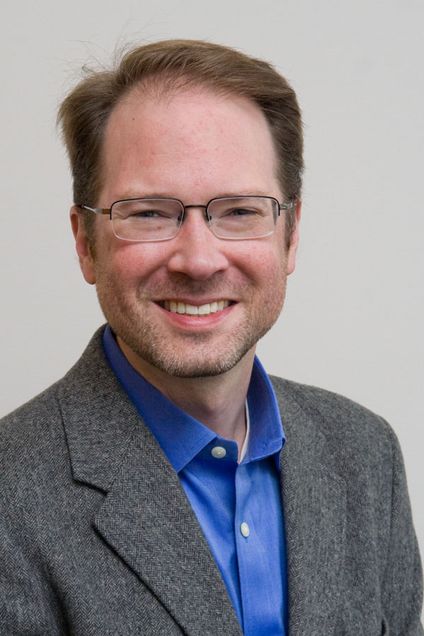
Dr. Sean Elliott recently published a paper in Nature Communications titled "A widely distributed diheme enzyme from Burkholderia that displays an atypically stable bis-Fe(IV) state."
“The work illustrates how if we look at the microbial world, enzyme continue to surprise us with how inventive they can be with chemical transformations,” says Sean Elliott. “If we can understanding the wiring, we’ll be able to re-wire these catalysts to do the reactions we need them for.”
Read the full announcement here.
Dr. Ahmad Khalil Featured in The Brink
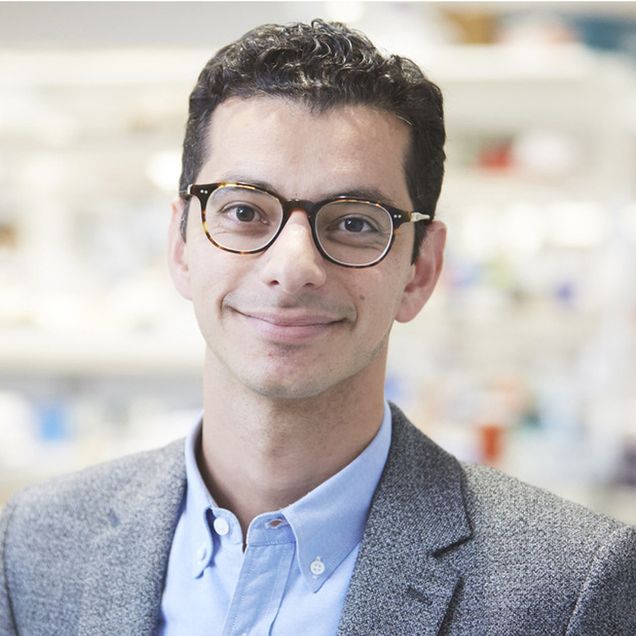
Dr. Ahmad Khalil was awarded a 2020 Vannevar Bush Faculty Fellowship—the Department of Defense’s most prestigious award for a single investigator—to explore how cells are capable of passing “memories” down to the next generation of offspring cells, a dynamic known as epigenetic memory. With his work supported by the fellowship, Khalil will discover how to manipulate epigenetic memory in cells to program self-assembling biological materials, like tissue and other cellular structures.
Read the full Brink article here.
Michael Zulch Accepted into Synthetic Biology and Biotechnology (SB2) Predoctoral Training Program
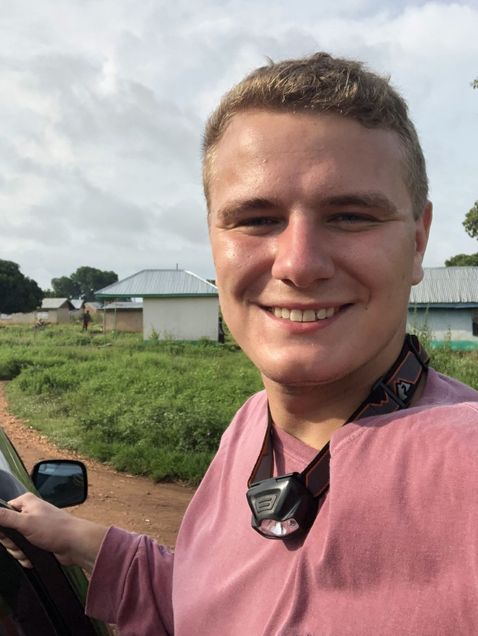
Michael Zulch of the Larkin Lab was recently accepted into the 2020 Synthetic Biology and Biotechnology (SB2) Predoctoral Training Program cohort. The goals of the SB2 Program are to provide a unique, field-defining, and interdisciplinary training environment in synthetic biology. Participating graduate programs include: Biomedical Engineering, Bioinformatics, and Molecular Biology, Cell Biology & Biochemistry.
Michael is interested in understanding the spatial organization of prokaryotic cells and their phenotypes in multicellular systems, and how this organization leads to emergent behaviors. He plans on investigating this using a multifaceted approach which includes next-generation single-cell sequencing, fluorescence microscopy, as well as bioengineering and synthetic biology.
Congratulations, Michael!
NSF Graduate Research Fellowship Awardees & Honorable Mentions
The awardees and honorable mentions for the 2020 NSF Graduate Research Fellowship Program (GRFP) competition have been posted! MCBB is exited to announce that Marisol Dothard of the Finnerty and Segrè labs was awarded a three-year graduate research fellowship, and Abigail Descoteaux of the Bradham Lab received an honorable mention.

Marisol's research interests lie primarily in investigating the role that microbial communities may play in the survival of corals in refuge habitats in Belize. She is excited to work closely with undergraduate students at both BU and the University of Belize in the field and in the lab.
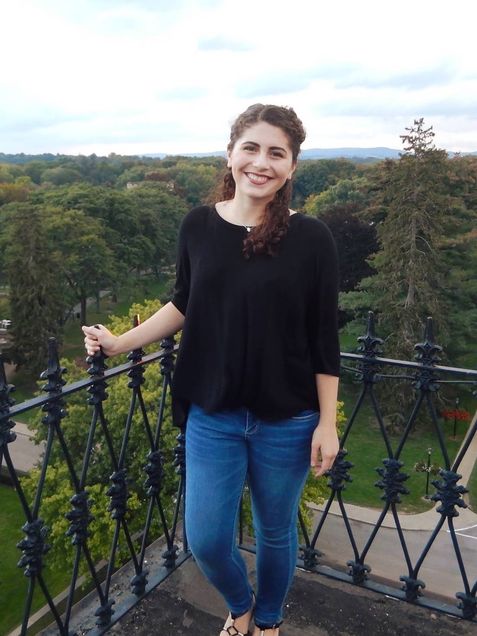
In the Bradham Lab, Abigail studies pattern formation and skeletogenesis using Lytechinus variegatus as a model organism. However, the extent of our understanding of how skeletogenesis is regulated is limited by our inability to observe the process dynamically in individual embryos. Early in development, embryos begin to swim. To image them, the embryos must be immobilized; however, current immobilization techniques are either highly transient, perturb normal development, or are lethal. To resolve this issue, she is working with Zachary Heins in the Khalil Lab to engineer a simple flow device that will continuously deliver a non-toxic paralytic drug to immobilize the embryos throughout development. By combining this device with fluorescent biomineralization read-outs and transplanted PMCs, she will for the first time visualize the entire process of PMC migration and skeletal biomineralization in individual live embryos. She will then introduce pharmacological perturbations to disrupt previously identified patterning cues and observe how they impact skeletal patterning and development in real time. This work will provide unprecedented insight into both the biomineralization process and the mechanisms driving PMC migration and embryonic patterning.
Congratulations, Marisol and Abigail!