
Classroom Activities
Michael has created a section called “Technology Today” where a student tracks news relating to a scientific or technological area of his or her choice and any contributing factors such as political, social, economic and natural events.
LEGO Robotics*
Michael developed a robotics curriculum using LEGO Mindstorm kits where students design, build and program autonomous robots to compete in a set of challenges. In the robotics unit, students learned about mechanical and dynamic design, basic programming concepts and algorithms, motion control, passive and active sensing, autonomous control and logical decision making
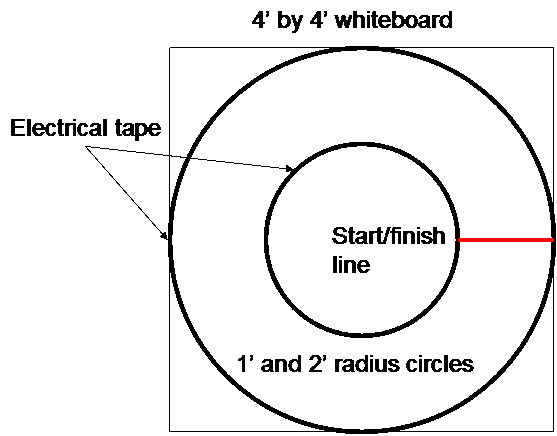

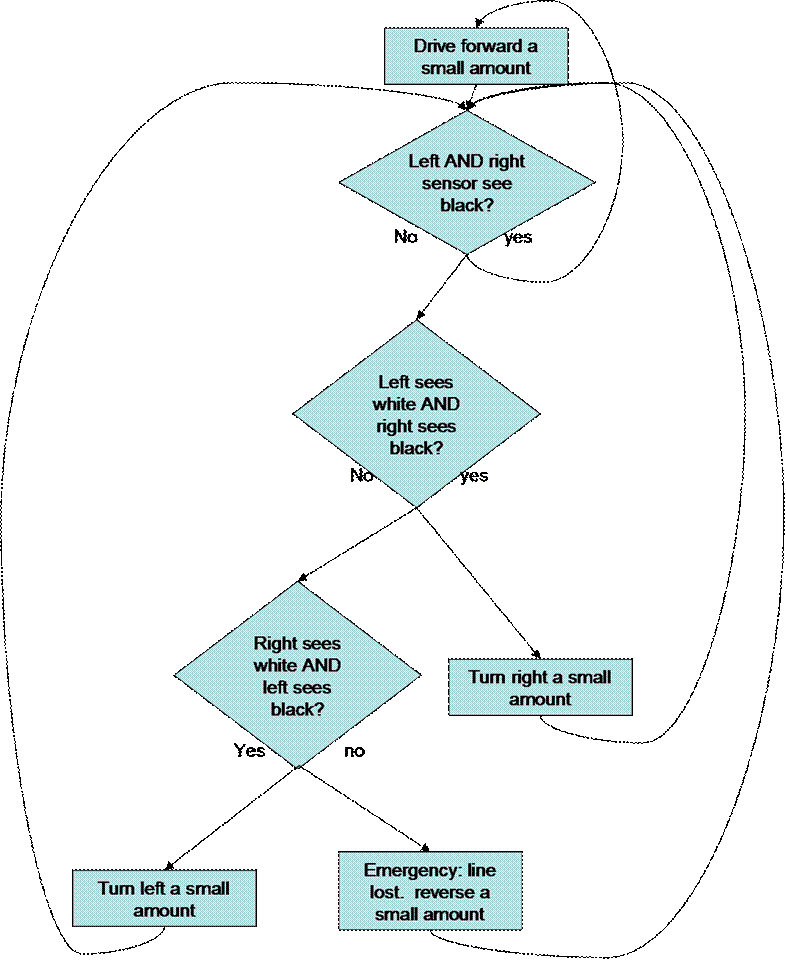
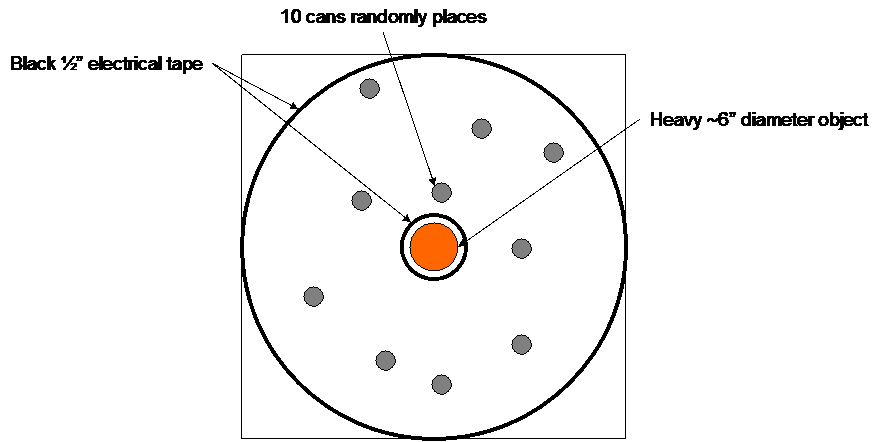
*NOTE: For the robotics unit, it is assumed that the instructor has experience with various programming languages and understands programming concepts such as loop structures, Boolean logic, logical operators, conditional logic, etc. The robotics activities are based around the text-based programming language NCQ (Not Quite C) and not the flowchart-based software ROBOLAB that comes with the LEGO Mindstorm kits. Although the flowchart-based programming is very valuable for understanding programming concepts, I believe that text-based programming is more of a core starting point much like learning to plot a graph by hand before using a graphing calculator. However, if the instructor has limited programming experience, then I suggest using the ROBOLAB software since the same concepts are still explored.
Students explore how heat transfers through an insulating material
Students devise a simple method to "see" what is on the bottom of a lake.
after experience with the subsurface probing activity, students probably realized that it was difficult to get a good image. This activity explores properties of the resolution and sampling frequency of an image.