News
The Truth Still Matters, National Academy of Sciences President Tells 2019 Grads
Marcia McNutt (Hon.’19): “Your University education arms you with the skills to determine who and what to trust”

At a time when there is urgent need for action on climate change, the United States is the only nation on Earth to abandon the Paris Agreement, McNutt told the crowd, which prompted whoops and hollers.
With showers sweeping across Nickerson Field, BU’s 146th Commencement began under threat of heavier rain. But as if on cue, the rain stopped as the 7,509 members of the Class of 2019 began processing to their seats. And as this year’s Commencement speaker, Marcia McNutt, president of the National Academy of Sciences, began her address, the clouds parted to reveal a blue sky.
Renowned geophysicist McNutt (Hon.’19), who led the 2010 Deepwater oil spill cleanup as director of the US Geological Survey, presented Sunday’s crowd with a hypothetical alternate reality of today’s society: What if that devastating oil spill happened now, in this post-truth era of “fake news” and a war on science? McNutt suggested that politicians and BP business leaders would bicker among themselves, scientists would be ignored, and the whole issue would be tied up in the courts while the leak continued to gush into the Gulf of Mexico. It may sound far-fetched, yet the ongoing trend to “use gut instinct and the preferences of special interests to replace science and evidence,” she said, “is having real-world consequences.” One example, which prompted whoops and hollers from the audience: at a time when there is urgent need for action on climate change, the United States is the only nation to have abandoned the Paris Agreement.
So call misinformation out, McNutt urged the robed graduates on Nickerson Field. “When you see junk science, call it out,” she said passionately. “When you don’t trust the sources, call them out. When your friends share misinformation on Facebook, set them straight…don’t let them get away with it, because the truth does matter.” The BU graduates gave McNutt a standing ovation.
The estimated 20,000 attendees, many sporting plastic ponchos, stood as Dylan Gregg (CFA’19) opened the ceremony singing “The Star-Spangled Banner,” and closed the proceedings with the University’s anthem, “Clarissima.”
Presenting McNutt with an honorary Doctor of Science, President Robert A. Brown told her, “According to a colleague, you have ‘a spine of iron.’ One thing we know for certain: you don’t shy [away] from a challenge.”
2019 Commencement speaker Marcia McNutt (Hon.’19) urged BU graduates to “Call misinformation out….the truth does matter.” Watch McNutt’s speech in the video above.
McNutt has shattered the glass ceiling during her career: in 2016, she was the first woman elected president of the National Academy of Sciences, and previously was the first female editor in chief of the Science journals. She has been on more than a dozen deep-sea explorations (leading most of them) and served as president and chief executive officer of the Monterey Bay Aquarium. She has received the Maurice Ewing Medal for her contributions to deep-sea exploration and the US Coast Guard’s Meritorious Service Medal for her assistance in containing the Deepwater explosion and spill, which killed 11 crewmen.
McNutt was careful to point out that scientists aren’t without fault, but that fortunately, in this day and age, it has never been easier to verify and to establish the trustworthiness of science, especially, she said, if you are armed with a college degree. No matter your major, ask important questions, about scientists’ motivations, competing interests, and transparency, among others.
“Whether the issue is healthcare, economics, education, or immigration, your University education arms you with the skills to determine who and what to trust,” she said, pausing with a laugh midway through the sentence at the interruption from the loud horn of a passing train. “And you have been instilled with the larger worldview to see beyond just your own lives and your own generation. Your choices will have profound and lasting impacts on others near and far, and on the world that your children and grandchildren are going to inherit.”
Student speaker Adia Turner (CAS’19) echoed McNutt’s sentiments about seeking the truth, saying that she and her peers have witnessed “a political, cultural, and social shift that could have scared us into silence,” but “we instead have turned our volume up,” referring to the divisive 2016 presidential election, increasingly frequent mass shootings, and the #MeToo campaign.
Student speaker and Posse scholar Adia Turner (CAS’19) was a Howard Thurman Center for Common Ground student ambassador, Student Government director of social advocacy, an Alternative Service Breaks coordinator, and executive editor of the student-run art publication Charcoal. Hear Turner’s speech in the video above.
“We have witnessed the rise of overt racism, homophobia, and xenophobia, and through it all, we have learned to speak up and speak out about the world we dream of, and most importantly, the world we know we deserve,” said the Posse scholar, who will start a job with Teach for America in September. “We are the legacy of a long line of powerful voices, most notably the voice of Dr. Martin Luther King, Jr. (GRS’55, Hon.’59). I hear Dr. King’s voice in my mind as I look out onto the field at all of you. He reminds us: ‘Our lives begin to end the day we become silent about the things that matter.’ So, Class of 2019, shout at the stars and scream at the sky if you have to, because our voice deserves to be heard.”
Brown awarded three other honorary degrees: an honorary Doctor of Science to Baccalaureate speaker John P. Howe III (MED’69, Hon.’19), a BU trustee and former president and CEO of the humanitarian organization Project HOPE, and to Karen Holmes Ward (COM’77, Hon.’19), public affairs and community services director for WCVB-Channel 5 and executive producer of the magazine program CityLine, which addresses issues facing Boston-area people of color, and Lauren Shuler Donner (CGS’69, COM’71, Hon.’19), Hollywood mega-producer, received honorary Doctor of Humane Letters (read their bios here).
The president also bestowed the University’s highest teaching honors on three faculty members. This year the top honor, the Metcalf Cup and Prize for Excellence in Teaching, went to Robinson “Wally” Fulweiler, a College of Arts & Sciences associate professor of earth and environment and of biology. Neal Fleisher(SDM’84), a Henry M. Goldman School of Dental Medicine clinical professor of general dentistry, and Gregory Stoller, a Questrom School of Business senior lecturer in strategy and innovation, received Metcalf Awards for Excellence in Teaching.
The crowd also heard from the three cochairs of the Class of 2019 Gift Campaign, who proudly announced that donations to the University from the new graduates have exceeded $50,000. More than 2,600 members of the class have donated (thus far), and with time still left, they are on course to break the current participation record, held by the Class of 2017.
Find more information about Commencement here.
Author, Amy Laskowski can be reached at amlaskow@bu.edu.
Candidates Tackle Student Loan Debt
BU IN DC
Michael Dietze of the College of Arts & Sciences hosted a workshop on ecological forecasting at the American Association for the Advancement of Science from May 13 through 15.
CANDIDATES TACKLE STUDENT LOAN DEBT
The pernicious impact of student loan debt is a dominant theme among the nearly two dozen contenders for the 2020 Democratic presidential nomination. Sen. Elizabeth Warren (D-MA) unveiled a detailed campaign proposal to eliminate up to $50,000 in student loans for households making $100,000 a year or less, and to provide partial loan forgiveness for households earning between $100,000 and $250,000. Warren would also implement universal free public college to help students avoid borrowing, significantly increase the size of Pell grants for low-income students, and invest in minority-serving institutions. Her plan is more specific than her rivals, but many Democratic candidates have come out in favor of debt-free or tuition-free plans.
BUZZ BITS...
- The U.S. Department of Defense (DOD) has selected Dr. Barton Halpern as director of the Army Research Office. Dr. Halpern previously served in technology and program management for the DOD and in private industry.
- The National Institutes of Health's Office of Behavioral and Social Sciences Research is seeking public input as it develops a list of impactful behavioral and social science research accomplishments in public health and health care. Submissions are due prior to July 31.
- President Donald J. Trump announced his intent to nominate Daniel Reed to the National Science Board, which oversees the National Science Foundation. Dr. Reed is a computer scientist and senior vice president for academic affairs at the University of Utah.
GRANTS NEWS YOU CAN USE
The U.S. Department of Energy (DOE) applied energy offices have recently released three solicitations worth over $200 million in funding The first is the Bioenergy Technologies Office (BETO) program for high-priority research with biofuel technologies. The Advanced Building Construction with Energy Efficient Technologies and Practices program is seeking research for buildings that will reduce energy consumption and relieve stress on the electrical grid. Lastly, the Advanced Manufacturing Office is looking to fund high-impact, early-to mid-stage research in integrated building retrofits, new construction technologies, and advanced technology integration.
Behind Bars. And Graduating from BU
Prison Education Program: Steven Correia’s story shows why it matters

Steven Correia is one of 10 inmates at MCI Norfolk who will receive their BU diplomas in June. Photo by Alex Potemkin.
Steven Correia won’t join his classmates on Nickerson Field at BU’s Commencement on Sunday to graduate with a bachelor of liberal arts degree in interdisciplinary studies.
Instead, Correia (MET’19) will wake up in his prison cell at MCI Norfolk, nearly an hour’s drive southwest of Nickerson Field, and go about his day behind bars, just as he has for most of the last 37 years.
But inside this medium-security state correctional facility, Correia declares his pride in the degree he’s earned through BU’s Prison Education Program over the last five years, and in his GPA, which is north of 3.5.
“This degree to me is going to be my display to my mother that I appreciate her and want her to be proud of her firstborn son,” says the 64-year-old, wiping away tears in a spartan prison conference room. “And I want my children to be proud finally of something I accomplished that is good. And I’ve stuck with it also to influence my grandchildren to get a college education, so they can have a career and get out of the grasp of poverty and move their lives forward.”
Neatly groomed, with a close-cropped salt-and-pepper beard and wearing clean blue work clothes, Correia nonetheless apologizes for his appearance—inmates on his cell block were rousted at 7:30 am so guards could search their cells, he says, and he was allowed back in only briefly to change before the interview. Unfailingly polite and often pensive in discussing his situation, he also bristles when describing the hardships and indignities of prison life.
He is one of 10 inmates who will don a cap and gown to receive their Boston University diploma in June in a small ceremony at the prison visiting room. He’s not sure if any of his family will come. Only one of his three children is in regular contact, and his mother is beginning to suffer from dementia. He’s hoping a cousin will bring her.
Correia is one of 372 inmates—the men from Norfolk, the women from MCI Framingham—to earn a BU diploma since the program started in 1972. Other area universities are getting involved in similar ways, including MIT’s Educational Justice Institute, which in 2017 founded the Massachusetts Prison Education Consortium.
Support for prison education waxes and wanes with the political climate, and some will always believe that convicts don’t deserve to get an education while they serve their sentences. But data support the idea that education reduces recidivism—and there’s even a move afoot in Washington to return Pell Grant access to inmates.
The most motivated students
“It’s really transformative to see how these men and women can articulate complex ideas and demonstrate critical thinking,” says Mary Ellen Mastrorilli, a Metropolitan College associate professor of the practice, criminal justice, who oversees the Prison Education Program. “It’s kind of mind-blowing. They are some of the most motivated students a professor will ever have.”

Inmates are “some of the most motivated students a professor will ever have,” says Mary Ellen Mastrorilli, a Metropolitan College associate professor of the practice, criminal justice, who oversees the Prison Education Program. Photo by Jackie Ricciardi.
In many cases, the source of that motivation is family outside the walls, often a child or a parent.
“I’m trying hard as I can to get my firstborn grandbaby to go to college. She wants to be a doctor,” Correia says. “I need to show her, if your granddaddy can do this at age 64, in the penitentiary, after I’ve been here 37 years, dealing with all this negativity, all this aggravation and disrespect and humiliation—if I can do it through all this, you can do it.”
The experience of getting a college education while behind bars is nothing like that of typical on-campus students. It’s a throwback to an era before cell phones, laptops, and the internet. Each class meets once a week for three hours, and inmates can take up to three classes a week; there’s a classroom dedicated just to the BU program. But computer technology is largely out of reach, with the prison library the main resource for research. Forget about labs. MET pays for textbooks, but otherwise it’s paper and pen and classroom discussion.
“I tell my faculty it’s like teaching in the 1970s,” says Mastrorilli, who is also MET’s applied social sciences department chair ad interim.
But those constraints have an upside, too, says one of Correia’s teachers, Abraham Waya, a MET adjunct faculty member who has been teaching in prison since 2004.
“No phones, no laptops, nothing electronic, so the students have their textbook and their notes and they have you, that’s it,” Waya says with a laugh. “No distractions at all, which is good, very good. They’re not running to their laptop to find out if what you just said is wrong. They pay attention, they contribute, the discussions are lively. They speak with respect to each other.”
The student inmates work hard in spite of—or perhaps because of—those challenges, he says, “and in many cases I get reports that I consider better than I get in an on-campus class. They are older, so they appreciate what has been given to them by education, and some people on campus take it for granted.”
Waya, who is also a pastor at a United Methodist Church in Brockton, doesn’t try to learn why his students are in prison, which puts them on a simpler student-teacher footing, he says. This semester, he taught Correia and two dozen other inmates in an Introduction to the Philosophy of Religions class, which pushes some inmates’ buttons because it raises fundamental questions about their faith. But Correia “has something to contribute every time, stating his opinions, and he doesn’t become defensive,” Waya says. “He is engaging, he is intelligent, he is calm.”
An impoverished childhood
Correia grew up in a poor family in New Bedford, with a single mother and six siblings. He liked school, but the streets lured him away by ninth grade, and he first entered a correctional facility as a teenager. He got his GED 40 years ago, he says, while serving time for breaking and entering and car theft. In 1985, he walked away from a work release program. When he was captured a couple of months later, he was charged, and convicted, in a string of crimes, including aggravated rape and armed robbery.

Several years ago, Correia created a website to share his writing with people outside the walls.
He bounced around the Massachusetts prison system, trying to get transferred to Norfolk for years because of the BU program and finally landing here in 2011. With several overlapping sentences ranging up to life, Correia says, he will not be eligible for parole until 2026. But parole is one reason prison education is a good idea, says Mastrorilli. Citing a 2016 US Sentencing Commission report, she says that some 60 percent of all released inmates are repeat offenders and find themselves back behind bars. But the recidivism for prison education graduates? Much less—only 19 percent.
“It’s a good investment in people,” she says. “Some 96 percent of these prisoners get out of prison one day. They’re coming back to your community and mine, so it’s a good investment. Education reduces possible reoffending, they get better jobs, they earn higher wages.”
A former prison administrator, Mastrorilli worked in corrections in the state for 24 years in a variety of posts, retiring from the Suffolk County Sheriff’s Department to fulfill a long-held desire to teach. Running the Prison Education Program, she says, she’s come full circle. “I’m so happy to be back in prisons again,” she says. “I’m very comfortable there, and I really love supporting our students, using both my corrections background and my academic background.”
Even inside the walls, Correia says, focusing on education has its benefits.
“In prison, people get on your nerves, they challenge you, people are disrespectful to you, there’s a bunch of things go on,” he says. “I don’t want to lose this degree, and that has kept me from punching people in the face sometimes….It’s been a challenge to let some things go, but I have because I’m focused on BU.”
Beginning next year, the Prison Education Program will shift to offering an eight-course certificate program in interdisciplinary studies, although students currently enrolled in the bachelors program can still complete their degree. Why the change? The primary reason, administrators say, is to reach a larger number of inmates with the program, and more specifically, to give inmates with shorter sentences the opportunity to acquire an academic credential.
“We want to help inmates to rebuild their life and we want to do it for as many as possible,” says Tanya Zlateva, dean of MET.
Other reasons for the shift include challenges to providing a bachelor’s degree program with the necessary range of courses, uncertainties about integrating prison education with the required BU Hub curriculum, and some changes in the prison staffing structure.
“BU is committed to post-secondary education for incarcerated individuals,” Mastrorilli says, which is why Metropolitan College devised a way to keep the program going in the form of a 32-credit interdisciplinary certificate.
For Correia, the change from getting a degree to a certificate diminishes the impact of the program.
“It’s a shame,” he says. “There are people coming behind me going to need this education to get their lives straight and keep their lives straight. With any education, opportunities are greater, I appreciate that—however, with a degree, the opportunities for a career are much better.”
Waya says inmates often ask him why he cares about educating prisoners when so many people just want to lock them up and throw away the key.
“My answer is, I don’t know why you’re here, so that has no impact on how I see you,” he says. “I also know there is no ticket to moving forward in life better than a good, solid education. It is something you need, and it is something I can offer. But you have to promise me that you are going to work hard and do everything possible not to come back here after you get out.”
Author, Joel Brown can be reached at jbnbpt@bu.edu.
White House to Address Research Environments
BU IN DC
School of Public Health Dean Sandro Galea gave a book talk at the Politics & Prose bookstore on May 4.
Katherine Einstein of the College of Arts & Sciences spoke on a Brookings Institution panel on housing policies for the middle class on May 8.
Elizabeth Leary of Government & Community Affairs attended the New England Council's Washington Leaders' Conference on May 8 and 9.
WHITE HOUSE TO ADDRESS RESEARCH ENVIRONMENTS
On Tuesday, the White House announced that the National Science and Technology Council (NSTC) will establish an initiative to "address issues related to research environment safety, integrity, and productivity." The NSTC, which is comprised of leaders of the federal science agencies, will charge a committee with examining four issues: administrative burdens on federally-funded research, research rigor and integrity, inclusive and equitable research settings that are free from harassment, and protecting America's research assets from security threats. The NSTC committee is expected to recommend uniform policy changes across the science agencies
BUZZ BITS...
- A U.S. district court temporarily suspended a U.S. Citizenship and Immigration Services policy under which foreign students who overstay their visas could have been barred from re-entering the U.S. for up to 10 years, even if they did not know they had fallen out of compliance. A final decision on the policy's legality is expected in June.
- The U.S. Air Force recently released its Science and Technology 2030 strategy, outlining its goals over the next ten years. The Air Force plans to prioritize research which will enhance its capabilities in global persistent awareness, resilient information sharing, rapid decision-making, and other areas.
- The National Institutes of Health (NIH) announced that Debara Tucci will serve as the next director of the National Institute on Deafness and Other Communication Disorders. Dr. Tucci will join NIH in September after leaving her current position at Duke University.
GRANTS NEWS YOU CAN USE
The Department of Defense (DOD) released its latest solicitation for the Minerva Research Initiative, its signature university-led social science research program. This year's competition will fund research in topics including statecraft, power and deterrence, alliances and burden sharing, economic interdependence and security, multi-domain behavioral complexity, artificial intelligence and social interactions, covert online influence, and automated cyber vulnerability analysis. DOD plans to issue 10 to 12 awards averaging between $150,000 and $1 million per year for a period of three to five years. White papers are strongly encouraged and must be submitted via email no later than June 20.
Leonid Levin Chosen to Join Ranks of National Academy of Sciences
BU computer scientist among 100 new US members elected

Leonid Levin, a College of Arts & Sciences professor of computer science, is one of the 100 2019 US researchers elected to the National Academy of Sciences. Photo by Cydney Scott.
Leonid Levin, a BU College of Arts & Sciences professor of computer science, is an expert on a range of things, from complex algorithms to information theory. He has read all the Game of Thrones books and thinks quantum computing is a hoax. One quick look at his website, and it’s clear Levin has bold stances on democracy and taxes and is also quite humble about his numerous theories and discoveries that have shaped modern computational science. According to Levin, the most crucial point in his career was emigrating to the United States from the Soviet Union.
Now, in recognition of his contributions to the field of computer science, he’s been elected to the National Academy of Sciences, a nonprofit nongovernmental organization of the country’s leading researchers.
BU Today: How did you first become interested in computer science and mathematics?
Levin: As a kid I was interested in chemistry—explosions and such. Then I found I cannot fully understand chemistry without physics. Later I saw that to deeply understand physics, I need [to understand] math. Then I concluded that to really understand math, I must study its foundations in logic. Mathematical logic turned out to be based on the notions of computability.
When did you know that this field would become a lifelong career?
I was selected among the winners of math Olympiads to attend special university-run high schools in Kiev, and then later, Moscow. There I met my future advisor, a great mathematician named Andrey Kolmogorov. The rest was his influence. As a teacher myself, now I feel overjoyed when I see students getting interested in studying the material at a level higher than what is required.
What was the most meaningful moment of your career?
The absolute most crucial point in my career was crossing the border of the Soviet Union 40 years ago. In a moment, I turned from being a communist slave into a free human. Nothing in my life compares with this experience.
What was that journey like?
With my wife, Larissa, we went on a train to Vienna, stayed there a week, and then spent a summer in Italy, while our US entry permission was being prepared. Finally, I received an invitation from MIT, where we went in September 1978.
What initially drew you to teaching?
I admired my teachers, and was very lucky to have the ones that I did. Like many young people, I wanted to imitate them. However, I had serious problems with communist authorities and was warned not to seek a teaching job, as I would be a bad influence on the political loyalty of students. In the United States, I finally had the right to teach, but first had to improve my English. After two years at MIT, BU invited me for a teaching job, in 1980.
Since we are living in such an algorithm-driven world, what do you think the future of the internet will look like?
I expect (fear, not hope) that it will turn into something that far exceeds our human intelligence. But we still have some time to live.
Do you have advice for the next generation of computer scientists?
It is not worth spending four years of your life and your parents’ savings to just get training for your first job. Study things that will last you a lifetime.
Author, Jessica Colarossi can be reached at jrcola@bu.edu.
ENG Prof Named 2019 Vannevar Bush Faculty Fellow by DOD

Siddharth Ramachandran. Photo courtesy of the College of Engineering.
Siddharth Ramachandran, a Boston University College of Engineering professor of electrical and computer engineering and of materials science engineering, thrives in the city. He loves the hustle and bustle of Boston and the diversity of all the people he encounters. When he’s not in his lab or teaching BU engineering students about the fascinating physics of, and applications related to, lasers and optics, you might find him listening to live music at Boston Symphony Hall or a local jazz café.
Ramachandran, who has been named a Vannevar Bush Faculty Fellow (the Department of Defense’s most prestigious award for a single investigator), will now use the support of the fellowship to explore one of the most marvelous optical phenomena: the existence of light beams that instead of streaming in a straight line, swirl downward like a spiral staircase.
BU Today: The fellowship support will allow you to study a new kind of light beam that shines in a twisted fashion, rather than as a straight beam. That sounds like science fiction. Can you tell us more?
Ramachandran: Generally, when we think of light, we think of a beam that looks like a spot traveling in a straight line. But the beams we will be studying under this fellowship curiously manifest in light traveling in a twisting path, whirling around an axis like a tornado. At a fundamental level, this fellowship will allow us to study these tornado light beams in ways that haven’t been considered in detail yet. What happens when we send these tornado light beams through air, water, different materials? Does the way light interacts with matter change because of this inherent twisting behavior?
So what makes tornado light beams shine in a twister shape in the first place?
To explain why light typically travels in a straight line, let’s look at waves in an ocean. As you analyze waves, you realize that the water itself isn’t moving forward but instead rises up and down in a synchronized fashion, and it is this synchronization that gives the wave an effective “forward” momentum. If you use the same analogy, a typical light beam does the same thing—the amplitude of light goes up and down in a local position, but the overall momentum flow is straight ahead. In contrast, if you imagine looking at water going down a drain, it twists and goes down in a spiral. That’s similar to a tornado light beam—its wavefront moves in a helical fashion—and so light’s momentum, although still directed down a central axis, locally traces a spiral shape.
Could you—pardon the expression—shine a light on why these weird twisting beams might be useful?
In a paper on tornado light beams we published in 2013 in Science, we showed, for the first time, that these exotic light beams can be encoded with data and made to travel through optical fibers. For telecommunications, this could be really important. Current fiber-optic technology has exhausted all the possible ways of manipulating regular light to increase information bandwidth. But the number of internet users and amount of information we consume continues to increase. Applying tornado light beams to carry data through fiber-optic cables could help us break through this bandwidth barrier.
There are other tantalizing potential applications as well. Going back to this analogy of the sink with swirling water, it turns out that these twisted light beams literally carry momentum that spirals around, a phenomena called orbital angular momentum (OAM). So, for example, you could use OAM in tornado light beams to rotate microscopic particles. This would allow us to create “tweezers” out of light that can rotate and unwrap DNA strands, allowing for very high-speed DNA sorting, for instance.
Tornado light beams could also be very useful for making high-powered lasers. The next generation of self-driving cars will have a lot of optical sensors that use lasers to gain a wealth of information, such as the proximity of objects, the speeds with which they are moving, etc., and lasers made with tornado light beams provide much more information in this regard, from a sensing perspective….With the fellowship support, the hope is that by the end of the program, we will gain a much deeper understanding of what we all can do with twisted light, both at a fundamental as well as an applications level.
What led you to start your own lab at Boston University?
As I was going through high school, I was inspired by teachers who could explain physical phenomena and show how they could be made into useful applications for society. After getting my PhD in engineering, I worked for the telecommunications research company Bell Labs for a decade. I absolutely loved the synergy between math and physics, and doing it with the intent that my efforts would be useful for business units tasked with developing new technologies, hence having an impact on society. But over time, I felt that industrial research in the United States has become less interested in long-term investment in science and more interested in very short-term innovations. I have always been naturally inclined toward the former, and I was reminded of the reasons I got into the field of engineering—my inspiring teachers—so I came here in 2010 and have been thoroughly enjoying this career change ever since.
How do you stay so innovative?
Being able to work with so many people who have different levels of engineering education—from undergraduate students to postdoctoral researchers—as well as different disciplinary backgrounds, but all sharing the same motivation and excitement for science and technology…I find that to be very fruitful for generating fresh and new ideas. You have this combination of people looking at problems from a fresh perspective alongside people who have been in different related fields for a long time.
You grew up and attended university in small towns, and you say your love for cities began when you started your career. What draws you to city life?
I have always liked living in big cities, where I have the opportunity to be in a cosmopolitan atmosphere with diversity of thought and opinion. When I was working at Bell Labs, I was living in Hoboken. It was easy to hop into New York City for a play, or jazz music, or restaurants. I like music a lot, mostly jazz and classical artists. Now, I happen to live seven minutes from Boston Symphony Hall, so it’s great that I can always just walk over there for a show (I’m a poor planner in advance).
Outside of research and jazz, where else do you like to invest your energy?
I personally get a lot of satisfaction working on volunteer programs to educate underprivileged children in some of the world’s most depressed economic areas. I feel there is a direct connection between me, as an educator for college students, and the much more challenging problems of literacy and education in the underdeveloped parts of the world. I grew up in India, so I go there quite often—at least once or twice a year—and almost every year I end up visiting migrant laborers who, because they are transient, tend to be the most exploited class of laborers. I try to visit those communities and contribute to adult education and adult literacy programs. I also play a small role in Boston organizations like the Association for India’s Development and Asha for Education, doing local project planning to identify new opportunities for education and human development programs.
Author, Kat J. McAlpine can be reached at katjmcal@bu.edu.
Not Politics As Usual
 BU IN DC
Not Politics As Usual
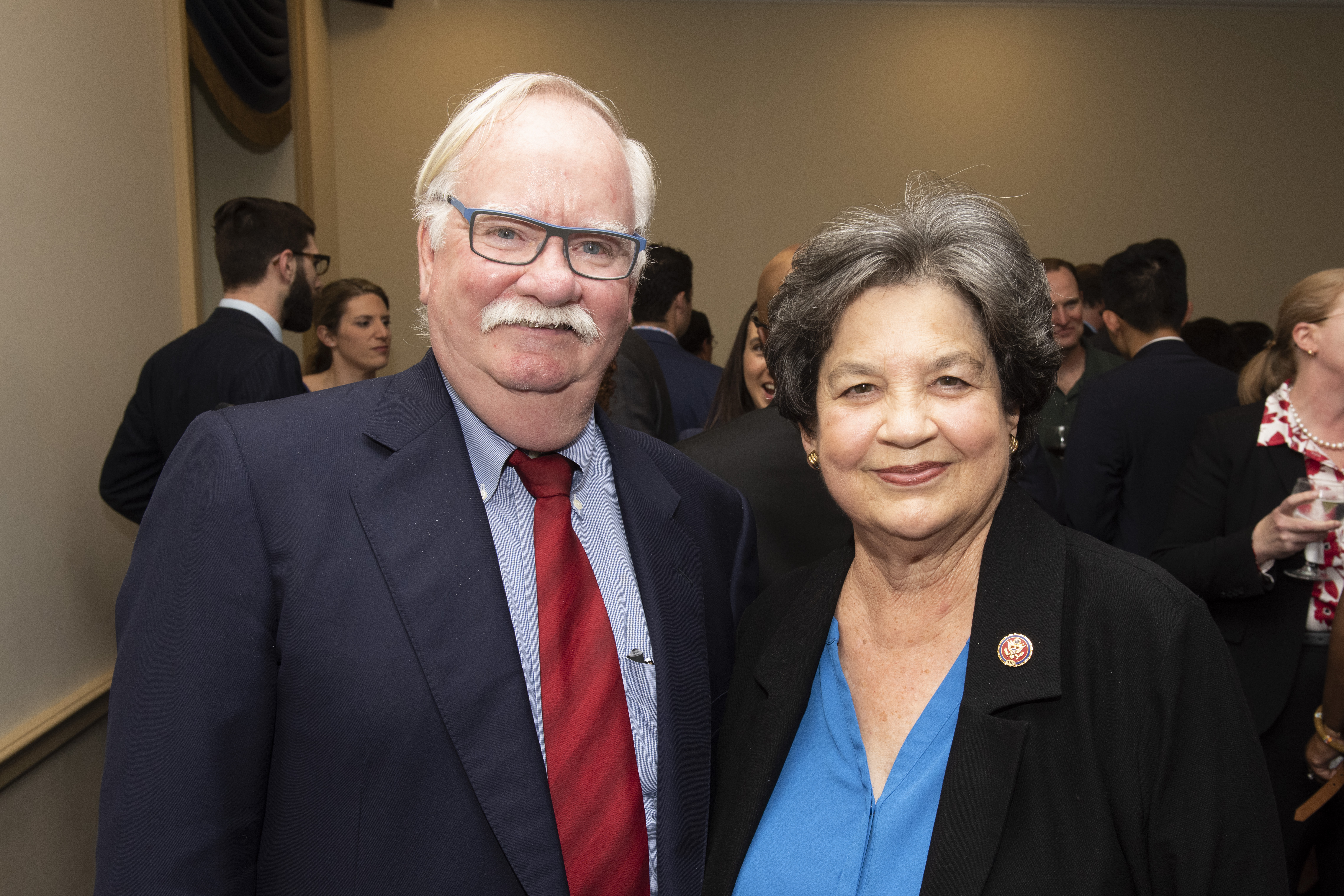
On April 30 and May 1, BU President Robert A. Brown hosted a Capitol Hill reception for more than 170 friends and alumni and met with Members of Congress. See for yourself
 COMMUNITY RESOURCE
Sharks & Cape Cod
The Cape has a great white shark problem. What does that mean for humans? Dive in
 RESEARCH HIGHLIGHT
Smarter, Bolder Autonomous Vehicles
Can lessons from neuroscience teach self-driving cars how to navigate unpredictable terrain in the world's harshest environments? BU scientists will find out, thanks to a $7.5 million Department of Defense grant. Get smart
IN CASE YOU MISSED IT...
Join the BU School of Public Health and the BU Initiative on Cities for a conversation about cities and health at the National Press Club on June 4th...Kevin Gallagher of the BU Global Development Policy Center explains how borrower nations can encourage less carbon-intensive activities in China... Kevin Kozin and Nanci Ginty Butler of the BU School of Social Work offer advice for finding a therapist in The Boston Globe... Sarah Ketchen Lipson of the BU School of Public Health developed an online tool for measuring the benefits of investing in student mental health initiatives... National Public Radio interviewed Jose Bou, who earned a bachelor's degree from BU while in prison.
President Brown Meets with Lawmakers
BU IN DC
College of Engineering Dean Kenneth R. Lutchen participated in the National Science Foundation Directorate for Engineering Advisory Committee meeting on April 17 and 18. He is a member of the committee.
Jeffrey Samet of the School of Medicine and School of Public Health attended a press conference announcing the research sites for the Helping to End Addiction Long-Term (HEAL) Initiative at the U.S. Department of Health and Human Services on April 18.
Daniel Segrè of the College of Arts & Sciences and the College of Engineering participated in a meeting of the Biological and Environmental Research Advisory Committee of the U.S. Department of Energy, of which he is a member, on April 25 and 26.
PRESIDENT BROWN MEETS WITH LAWMAKERS
President Robert A. Brown discussed the University's support for low-income students and the importance of federally-funded research with several Members of Congress on Wednesday. Brown met with Congresswoman Ayanna Pressley (D-MA), who represents BU in Congress, and Reps. Lois Frankel (D-FL, CAS '70), Joseph Kennedy III (D-MA), Frank Lucas (R-OK), Chellie Pingree (D-ME), and Lori Trahan (D-MA). On Tuesday evening, Brown and Provost Jean Morrison hosted a Capitol Hill reception for alumni, friends, and policymakers. Frankel joined the group, as did College of General Studies Dean Natalie McKnight, Associate Provost and Dean of Students Kenneth Elmore, Vice President and Associate Provost for Enrollment & Student Administration Christine McGuire, Vice President for Alumni Relations Steve Hall, Vice President for Government & Community Affairs Jake Sullivan, Assistant Vice President and BU Today Executive Editor Doug Most, Assistant Vice President for External Relations Anita Stasiowski, Alumni Relations Executive Director Susan Richardson, Director of BU Washington Programs Walter Montaño, and Daniel Solworth, Chief of Staff and Director of Operations for the Dean of Students.
HOUSE DEMOCRATS OFFER NIH, STUDENT AID BOOSTS
Kicking off the fiscal year 2020 budget process, a subcommittee in the U.S. House of Representatives approved a spending bill on Tuesday which would increase funding for the National Institutes of Health budget and bolster student aid funding. The measure passed by the House Labor, Health and Human Services, and Education Appropriations Subcommittee would provide NIH $2 billion more than its current level, increase the maximum Pell Grant award for low-income students to $6,345, and add $304 million to the Federal Work-Study program. Notably, the measure also includes $50 million for "firearm injury and mortality prevention research" at NIH and the Centers for Disease Control and Prevention (CDC); the CDC hasn't funded the topic in more than twenty years. House Democrats offered the legislation in the absence of an agreed upon budget level, so the bill represents the first step in a long series of negotiations between the House, the U.S. Senate, and the White House.
EVENTS NEWS YOU CAN USE
Are you looking to showcase your research on social media, but don't know where to start? BU Research and BU Public Relations are here to help. Whether you are looking to increase your following or build visibility for your department, center, or initiative, a panel discussion with acclaimed science writer and social communicator Karen Weintraub is now available online. The video will guide you through the do’s and don’ts of using social media, how to set goals and measure success, and how to take advantage of Facebook, Twitter, Instagram, and more.
National Academy of Sciences President Announced as 146th Commencement Speaker
Honorary degree recipients, student speaker also named at Friday’s Senior Breakfast

The BU Class of 2019 watched a highlight reel of their past four years at Friday’s Senior Breakfast. Among the memories were Beyoncé's Lemonade video, the inauguration of President Donald Trump, and the Patriots and Red Sox championships. Photo by Jacob Chang-Rascle.
Marcia McNutt, the president of the National Academy of Sciences, whose background as a geophysicist was instrumental as she helped to lead the cleanup of the 2010 Deepwater Horizon oil spill, is this year’s Boston University Commencement speaker, seniors learned Friday morning at the Class of 2019 Senior Breakfast. Their student speaker at Commencement will be senior Adia Turner (CAS), a Thurman Center for Common Ground ambassador on her way to being a public school teacher in St. Louis, Mo., this fall.
McNutt will deliver the 146th Commencement address on Sunday, May 19, at the main graduation ceremony on Nickerson Field.
Robert A. Brown, BU president, announced McNutt as Commencement speaker at the annual event at the George Sherman Union Metcalf Ballroom, where more than 2,000 well-dressed soon-to-be grads packed in for a fancy brunch of roasted tomato and mozzarella tarts and Lyonnaise potatoes. A slideshow of photos and iconic songs from the last four years played as students filed in.
McNutt will receive an honorary Doctor of Science. Brown also named this year’s other honorary degree recipients: journalist and community advocate Karen Holmes Ward (COM’77), Doctor of Humane Letters; global health activist John P. Howe III (MED’69), Doctor of Science; and Hollywood mega-producer Lauren Shuler Donner (COM’71), Doctor of Humane Letters. Howe will deliver this year’s Baccalaureate address at Marsh Chapel on Commencement morning.
Brown also revealed the winners of the University’s highest teaching honors. This year the top honor, the Metcalf Cup and Prize for Excellence in Teaching, goes to Robinson “Wally” Fulweiler, a College of Arts & Sciences associate professor of earth and environment and of biology. Neal Fleisher (SDM’84), a Henry M. Goldman School of Dental Medicine clinical professor of general dentistry, and Gregory Stoller, a Questrom School of Business senior lecturer in strategy and innovation, are the recipients of the Metcalf Awards for Excellence in Teaching. The three faculty members will be honored at the 2019 Commencement ceremony.
McNutt was the first female elected president of the National Academy of Sciences, in 2016. She was previously editor in chief of the Science journals, president and chief executive officer of the Monterey Bay Aquarium, and director of the US Geological Survey. During her three-year tenure at the Geological Survey, her team responded to major disasters, among them the Deepwater Horizon oil spill. She has received the Maurice Ewing Medal for her contributions to deep-sea exploration and the US Coast Guard’s Meritorious Service Medal for her assistance in containing the Deepwater explosion and spill that killed 11 crewmen.
Holmes Ward is WCVB’s director of public affairs and community service and host and executive producer of the magazine program CityLine, which addresses issues facing Bostonians of color. She is an inductee of the Massachusetts Broadcasters Hall of Fame and a recipient of the National Academy of Television Arts & Sciences’ Silver Circle Award for Lifetime Achievement.
For 14 years, Howe was president and CEO of the humanitarian organization Project HOPE, which delivers healthcare and advocates for the world’s most vulnerable populations. Howe is an internationally prominent cardiologist, winner of distinguished alumnus awards from both the School of Medicine and the University, and is a BU trustee and a former vice chair of the Board of Trustees.
Shuler Donner has had a hand in some of Hollywood’s most successful films over her 40-year career, among them X-Men and Deadpool, the Brat Pack films Pretty in Pink and St. Elmo’s Fire, and Free Willy, You’ve Got Mail, and Any Given Sunday. In recent years, Shuler Donner has set her sights on television, as executive producer of Legion and The Gifted.

Senior Breakfast emcee Kenneth Elmore, dean of students and associate provost, quizzed students and awarded jerseys at the Senior Breakfast.
The breakfast kicked off with the BU Allegrettos singing “Lose My Cool” by Amber Mark. Next, event emcee Kenneth Elmore (Wheelock’87), associate provost and dean of students, walked among the throng of 2019 graduating seniors, interviewing them, as a camera followed. “What does the ‘A’ stand for in Robert A. Brown?” he quizzed three students, with the final one coming up with the correct answer: Arthur. Robert Allan Hill, dean of Marsh Chapel, next led an invocation prayer, and pointing out that May 12 is Mother’s Day, he told the seniors that it would be a good idea to send flowers—and call.
Brown recalled some of the milestones this year’s seniors have experienced, like the opening of the Joan & Edgar Booth Theatre, the University’s launching its Climate Action Plan, and the merger of BU and Wheelock College.
New-ish alum Jordan Fessehaie (SHA’18) welcomed the Class of 2019 as new members of the BU Alumni Association. Describing herself as one year into “adulting,” she asked the tables of students to raise their hands if they came to BU undecided, changed majors, or changed classes. Practically everyone shot a hand up, proving that few stick to their original plans. “You’ve learned enough about your major—now it’s time to learn about yourself and the phenomenal people you’ll meet along the way,” Fessehaie said.
Look for stories on BU Today next week for more information on the honorary degree and Metcalf recipients.
Find more information about Commencement on the Commencement website.
Author, Amy Laskowski can be reached at amlaskow@bu.edu.
Not Politics as Usual
Photographer: Dave Scavone
On Tuesday, April 30, 2019, Boston University President Robert A. Brown and University Provost Jean Morrison hosted BU’s 4th biannual Capitol Hill reception at the Rayburn House Office Building. With the theme of “Not Politics as Usual,” more than 170 attendees celebrated BU’s federal partnerships and alumni in Congress: Representatives Ayanna Pressley (CGS), Lois Frankel (CAS’70), and Alexandria Ocasio-Cortez (CAS’11).
Brown also met with Reps. Pressley, Frankel, Joseph Kennedy III (D-MA), Frank Lucas (R-OK), Chellie Pingree (D-ME), and Lori Trahan (D-MA) on Wednesday, May 1, 2019.