News
BU Appoints New Executive Director of Innovate@BU
Former MassChallenge president and CEO Siobhan Dullea (CAS’91) starts April 3.
Delivery Drones and Rotor-Powered Rideshares Sound Great — and Noisy
BU researchers with NASA funding will lead a multimillion-dollar, multi-institution project to help develop quieter vertical lift air vehicles.
Racism & Heart Disease, Mystic River, Fastest Track
RESEARCH HIGHLIGHT
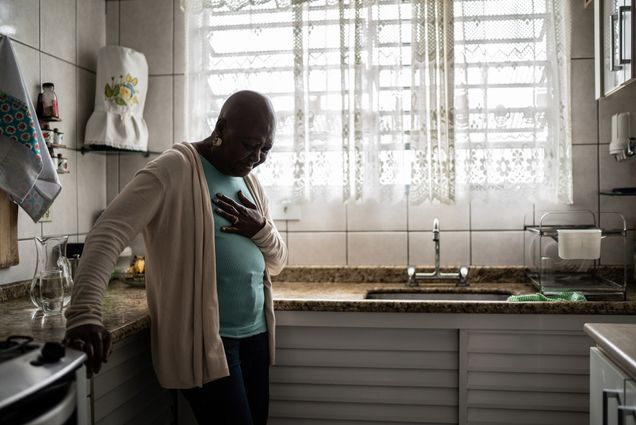
Experiencing Racism Increases Black Women's Heart Disease Risk, BU Research Finds
New National Institutes of Health-supported research from the Black Women's Health Study shows perceived racism in employment, housing, and interactions with the police is associated with a 26 percent higher risk of coronary heart disease.
FACULTY EXPERT

Climate Change is Threatening the Mystic River Watershed -- Can It Be Saved?
With a $1.3 million grant from the U.S. Environmental Protection Agency, BU environmental health researchers Jonathan Levy and Amruta Nori-Sarma use geospatial data and mapping tools to support community climate resilience efforts.
Learn how they're working to change the future
ON THE CHARLES RIVER

The Mystery behind BU's Record-Breaking Indoor Track
There are a number of reasons why the world's fastest runners come to BU when they want to set a record.
THOUGHT LEADERS
In Case You Missed It...
The U.S. State Department highlighted earthquake relief for Turkey and Syria organized by BU students... Wesley Wildman of the BU School of Theology discusses ethical considerations for AI text generation in education during a recent Reddit AMA... Marilyn Augustyn of the BU Avedisian & Chobanian School of Medicine weighs in on the Adderall shortage in New England in The Boston Globe... BU pathologist Thor Stein explains recent research on the risk of brain damage from starting football at a young age to CBS Boston... Katy Coduto of the BU College of Communication weighs in on Taylor Swift lookalikes on social media with Marie Claire.
Biden Budget; Research Security; Cities, Safety, & Health
BU IN DC
Ambassador Mark Storella of the Pardee School of Global Studies spoke on a panel on U.S. foreign policy and the war in Ukraine at the Principles First Summit on March 4th.
Vice President and Associate Provost for Research Gloria Waters attended the Association of American Universities Senior Research Officers meeting between March 5th and 7th.
Dean Scott Taylor and Cory Diamond of the Pardee School of Global Studies attended a reception hosted by Pardee School Dean’s Advisory Board member Paul Nathanson (Pardee ’85) for alumni and students on March 6th.
Yannis Paschalidis of the Rafik Hariri Institute of Computing and Computational Science & Engineering participated in a National Science Foundation workshop on harnessing artificial intelligence for scientific advancement on March 8th and 9th.
BIDEN ASKS CONGRESS FOR LARGE NSF, ENERGY, PELL INCREASES
On Thursday, President Joe Biden released his budget request for fiscal year 2024, revealing the Administration’s education and research priorities for the year ahead. Building on the vision laid out in last year's CHIPS + Science Act (Public Law 117-167), the President proposed an 18% increase in the National Science Foundation budget ($11.3 billion) and a 9% increase for the Department of Energy's Office of Science ($8.8 billion). The President also requested an additional $1 billion for the new Advanced Research Projects Agency-Health and just shy of a 2% increase for the National Institutes of Health. The White House requested an $820 increase in the maximum Pell Grant award amount ($8,215), continuing the President's goal of eventually doubling the award. Congress will hold hearings on the President's proposals this spring and then begin to formulate the spending bills that will determine agency budgets for fiscal year 2024.
BUZZ BITS...
- The White House Office of Science and Technology Policy (OSTP) is seeking input on a draft standard requirement for research institutions to establish and operate a research security program. The proposal builds on the research security goals outlined in National Security Presidential Memorandum 33, released during the Trump Administration. OSTP is soliciting comments on the proposed guidance through June 5th.
- The House Science, Space, and Technology Committee held a hearing on Wednesday examining the U.S. Department of Energy's (DOE) position in the federal research ecosystem and how the agency might better collaborate with other agencies. Witnesses from DOE and several science agencies spoke about the value that DOE's research apparatus brings to their own research missions and how they partner with the agency to benefit the U.S.
- DOE is seeking feedback from universities on the best practices for preparing students for careers in quantum information sciences, including how the DOE national lab system can contribute. Responses are due by April 20th.
EVENTS NEWS YOU CAN USE
The Office of Research and the Initiative on Cities are cosponsoring "Safety, Justice, and Health in U.S. Cities" as the next Research on Tap on March 15th at 4 p.m. in the Kilachand Center. Hosted by Professors Jonathan Jay and Jessica Simes, the event will feature microtalks on multidisciplinary research at BU examining the links between community violence, the criminal justice system, and health in U.S. cities and will explore solutions through community-based and policy-engaged work. Participants will have an opportunity to connect with potential collaborators at a reception following the event.
Climate Change Is Threatening the Mystic River Watershed — Can It Be Saved?
Researchers at BU’s School of Public Health use geospatial data and mapping tools to support community climate resilience efforts.
Post-Doc Policies, NASA Science, National Science Strategy
BU IN DC
Vice President and Associate Provost for Global Programs Willis Wang attended the Association of International Education Administrators annual meeting from February 19th through 22nd.
Rebecca Ray and Cecilia Springer of the Global Development Policy Center addressed a Woodrow Wilson Center webinar on greening China's Belt and Road Initiative governance on February 22nd.
Naomi Caselli of the Wheelock College of Education & Human Development spoke at a Capitol Hill briefing and met with the Congressional Deaf Caucus as part of the Conference of Educational Administrators of Schools and Programs for the Deaf advocacy summit on February 22nd.
Juliet Moncaster of the Chobanian & Avedisian School of Medicine met with several Massachusetts Congressional offices as part of National Alliance for Eye and Vision Research advocacy day on February 28th.
Michelle Amazeen of the College of Communication attended a Federal Information Literacy Convening hosted by the Institute of Museum and Library Services on February 23rd and 24th. She also attended a meeting of the Civic Science Fellows program, of which she is a member, on February 28th and March 1st.
NIH SEEKS INPUT ON POST-DOCS, OPEN ACCESS
The National Institutes of Health (NIH) recently asked the scientific community to weigh in on the agency's planned policies and research priorities.
- NIH is requesting feedback on how the biomedical research enterprise can improve postdoctoral research training. The agency is looking to address concerns about recent declines in the number of postdocs nationally and the adverse impacts this may have. Stakeholders can submit written responses by April 14th and participate in several listening sessions being held this month.
- The agency also is seeking input on its proposed public access plan designed to make the results of NIH-sponsored research readily available to the public. NIH is particularly interested in feedback on ensuring the open access policy is implemented equitably, both for grantees and for the public. Comments are due by April 14th.
- The National Institute of Environmental Health Sciences (NIEHS) within NIH is asking for written comments on what to include in the upcoming NIEHS strategic plan for 2024-2028. The request is an opportunity to help shape NIEHS research priorities for the future. Comments are due by April 20th and a workshop is planned this spring.
BUZZ BITS...
- The National Aeronautics and Space Administration (NASA) announced that Dr. Nicola Fox is now the associate administrator for NASA's Science Mission Directorate (SMD), which oversees the agency's research programs. Dr. Fox has led SMD's heliophysics division since 2018; she previously served as chief scientist at the John Hopkins University Applied Physics Laboratory.
- The U.S. Department of Health and Human Services (HHS) named Shelia Garrity as the new director of the HHS Office of Research Integrity, which is responsible for ensuring compliance with federal research regulations by its grantees. Ms. Garrity previously oversaw research compliance training and policy development for both George Washington University and the John Hopkins University School of Medicine.
- The National Science Board (NSB), which oversees activities at the National Science Foundation (NSF), is forming a commission to assess the criteria used in NSF's merit review process. NSB is particularly interested in whether inequities in the process contribute to disparate funding rates among different applicants and recommendations for how merit review might be improved. A final report is expected in May 2024.
CONGRESS CONSIDERS INNOVATION STRATEGY
On Tuesday, the House Science, Space, and Technology Committee held its first hearing of the new Congress, focusing on how the U.S. can maintain its global leadership in research and innovation as international competition increases, particularly from China. Witnesses from academia, think tanks, and national laboratories offered recommendations for how the federal government should develop a national science and technology plan to provide long-term guidance on science priorities and incentivize better collaboration between government, universities, and industry. Members of the Committee questioned the witnesses on topics including protecting federal research from malign foreign influence, broadening participation in science by underrepresented communities, reducing regulatory burden on small businesses engaging in research, and addressing the climate crisis.
Closing the Literacy Gap
Hank Fien and BU’s National Center on Improving Literacy are on a mission to cultivate a generation of readers.
Ketanji Brown Jackson, Biased Algorithms, Helping Ukraine
ON THE CHARLES RIVER
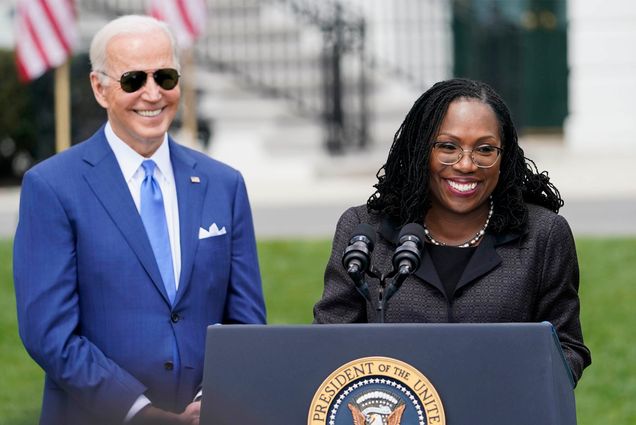
Supreme Court Justice Kentanji Brown Jackson To Address BU School of Law Convocation
"You want your students exposed to people who not only do well career-wise, but also do good in their lives. Justice Jackson is a great role model for our students," said BU School of Law Dean Angela Onwuachi-Willig. Jackson will participate in the school's May commencement ceremony.
FACULTY EXPERT
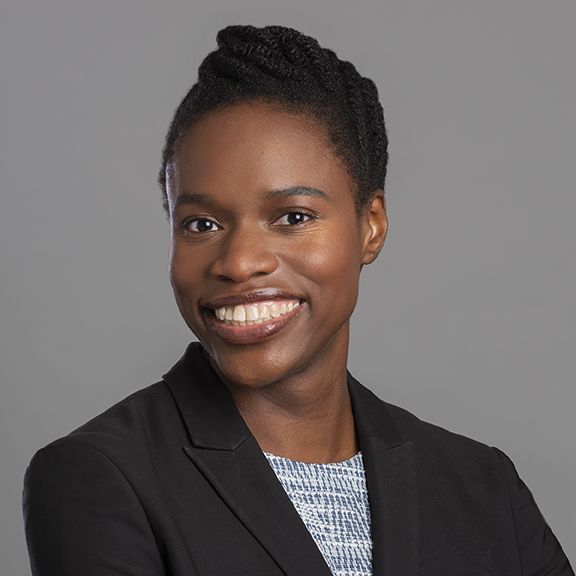
Algorithms Were Supposed to Reduce Bias in Criminal Justice—Do They?
Data can discriminate, says Professor Ngozi Okidegbe, the first dual-appointed professor to the BU School of Law and the BU Faculty of Computing & Data Sciences.
Learn how algorithms can replicate bias
STUDENT LIFE
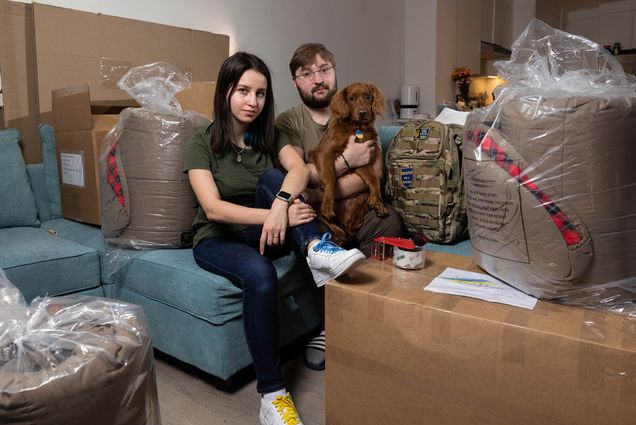
One Year after the Invasion of Ukraine, the War Has Transformed Life for This BU Couple
Daria Bogatova (GRS'29,'29) and Dmytro Bogatov (GRS'22,'22) have launched the nonprofit Mriya to help their fellow Ukrainians.
THOUGHT LEADERS
In Case You Missed It...
The Washington Post highlights research by the BU Global Development Policy Center to demonstrate how China became the biggest bilateral creditor for developing and emerging nations... Janine Bempechat of the BU Wheelock College of Education & Human Development explains why reducing homework may widen the educational disparity between low and high income households in Vox... Joshua Semeter of the BU College of Engineering describes the possible explanations for the UFO sighting over Lake Huron in Newsweek... Emanuela Binello of the BU Chobanian & Avedisian School of Medicine discusses brain surgery that happened 3,500 years ago in Smithsonian Magazine.