Student Spotlight: Manuel Marte
Congratulations, Dr. Manuel Marte!
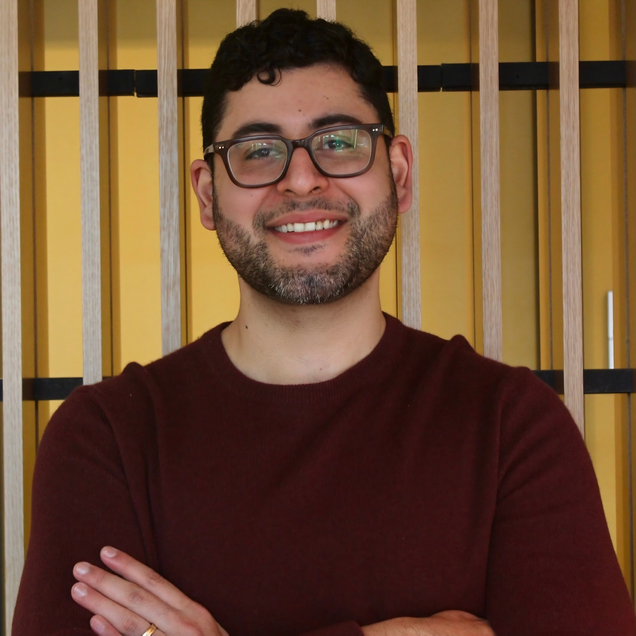
Manuel Marte
Dr. Marte successfully defended his dissertation on October 22nd, 2025, completing his PhD at Boston University’s Sargent College in the Department of Speech, Language & Hearing Sciences. Throughout his doctoral studies, Manuel was mentored by Dr. Swathi Kiran, director of the Boston University Center for Brain Recovery.
Dr. Marte’s dissertation was titled “A multimodal and naturalistic approach to assessment in aphasia”.
Q&A with Manuel Marte
How did you initially become involved and/or interested in your field?
When I was a freshman undergraduate at Buffalo, I volunteered as an annotator for The Tesserae Project. This was a joint research program among the Classics, Linguistics, and Computer Science departments using what are now considered primitive natural language processing techniques to discover allusions made between pre-modern texts written hundreds or sometimes thousands of years apart.
The project itself introduced me to the field of linguistics, and from linguistics I began thinking about how to apply this interesting knowledge to help others and satisfy my curiosity about the mind and brain. Ultimately, I found that training as a speech-language pathologist would achieve all these ends in a very practical way.
How do those interests align with your work and research at the Center for Brain Recovery?
The amazing thing about CBR is that it is a playground for your interests. As an undergraduate and master’s graduate student, I was always strongly interested in topics like neuroplasticity, psycholinguistics, and computing. Then, as a practicing clinician, I became interested in more applied topics like language dysfunction and recovery, multilingualism, assessment approaches, treatment efficacy, and so on. At CBR, I’ve been able to combine all of these together, using, for example, machine learning approaches to examine treatment responses in bilingual aphasia, and publishing these findings in venues like Stroke.
What brought you to Boston University?
The infrastructure, department, location, and chiefly, the opportunity to work with Dr. Swathi Kiran.
What research are you most proud of?
My dissertation work, because it put several new modalities, analytical techniques, and insights, under one roof.
If you could give one piece of advice to someone just starting their PhD, what would it be?
Accept and lean into your naivety and make it a strength by asking the questions you need answered to feel more informed.
What is next for you after completing your PhD?
I have recently started a postdoctoral research fellowship in vascular neurology at Johns Hopkins University with Dr. Argye Hillis. My focus here is to develop multimodal predictive models that say something about who may or may not recover their language faculties immediately after stroke. Prospectively, this will tell us who is at the highest risk for poor outcomes, allowing us to apply intensive interventions and neuromodulatory techniques earlier in the recovery process when the brain is more plastic, rather than deep into the chronic stage of recovery when it is less so.
What is something unique about you that people might not know?
Most people know most things about me, such as the fact that I have raised twins all throughout the PhD at CBR, or that I play a lot of pick-up basketball. It’s not especially unique to academics, but one thing is that I am also an avid reader and audiobook listener, and have read around 100 books per year for the last several years.