Dr. Kenneth Anderson (CAS’73) once planned to become a general practitioner.
He came to Boston University from a small town in central Massachusetts, where the only medical professionals he knew were his mother, a nurse, and the local family physician. As the first in his family to attend college, he was drawn by BU’s academic reputation, its global student body, and the opportunity to live in Boston.
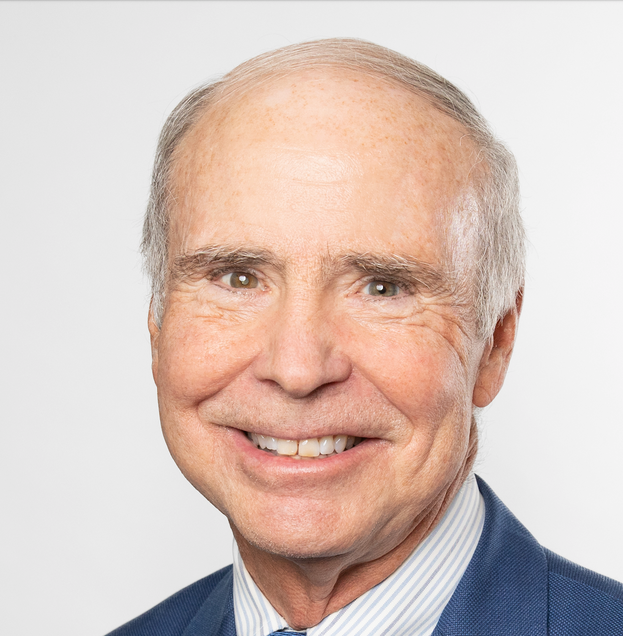
BU affirmed Dr. Anderson’s interest in science and biology—and his desire to use science to help others. But it also introduced him to a new field: research. That exposure would lead to a decades-long career of life-changing contributions in cancer care.
Today, Dr. Anderson is the Kraft Family Professor of Medicine at Harvard Medical School and Director of both the LeBow Institute for Myeloma Therapeutics and the Jerome Lipper Multiple Myeloma Center at Dana-Farber Cancer Institute. He is a renowned global expert on multiple myeloma who has inspired generations of scientists and physicians around the world. In recognition of his groundbreaking contributions to medicine, as well as his commitment to compassion and science, Boston University will honor him this fall with a 2025 BU Arts & Sciences Distinguished Alumni Award.
“I’m extraordinarily grateful and especially thankful to BU for setting me on this career,” says Dr. Anderson. “BU really did provide the groundwork for me to go on to medicine and apply what I had learned in biology in medical school and beyond.”
At BU, Anderson volunteered in local emergency rooms and completed a senior thesis in the biology department—focused on a fungal topic he now chuckles about. “It wasn’t so much the subject,” he says, “but the spark it ignited. I was going to be a general practitioner, but the research experience at BU opened my eyes to a whole new world.”
That world led him to Johns Hopkins, where he began working on multiple myeloma, a then-incurable bone marrow cancer. His first mentor there reinforced two principles that had taken root at BU: make science count for patients and treat patients as family. “Those two principles guide me every day,” he says.
Over the decades, Dr. Anderson has done just that. His work has helped transform multiple myeloma from a disease with a grim prognosis into a chronic condition for many. “Patients used to live only a year or two,” he says. “Now, they grow old and die from something else. They celebrate milestones—children, grandchildren. There’s no greater reward than that.”
Dr. Anderson has developed laboratory and animal models of multiple myeloma in its microenvironment, enabling the identification and validation of novel targeted and immune therapies. He has led efforts to translate these discoveries into clinical trials, resulting in FDA approval of multiple therapies that have transformed the treatment paradigm and dramatically improved patient outcomes.
His lab has also become a global hub for training, with two generations of researchers now leading myeloma programs across the world, including Europe, Asia, and Latin America. “It’s like another family,” he says. “Some stay, most go on to become leaders in their countries. It’s incredibly rewarding.”
Dr. Anderson’s contributions have earned him some of the highest honors in medicine, including the American Society of Hematology’s William Dameshek Prize, the American Association for Cancer Research’s Joseph H. Burchenal Award, the American Society of Clinical Oncology’s David A. Karnofsky Award, and the Harvard Medical School Warren Alpert Prize. He is also the recipient of the Robert A. Kyle Lifetime Achievement Award from the International Myeloma Foundation and the Waldenstrom Award at the International Myeloma Workshop. He is a Fellow of the American Association for Cancer Research Academy and the American Society of Clinical Oncology, a member of the National Academy of Medicine and the Royal College of Physicians and Pathologists, and a past president of both the International Myeloma Society and the American Society of Hematology. He is a Doris Duke Distinguished Clinical Research Scientist and an American Cancer Society Clinical Research Professor.
When he returned to BU in 2023 to speak at his 50th reunion, Dr. Anderson was flooded with memories. “It allowed me to reflect on how prepared I was by BU, even though I was so naïve at the time. The excellence in teaching, the diversity of students, the exposure to Boston—it was transformative. The combination of scientific study and clinical exposure confirmed my calling to medicine.”
For students considering medicine today, he offers heartfelt encouragement. “There may seem to be many impediments—grants, competition—but there is no greater career on planet Earth than medicine. Patients motivate me every day. Pursue your goals and dreams. It will be well worth it.”
As he receives an Arts & Sciences Distinguished Alumni Award, Dr. Anderson remains humble. “Clinical care is extraordinarily rewarding. You end up, without going out of your way, helping people and making a major difference in their lives,” he says. “I’ve been privileged to care for so many patients over the years, and it is a direct result of my BU experience.”