Food, Fantasy, Friendship: Summer Reading—CAS Style
Staff and faculty share their favorite books for summer 2022
From fantasy fiction to food history, short stories to sci-fi, the summer reading lists of CAS faculty and staff span the sections of your local bookstore. Deans, directors, professors, and advisors have all weighed in with their favorite recent reads—so, whether you’re looking to educate yourself or escape for a few hours, hopefully you’ll find something new below.
Do you have a favorite book that you’d like to add to this list or recommend for a future story? Send your short review (approximately 200 words in length) to cascom@bu.edu.
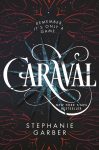
Caraval (Flatiron, 2017) by Stephanie Garber

 The summer is great for reading exciting books, and Caraval is definitely one of those. It’s fantasy fiction that focuses on two sisters and a magical performance that gives the book its name. When one of the sisters goes missing, a competition to find her begins. It’s filled with mystery, romance, and strong sisterhood bonds—and it’s filled with twists that will have you questioning what is real or part of the game. This New York Times bestseller is part of a series, which is another reason I love it, because I’m able to continue on with the characters and learn more about their story. —Kelly Capri, academic advisor
Desire and Delusion and Night Games by Arthur Schnitzler


 I’ve been reading some great German and Austrian literature this summer, including short stories by Arthur Schnitzler, a contemporary of Freud and much admired by the latter for his psychological astuteness. Americans know him mainly for the movie Eyes Wide Shut, which was based on one of his short stories. —Sally Sedgwick, professor and department chair of philosophy
The Equivalents: A Story of Art, Female Friendship, and Liberation in the 1960s (Vintage, 2020) by Maggie Doherty
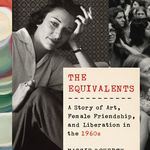
 I’ve been reading a lot of group biographies and one book immediately stands out: MaggieDoherty’s The Equivalents, which follows some of the first women to receive fellowships at the Radcliffe Institute. The book is a model of the genre. It allows the individuals—with all of their quirks, complexities, and insecurities—to come into focus without sacrificing the broader ties between characters, and sense of collective purpose and struggle. In The Equivalents, for example, Doherty offers telling details—like the poet Anne Sexton swimming laps in her suburban pool—while always returning to the broader questions with which her book wrestles: What does it mean to be a female artist or writer? How do feminist conversations carry across and between generations? What role have institutions played—and can they continue to play—in nurturing women’s talents? —Arianne Chernock, professor of history and associate dean of the faculty for the social sciences
An Everlasting Meal: Cooking with Economy and Grace (Scribner, 2012) by Tamar Adler

 Adler writes beautifully about food and meal preparation. I love to cook, and found that this single book has had a greater impact on my cooking and my enjoyment of food than anything else I’ve ever read. It has also made my meal preparation far more economical. It is not a traditional cookbook, but rather a guide to all the simple cooking wisdom she learned as a chef. It is a joy to read and makes the reader fall in love with and appreciate food. —Meg Younger, assistant professor of biology
Klara and the Sun (Knopf, 2021) by Kazuo Ishiguro

 There is a reason that Kazuo Ishiguro won a Nobel Prize in literature! This book makes me think hard about how much we try to control the uncontrollable, yet extremely obsessive and competitive desires to do so anyway become normalized nonetheless. For example, the lengths to which the parents in this novel would go to give their children unnatural advantages through genetic engineering is not that far fetched. Ishiguro writes in a quiet, contemplative fashion about very alarming social issues. —Alice Tseng, professor of Japanese art and architecture, and associate dean of the faculty for the humanities
The Partition (Akashic, 2022) by Don Lee
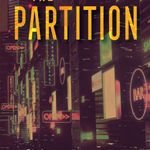
 The Partition is an engrossing collection of short stories featuring an eclectic group of characters situated in fascinating scenarios written with Lee’s characteristic flair for vivid language and intricate character development. This is his second short story collection since 2001’s Yellow and his astute ear for dialogue and economical approach to plot remain as strong as ever. Divided into multiple stories, followed by a three-part section focused on the growth of a single character, called “Les hôtels d’Alain,” the collection has a cinematic scope. The title story, about an intense encounter in Texas between an earnest literary scholar and an eccentric author visiting from South Korea is an especially brilliant page turner. It’s worth noting Lee’s finesse in depicting characters of Asian descent, whose stories are laced with witty, informed observations about diasporic culture that never flattens out characters or lapses into didacticism. —Vincent L. Stephens, associate dean, diversity and inclusion
Somebody’s Daughter (Flatiron, 2021) by Ashley C. Ford
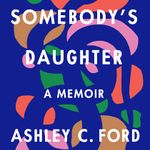
 I recently finished the memoir Somebody’s Daughter. It’s the story of Ford’s life, growing up poor and Black in Indiana with an incarcerated father. I was engrossed by the story itself as well as her writing style. It’s smart, honest, compelling, and a wonderful reflection on family trauma and dynamics as one moves into adulthood. —Kerry Buglio, assistant dean for advising and academic services
The Thirty Names of Night (Atria Books, 2020) by Zeyn Joukhadar

 The Thirty Names of Night is a really wonderful novel about a Syrian-American family living in New York City, narrated in alternating chapters by two characters living in different time periods. Both characters are what we would today label as “queer,” but that identity emerges differently for each of them because of their individual historical and cultural circumstances. These characters experience some real pain and grief, but they are ultimately able to create communities and fashion lives for themselves where they can honor all of their identities. There’s a lot I loved about this novel, but one thing I especially appreciated is that it resists easy stereotypes about what it’s like to be queer, or a person of color, or an immigrant. It treats all of those identities as nuanced and acknowledges how they are always intersecting with one another, in both complicated and beautiful ways. I think anyone would find this novel engrossing—the poetry of some passages just takes your breath away. I also personally found it quite moving as a queer woman whose great-grandmother emigrated to America from that region of the world in the same era as one of the novel’s central characters. —Heather Barrett, senior lecturer and associate director of the Writing Center
The Women of Troy (Doubleday, 2021) by Pat Barker


This is the second book of Barker’s inspired by the events of Homer’s Iliad and some of the Greek Tragedies. The first was The Silence of the Girls (Doubleday, 2018), which I really enjoyed and read with some students in a Zoom book group when COVID hit in 2020. The books imagine the stories of women during the Trojan War and continue a popular reenvisioning of these ancient and very influential characters. —Kyna Hamill, master lecturer and director of the Core Curriculum
Zabar’s: A Family Story, with Recipes (Schocken, 2022) by Lori Zabar
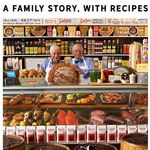
 Most of my summer reading is external tenure and promotion packets, so my fun reading is definitely of the “beach read” sort—stories of women’s friendships and romances. But one more serious book I’d recommend is Zabar’s: A Family Story, with Recipes. It’s a fascinating behind-the-scenes glimpse into this beloved store, that’s part family and social history and part cookbook. It’s really a celebration of food, and will leave its readers craving a good sandwich. —Deborah Carr, professor of sociology and director of the Center of Innovation in Social Science