Videos tagged xcc
(19) videos
 Watch this video
XCC Faculty Feature
Highlight video of Profs. Bob Weintraub (Wheelock) and Samantha Myers (CAS) at the Fall 2021 XCC Showcase.
More info
- 158 love it
- 0 comments
- 33 views
 Watch this video
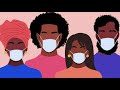
HUB XC 433 F1 The Intersection of Gender, Race, Media and Covid 19
COVID-19 has posed great challenges to society as a whole in facing the social, economic, and cultural effects of the virus and exposing inequalities in a number of spheres. Understanding the impact of the pandemic on gender/race/ethnicity, not just [...]in the short term but in the future is key to designing effective and targeted responses to reconfigure the private and the public sphere.
The impact of COVID-19 on gender/race/ethnicity has immediate and visible consequences such as vulnerability in terms of job security, unequal work-life balance, gender-based violence, inadequate social protection policies (furlough, health insurance, sick leave), education and technological challenges.
The course will focus on Australia, the U.S. and Europe. The perspective adopted will be that of discussing Covid & Gender through a social-economic and a racial/ethnic prism.
An unprecedented event like COVID-19 demands a new kind of storytelling. Students focus on one country/area and discuss how the media represent the issue. They evaluate if there is a fair and equal representation of the problem and what are the most urgent needs to be taken into account.
The course is interdisciplinary and is meant to encourage diversity and inclusiveness among the students’ teams. Full engagement in group work, discussion, collaboration, use of multiple strategies, recognition of other people’s view and a creative approach are essential.
More info
- 142 love it
- 0 comments
- 57 views
 Watch this video
HUB XC 433 E1 Justice Media Computational Journalism Co-Lab
Investigative journalism is an interdisciplinary endeavor. The Justice Media Computational Journalism Co-Lab will provide students from diverse disciplines an opportunity to work with and publish investigations in professional news outlets including [...]NPR, the Boston Globe, the Baystate Banner, and more. The investigative journalism assignments will be focused on issues of justice and accountability. This course will bring together students from journalism, computer science and other disciplines guided by veteran faculty practitioners in journalism and computer science/ engineering.
More info
- 168 love it
- 0 comments
- 41 views
 Watch this video
HUB XC 475 A1 Spark! Technology Innovation Fellowship
The Spark! Innovation Fellowship program supports student innovators passionate about solving problems through technology. The course provides a structured process where students advance a technology project of their own creation, or an innovative [...]solution for a problem sponsored by an external partner. The goal is to design, develop, and deploy a working prototype in one semester with the support of industry mentors.
This program has a designer track and a developer track - students applying for the program should fit into one of these two tracks with the requisite skills.
More info
- 134 love it
- 0 comments
- 47 views
 Watch this video
HUB XC 433 E1 Justice Media Computational Journalism Co-Lab
Investigative journalism is an interdisciplinary endeavor. The Justice Media Computational Journalism Co-Lab will provide students from diverse disciplines an opportunity to work with and publish investigations in professional news outlets including [...]NPR, the Boston Globe, the Baystate Banner, and more. The investigative journalism assignments will be focused on issues of justice and accountability. This course will bring together students from journalism, computer science and other disciplines guided by veteran faculty practitioners in journalism and computer science/ engineering.
More info
- 120 love it
- 0 comments
- 27 views
 Watch this video
HUB XC 433 A1 Zero Waste
Zero Waste initiatives are some of the most important things we can do to reduce our environmental impact. As part of the Boston University Climate Action Plan, which will make the University carbon neutral by 2040, BU is committed to achieving Zero [...]Waste by 2030. In this experiential, project-based course student groups will be directly impacting the BU Campus, by better understanding the problem, and by collaboratively creating solutions to help BU achieve this goal.
What is Zero Waste? From the Zero Waste International Alliance, here is the goal: “The conservation of all resources by means of responsible production, consumption, reuse, and recovery of products, packaging, and materials without burning and with no discharges to land, water, or air that threaten the environment or human health.â€
More info
- 107 love it
- 0 comments
- 61 views
 Watch this video
HUB XC 433 B1 Thinking through Puppets and Performing Objects
Puppetry and other forms of object performance are experiencing a renaissance in the US and across the globe. But what can they offer a research university, where not only creating but also communicating new knowledge to a range of audiences is [...]increasingly important? These “animated objects†have traditionally been used to convey narrative content; can they help research to become a compelling story that engages, informs, and even entertains an audience–by activating their intellect and affect? In this course, students from across BU’s many colleges will explore how a broad range of puppetry techniques can help them to investigate and then communicate abstract theories, philosophies, and complex processes, injecting them with humor, suspense, and awe. Through visual storytelling, metaphors, materiality, and the handmade, participants will research the function and power of animate objects as tools of arts research. They will engage in analyzing ideas, making and performing, reflecting and giving feedback. The final products will be two puppet slams (a collection of short, experimental works), one based on the students’ own research in small groups, and the other in collaboration with BU doctoral students, who are client partners for this project. Other stakeholders are the office of the Associate Provost for Graduate Affairs at BU and the Puppet Showplace Theater, which in hosting the second event is lending its brand along with providing its venue.
More info
- 157 love it
- 0 comments
- 76 views
 Watch this video
HUB XC 433 F1 The Intersection of Gender, Race, Media and Covid 19_Elisabetta Convento
COVID-19 has posed great challenges to society as a whole in facing the social, economic, and cultural effects of the virus and exposing inequalities in a number of spheres. Understanding the impact of the pandemic on gender/race/ethnicity, not just [...]in the short term but in the future is key to designing effective and targeted responses to reconfigure the private and the public sphere.
The impact of COVID-19 on gender/race/ethnicity has immediate and visible consequences such as vulnerability in terms of job security, unequal work-life balance, gender-based violence, inadequate social protection policies (furlough, health insurance, sick leave), education and technological challenges.
The course will focus on Australia, the U.S. and Europe. The perspective adopted will be that of discussing Covid & Gender through a social-economic and a racial/ethnic prism.
An unprecedented event like COVID-19 demands a new kind of storytelling. Students focus on one country/area and discuss how the media represent the issue. They evaluate if there is a fair and equal representation of the problem and what are the most urgent needs to be taken into account.
The course is interdisciplinary and is meant to encourage diversity and inclusiveness among the students’ teams. Full engagement in group work, discussion, collaboration, use of multiple strategies, recognition of other people’s view and a creative approach are essential.
More info
- 115 love it
- 0 comments
- 39 views
 Watch this video
HUB XC 433 C1 Stories Across Borders_Stacy Scott
HUB-XCC’s Spirit of Wonder Course allows students to learn the Spirit of Wonder (SOW) research model, including interviewing, video blogging and essay writing. This course provides students with the opportunity to study and practice social [...]cross-cultural research methodologies, including designing qualitative research questions, connecting and engaging with targeted populations, collecting data through SOW’s storytelling interviews, analyzing data, and presenting their findings in written and visual formats.
More info
- 149 love it
- 0 comments
- 66 views
