Skip to Main Content
Boston University
  • Bostonia
  • BU Today
  • The Brink
  • University Publications

    • Bostonia
    • BU Today
    • The Brink
  • School & College Publications

    • The Record
Other Publications
BU Today
  • Sections
News, Research, Community

Cheese Is Now a Protein Source? Five Things to Know About the Updated Mediterranean Diet

Revisions to the food pyramid reflect new research on nutrition, chronic disease prevention, and sustainability. BU nutrition expert Joan Salge Blake breaks down the key changes.

Joan Salge Blake (center), a clinical professor of nutrition in Boston University’s Sargent College of Health & Rehabilitation Sciences, and Paula Quatromoni (second row, far right), a Sargent associate professor of health sciences, visit a cooking school in Padova, Italy, with students during a study abroad program exploring the Mediterranean diet and lifestyle. Photo courtesy of Joan Salge Blake

Arts & Culture

Cheese Is Now a Protein Source? Five Things to Know About the Updated Mediterranean Diet

Revisions to the food pyramid reflect new research on nutrition, chronic disease prevention, and sustainability. BU nutrition expert Joan Salge Blake breaks down the key changes.

June 17, 2026
  • Kallejhay Terrelonge (COM’27)
Twitter Facebook

The Mediterranean diet has long been considered one of the healthiest eating patterns in the world. But a recently revised food pyramid for the diet, developed by a working group of the Italian Society of Human Nutrition, reflects new research on chronic disease prevention and sustainable eating.

In a recent Substack post, Boston University nutrition expert Joan Salge Blake (Sargent’84, Wheelock’16), a Sargent College of Health & Rehabilitation Sciences clinical professor of nutrition, highlights several notable changes to the updated guidance. Salge Blake is teaching a Study Abroad course in Padua, Italy, alongside Paula A. Quatromoni (SPH’01), a Sargent associate professor of health sciences, who created the class in 2017.
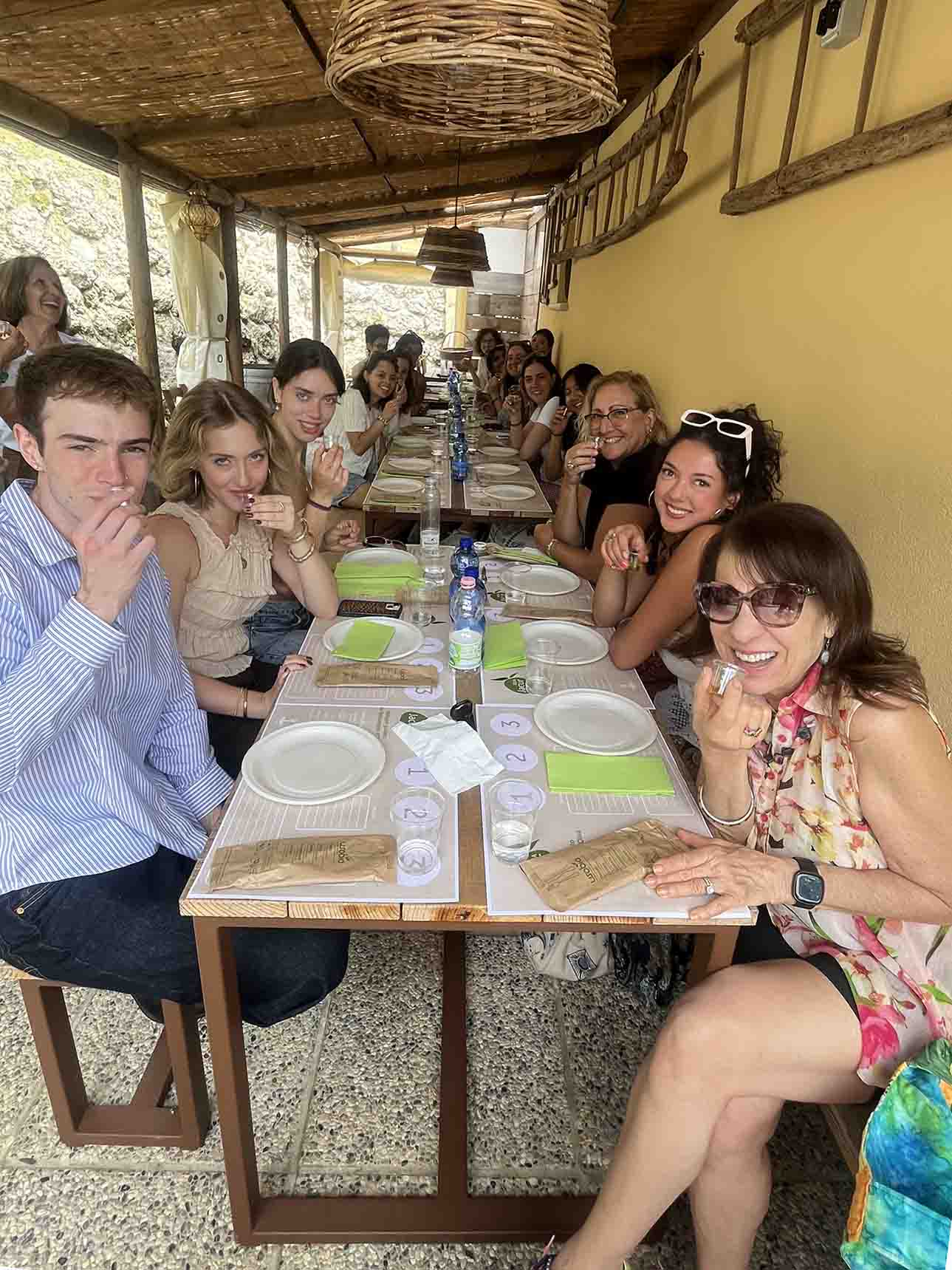
Students participate in an olive oil tasting with professors Paula Quatromoni and Joan Salge Blake and during a study abroad course. Extra-virgin olive oil, rich in antioxidants and anti-inflammatory compounds, is a key component of the Mediterranean diet. Photo courtesy of Joan Salge Blake

1. Extra-Virgin Olive Oil Takes Center Stage

According to Salge Blake, the updated pyramid places extra-virgin olive oil prominently at its base to emphasize adding quality, healthy fats to our diet. Rich in antioxidants and anti-inflammatory compounds, extra-virgin olive oil is recommended over more refined olive oils, which contain fewer beneficial plant compounds.

2. Dairy Earns a Daily Role

Salge Blake notes that skim and low-fat milk and yogurt are now included among foods recommended for daily consumption. The addition reflects growing evidence that these foods can provide important nutrients, including protein and calcium, as part of a balanced diet.

3. Cheese Is Now Considered a Protein Source

One of the biggest shifts, Salge Blake writes, is that cheese is now classified as a protein source rather than a side dish. The guidelines favor fresh cheeses, such as ricotta and mozzarella, over saltier aged varieties.

Students and Joan Salge Blake hold up rolling pins before making fresh pasta during a cooking lesson in Padova, Italy. Photo courtesy of Joan Salge Blake
Joan Salge Blake and students pose with a BU banner in Padova, Italy. The students pose with Aslihan Koruyan Sabanci, a renowned Mediterranean Diet cookbook author and a guest speaker in this course. Photo courtesy of Joan Salge Blake

4. Potatoes Move Down the Pyramid

The updated guidance moves potatoes from the base of the traditional pyramid to a category of foods that should be eaten less frequently. According to Salge Blake, the change is intended to encourage people to consume a wider variety of vegetables, including leafy greens, tomatoes, and broccoli.

5. Alcohol Is No Longer Recommended as a Daily Habit

Perhaps the most significant update is the reduced emphasis on alcohol. While earlier versions of the Mediterranean diet often included moderate wine consumption, the revised guidance states that alcohol should not be recommended as a habitual practice. According to Salge Blake, the change reflects emerging research suggesting that the potential risks of alcohol consumption, such as an increased risk of certain cancers, may outweigh previously perceived heart-health benefits.

Despite the updates, the foundation of the Mediterranean diet remains unchanged: fruits and vegetables, whole grains, legumes, and fish. The revised pyramid also places greater emphasis on reducing food waste and choosing foods that support environmental sustainability.

Explore Related Topics:

  • food
  • Share this story

Share

Cheese Is Now a Protein Source? Five Things to Know About the Updated Mediterranean Diet

Share

  • Twitter
  • Facebook
  • Reddit
  • LinkedIn
  • Email

Latest from BU Today

  • Things-to-do

    A Trip to the Sea via the T

  • University News

    BU Schedules Informational Town Halls Regarding New Federal Cap on International Students’ Time in the US

  • Film & TV

    As Christopher Nolan’s The Odyssey Hits Movie Screens, BU Students Already Know the Story

  • Health & Medicine

    Chobanian & Avedisian School of Medicine’s Chief Resident Immersion Training (CRIT) Marks 25th anniversary

  • Theatre

    CFA’s Jim Demler and His Identical Twin Brother Make Their Off-Broadway Debut

  • Accolades

    Dream of Being a Fulbright Scholar? Hear from Recent Awardees

  • University News

    BU Leaders Ask Federal Government to Reconsider Changes to Research Grants’ Approval Process Rules

  • University News

    Three New College of Arts and Sciences Master’s Programs Will Take Students to the Cutting Edge

  • Things-to-do

    Want to Beat the Summer Heat? Check Out One of the Boston Area’s Many Public Pools

  • University News

    Boston University Announces Leadership Updates

  • International Sports

    FIFA World Cup Gives a SHA Grad Student Hands-On Experience in Event Management

  • University News

    Boston University Hospitality Dean Arun Upneja Stepping Down

  • University News

    Meet the 38 Charles River Campus Faculty Promoted to Ranks of Associate Professor, Full Professor

  • University News

    BU Opens Cooling Stations on Charles River Campus as First Heat Wave of the Summer Arrives

  • Things-to-do

    Looking for Places to Watch Fireworks This Fourth of July? BU Has You Covered

  • In the City

    How to Celebrate the Fourth of July in Boston During America’s 250th Birthday

  • Things-To-Do

    Getting to Know Your Neighborhood: Newbury Street

  • Photography

    Photo Gallery Offers a Look Back at Spring 2026 Highlights on Campus

  • Arts & Culture

    Cheese Is Now a Protein Source? Five Things to Know About the Updated Mediterranean Diet

  • Theatre

    CFA Students Bring Their Design Talents to World’s Largest Shakespeare Festival

Section navigation

  • Sections
  • Must Reads
  • Videos
  • Series
  • Close ups
  • Archives
  • About + Contact
Get Our Email

Explore Our Publications

Bostonia

Boston University’s Alumni Magazine

BU Today

News, Research, Community

The Brink

Pioneering Research from Boston University

  • Twitter
  • Facebook
  • Youtube
  • LinkedIn
  • Instagram
  • Weibo
  • TikTok
© Boston University. All rights reserved. www.bu.edu
© 2026 Trustees of Boston UniversityPrivacy StatementAccessibility
Boston University
Notice of Non-Discrimination: Boston University prohibits discrimination and harassment on the basis of race, color, natural or protective hairstyle, religion, sex or gender, age, national origin, ethnicity, shared ancestry and ethnic characteristics, physical or mental disability, sexual orientation, gender identity and/or expression, genetic information, pregnancy or pregnancy-related condition, military service, marital, parental, veteran status, or any other legally protected status in any and all educational programs or activities operated by Boston University. Retaliation is also prohibited. Please refer questions or concerns about Title IX, discrimination based on any other status protected by law or BU policy, or retaliation to Boston University’s Executive Director of Equal Opportunity/Title IX Coordinator, at titleix@bu.edu or (617) 358-1796. Read Boston University’s full Notice of Nondiscrimination.
Search
Boston University Masterplate
loading Cancel
Post was not sent - check your email addresses!
Email check failed, please try again
Sorry, your blog cannot share posts by email.
Cheese Is Now a Protein Source? Five Things to Know About the Updated Mediterranean Diet
0
share this