Skip to Main Content
Boston University
  • Bostonia
  • BU Today
  • The Brink
  • University Publications

    • Bostonia
    • BU Today
    • The Brink
  • School & College Publications

    • The Record
Other Publications
BU Today
  • Sections
News, Research, Community

The Day the Bees Stopped Coming Home

CAS sociobiologist James Traniello on the mystery of the disappearing honeybees
March 15, 2007
  • Art Jahnke
Twitter Facebook
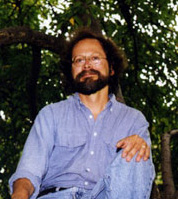
James Traniello, a CAS professor of biology, says that scientists are scrambling to find out why the honeybees are dying.

As spring approaches, beekeepers across the country fear that something is terribly wrong. In at least 20 states, millions of bees have died, and millions more have flown away, probably never to return to their hives. No one knows why.

BU Today
talked about the mystery with James Traniello, a College of Arts and Sciences professor of biology, whose fields of expertise are behavioral ecology and the sociobiology of insects.

BU Today: What is the extent of the loss of bee colonies? 

Traniello: Beekeepers are reporting 60 to 100 percent loss of their hives.

What does that mean for our economy? Is it possible to calculate how much bees contribute?
Yes. About one-third of crops are pollinated by honeybees; this translates into roughly $14 billion in losses. Honeybee pollination is so significant that U.S. farmers rent hives at a cost of about $150 million a year to attempt to ensure pollination.
 
What is the likely cause of the disappearance?
The reason for the disappearance of honeybees is not understood, but there are several speculations as to why “colony collapse disorder,” as it’s been called, occurs: fungal, bacterial, and viral diseases; pesticide use and toxic nectar and pollen; development and the alteration of natural landscapes; or a combination of these factors acting in concert are likely involved. Parasites accidentally imported from Europe could play a role. It may also be that domestication of the honeybee has reduced genetic variation, which is important in adapting to disease. Honeybee queens are polyandrous — that is, they mate with multiple males. Recent research has shown that the greater the number of drones inseminating a queen, the greater the resistance of her offspring to disease. One might hypothesize that genetic variation has decreased due to lower levels of polyandry, and that this has had the consequence of increasing susceptibility to infection.
 
What would happen if all the honeybees went away and never came back?

Bees pollinate an extraordinary number of flowering plants, and crops of course. It would be hard to imagine life without honey, fruits, vegetables, and seeds and the visual beauty and scent of flowers. Honeybees also serve as a model for the study of social complexity, so much insight into social organization will be missed.
 
What are researchers doing about this?
I believe the expression is “scrambling” — to try to identify the cause or causes. Researchers are performing autopsies on affected hives. Excellent forensic science is needed, and it’s needed fast. The National Academy of Sciences has released a report on the problem and has made a number of recommendations, ranging from concerns related to pesticide use to land use. I imagine many researchers at agricultural colleges and universities are focusing on these problems.

Art Jahnke can be reached at jahnke@bu.edu.

Explore Related Topics:

  • Ecology
  • Faculty
  • Research
  • Share this story

Share

The Day the Bees Stopped Coming Home

Share

  • Twitter
  • Facebook
  • Reddit
  • LinkedIn
  • Email

Latest from BU Today

  • University News

    Suggestions for 2027 BU Honorary Degrees Welcome

  • University News

    BU Welcomes Inaugural Class of Davis United World College Scholars

  • Class of 2030

    Seven Things to Know about Freshman Alaiza Roth (CAS’30)

  • University News

    Boston University Trustees Elect Five New Members

  • Varsity Sports

    Field Hockey Looks to Defend Patriot League Title Under New Leadership

  • Things-to-do

    This Weekend @ BU: October 1 to 4

  • Arts & Culture

    Extra, Extra: New Exhibit at Stone Gallery Finds Inspiration in Fading Presence of Newspapers

  • Student Health Services

    Ask Anything—Anonymously—at Student Health Services’ Sex in the Dark Event

  • Hillel

    Adam Weingarten, BU Hillel’s Pioneering First Music Director, Wants Campus to Sing

  • Student Life

    BU Medical School Students Spent their Summer Volunteering in Malawi and Ghana

  • Things-to-do

    Getting to Know Your Neighborhood: Coolidge Corner

  • This Weekend @ BU: September 24 to 27

  • Class of 2030

    Class of 2030: Nicole Treviño Begins Her BU Journey

  • University News

    William Fairfield Warren Distinguished Professorships Awarded to Five Senior Faculty

  • University News

    Annual Safety Fest to Take Place This Week on Medical, Charles River Campuses

  • Engineering

    College of Engineering’s 2026 Catalyst Summit Focused on Decoding Everyday Health

  • Rankings

    Boston University Achieves Its Highest-Ever Ranking from U.S. News & World Report

  • Watch Now

    Video: Leaders Among Us—President Gilliam in Conversation with Yvette Cozier

  • Community

    Want to Take a Walk with Bean?

  • BUPD

    New BUPD Deputy Chief Brings Community-Centered Policing to the Forefront

Section navigation

  • Sections
  • Must Reads
  • Videos
  • Series
  • Close ups
  • Archives
  • About + Contact
Get Our Email

Explore Our Publications

Bostonia

Boston University’s Alumni Magazine

BU Today

News, Research, Community

The Brink

Pioneering Research from Boston University

  • Twitter
  • Facebook
  • Youtube
  • LinkedIn
  • Instagram
  • Weibo
  • TikTok
© Boston University. All rights reserved. www.bu.edu
© 2026 Trustees of Boston UniversityPrivacy StatementAccessibility
Boston University
Notice of Non-Discrimination: Boston University prohibits discrimination and harassment on the basis of race, color, natural or protective hairstyle, religion, sex or gender, age, national origin, ethnicity, shared ancestry and ethnic characteristics, physical or mental disability, sexual orientation, gender identity and/or expression, genetic information, pregnancy or pregnancy-related condition, military service, marital, parental, veteran status, or any other legally protected status in any and all educational programs or activities operated by Boston University. Retaliation is also prohibited. Please refer questions or concerns about Title IX, discrimination based on any other status protected by law or BU policy, or retaliation to Boston University’s Executive Director of Equal Opportunity/Title IX Coordinator, at titleix@bu.edu or (617) 358-1796. Read Boston University’s full Notice of Nondiscrimination.
Search
Boston University Masterplate
loading Cancel
Post was not sent - check your email addresses!
Email check failed, please try again
Sorry, your blog cannot share posts by email.
The Day the Bees Stopped Coming Home
0
share this