
News
Researchers develop robotic wearable device to improve walking for individual with Parkinson’s disease
Researchers develop robotic wearable device to improve walking for individual with Parkinson’s disease
New multidisciplinary research has developed a soft, robotic wearable device that was able to help a person living with Parkinson’s walk without freezing, a debilitating symptom of the disease.

BU Ignition Awards to Accelerate Products for Repairing Damaged Teeth, Fighting Cancer, Boosting Reading Skills, and More
BU Ignition Awards to Accelerate Products for Repairing Damaged Teeth, Fighting Cancer, Boosting Reading Skills, and More
BU Technology Development’s 2023 Ignition Awards help researchers transform their ideas into life-changing products and services
In labs across Boston University, researchers are working on ideas and technologies that could change—and save—lives.

Boston University’s ‘Jenga’ building stacks its way to the top as finalist for World Building of the Year
Boston University’s ‘Jenga’ building stacks its way to the top as finalist for World Building of the Year
Boston University's Center for Computing and Data Sciences has made the shortlist for "World Building of the Year" along with 249 others
Boston University’s Center for Computing and Data Sciences, located at 665 Commonwealth Ave. and colloquially known as the “Jenga building,” recently earned a place on the shortlist for the World Architecture Festival’s best building of the year and for best interior design.

NEIDL Researchers Refute UK Article about COVID Strai
NEIDL Researchers Refute UK Article about COVID Strain
BU calls the reporting “false and inaccurate,” and says it misrepresents what researchers actually found
As this ongoing story continued to develop Tuesday, Boston University released a statement addressing reports about its adherence to federal research guidelines. We’ve added that complete statement, which says that BU “fulfilled all regulatory obligations and protocols” and that “there was no gain of function with this research,” to the end of this article.

Bionic Pancreas Better for Managing Type 1 Diabetes
Bionic Pancreas Better for Managing Type 1 Diabetes
Clinical trial finds automated insulin delivery device, iLet, helps adults and kids maintain healthier blood glucose levels
Your pancreas is like a little digestive engine, working hard to keep your body fueled and running. Just six inches long, it’s responsible for turning lunch into the energy that gets you through the afternoon and making sure your blood sugars stay balanced.

COVID-19 Vaccines Don’t Cause Infertility or Harm Pregnancy Chances, BU Research Shows
COVID-19 Vaccines Don’t Cause Infertility or Harm Pregnancy Chances, BU Research Shows
No link between vaccines and chances of getting pregnant, but COVID-19 infection may have short-term impact on male fertility
Having a COVID-19 vaccine doesn’t impact a couple’s chances of becoming pregnant—but skipping the shots and landing a coronavirus infection might reduce male fertility.
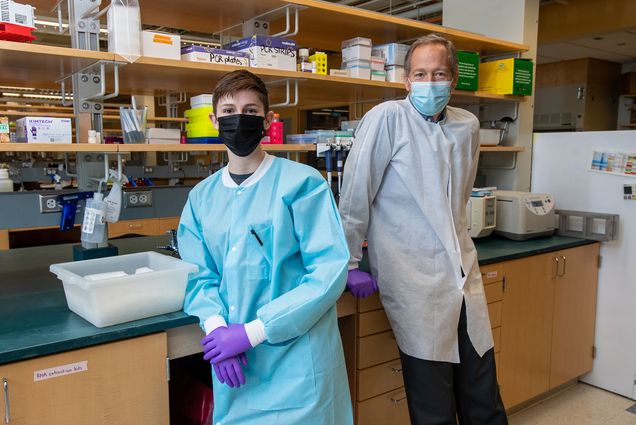
BU Scientists Are Prepared to Detect Omicron—and Other Variants
BU Scientists Are Prepared to Detect Omicron—and Other Variants
BU’s National Emerging Infectious Diseases Laboratories (NEIDL) has been monitoring COVID-19 variants from BU and Boston Medical Center tests since February
Social determinants of health—the factors that shape where we live, work, learn, and play, from stable employment and housing to food access, education, and policies and laws—impact our health in many more ways than a doctor can
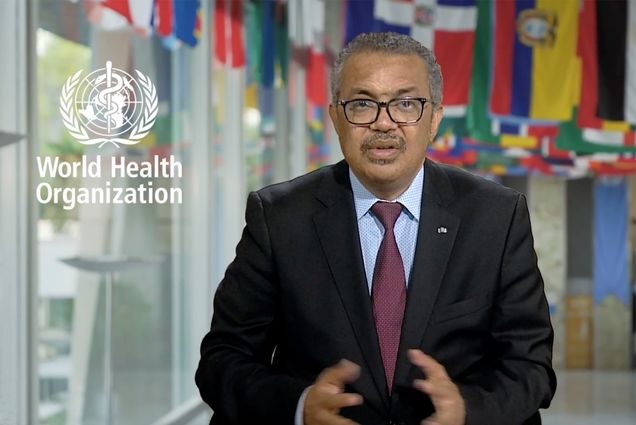
BU-Led Global Commission Launches Roadmap to Better Health Using Big Data
BU-Led Global Commission Launches Roadmap to Better Health Using Big Data
Social determinants of health—the factors that shape where we live, work, learn, and play, from stable employment and housing to food access, education, and policies and laws—impact our health in many more ways than a doctor can

A Physics Breakthrough: More Evidence of New Particles or Forces
A Physics Breakthrough: More Evidence of New Particles or Forces
New results from a massive experiment double down on indicating undiscovered influences on particles called muons
There are still-undiscovered particles or unknown forces swirling all around us, suggest new results from a massive experiment conducted at the US Department of Energy’s Fermi National Accelerator Laboratory (Fermilab) in Illinois.

BU-Supported Wind Farm Now Up and Generating Clean Electricity
University’s energy purchase enabled South Dakota facility’s construction
Boston University begins buying clean energy today from the South Dakota wind farm that the University enabled, fulfilling a key goal of the University’s Climate Action Plan (CAP).