September 2026

Dear International Students,

Welcome and welcome back to campus Terriers! September is here, and with it comes new beginnings, exciting opportunities, and a chance to start the year off on the right foot.

In the Announcements section, dive into September’s exciting lineup—the Fall Arts Fair, Banking 101, Global Programs Game Night, and AI in Action series—to explore creativity, manage your finances, connect with fellow international students, and learn about the future of work.

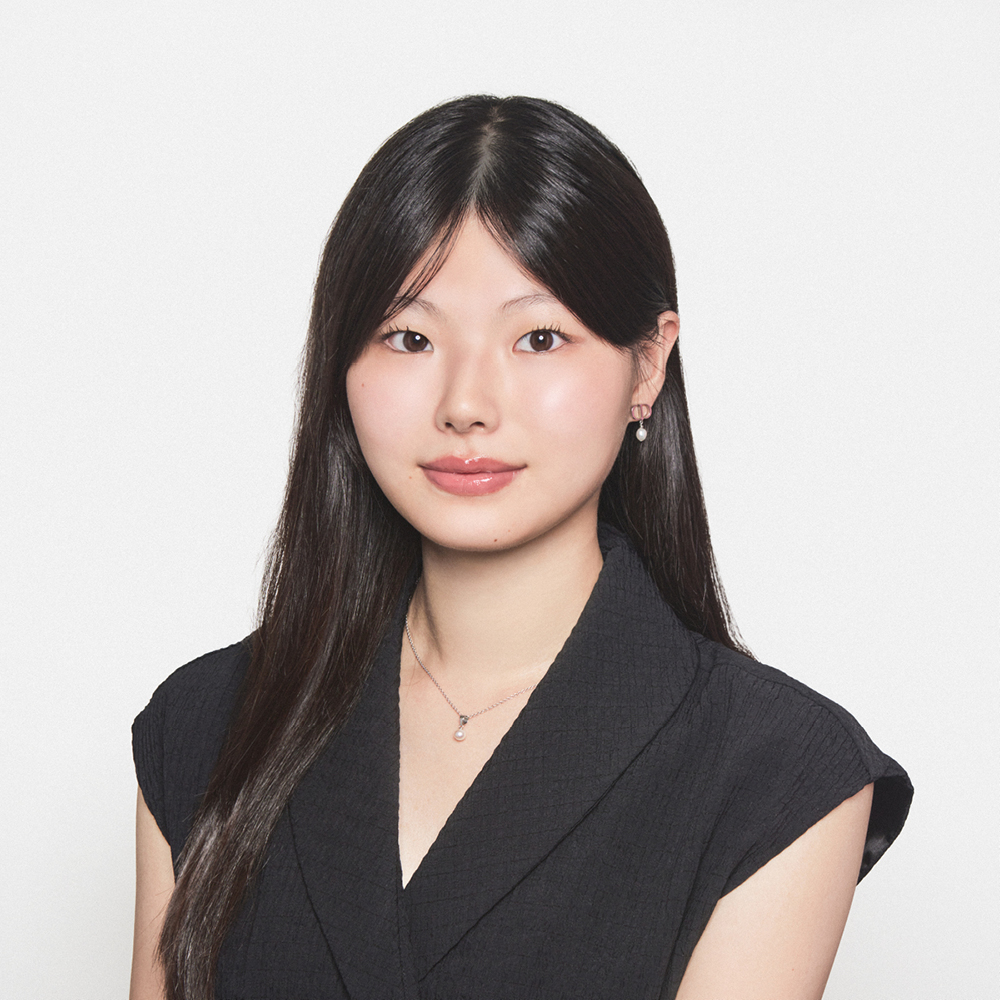
In Student Experiences, meet Chihiro Yanase (Pardee ’29) as she shares her journey as an international student at BU, navigating cultural differences, becoming an IPM mentor, and how she found her community and herself.

And in Culture Corner, we decode American Gen Z slang—exploring where these words come from, why Americans have always reinvented the English language, and what phrases like “lock in” and “cooked” reveal about college culture.

If you have any feedback for future newsletters, please contact Sheila Hernandez at sheilahz@bu.edu.
Announcements

Upcoming Events

Career Open House

Day: Monday Sep 14th Time: 5:00pm - 6:30pm Yawkey Center, CCD Sixth Floor, 100 Bay State Rd, Boston, MA 02215, USA

Global Programs Game Night

Day: Thursday Sep 24th Time: 5:30pm - 6:30pm BU Global Programs Office: 888 Commonwealth Avenue, 2nd Floor, Room 240, Boston, MA 02215

Explore the Possibilities Fair

Day: Wednesday Sep 30th Time: 11:00am - 1:00pm Marsh Plaza, 735 Commonwealth Avenue, Boston, MA 02215

Global Programs Origami Night

Day: Monday Oct 5th Time: 5:30pm - 6:30pm Global Programs Office: 888 Commonwealth Avenue, 2nd Floor, Room 240, Boston, MA 02215

Global Programs Mini Pumpkin Decorating

Day: Wednesday Oct 21st Time: 5:30pm - 6:30pm Global Programs Office: 888 Commonwealth Avenue, 2nd Floor, Room 240, Boston, MA 02215

Global Programs TY Postcard Making

Day: Tuesday Nov 10th Time: 5:30pm - 6:30pm Global Programs Office: 888 Commonwealth Avenue, 2nd Floor, Room 240, Boston, MA 02215

Student Experiences

A Word from Students: Chihiro Yanase (Pardee ‘29), shares her insights on life as an international student at BU and her experience with the IPM program.

Learn More

ISSO Insights

Welcome back to Boston and welcome back to campus! We hope you had a great summer and are settling in for a successful fall semester. It’s been a busy summer at ISSO, with announcements from Washington, D.C. that may impact you as an international student. We’ve also refreshed our website to make it easier to find the information and support you need. Check out our latest news and upcoming events to stay informed and connected.

One important development is the elimination of Duration of Status, a new federal rule taking effect September 15. As you settle back into campus life, keep an eye out for ISSO communications about how this change will be implemented. We also encourage you to attend an ISSO information session to learn what the new rule may mean for you as you continue your program at BU.

Not sure how to reach us? Refresh your memory on how to connect with ISSO, including Advisor on Call, appointments, and email support. We’re looking forward to supporting you throughout the fall!

Culture Corner

Decoding American, Gen Z Slang

“Wallahi, if we don’t lock in, we’re cooked” is a phrase muttered nervously amongst college students as the clock ticks to the start of their midterms. It’s a phrase that means nothing to most, yet everything to those who live within the cultural salad bowl of Gen Z slang. But is this just a recent phenomenon? And why does it feel more intrinsic to the US?

As humans, we never just inherit words. We break them apart, steal from one another, put them back together, and hope they describe what we often believe we’re the first to experience. Sometimes we do it to communicate more precisely. Sometimes to make something painful a little funnier. Sometimes simply because ‘the limits of your language mean the limits of your world,’ as philosopher Ludwig Wittgenstein famously wrote.

Americans, in particular, have been messing with English for a very long time. After landing in the United States, English speakers encountered indigenous languages and communities, Dutch and Spanish speakers, French settlers, enslaved Africans and their descendants, and generations of immigrants from around the world. American dialects developed through this mixing, movement and separation. And Americans didn't just absorb words, they deliberately changed the language too. In the years after independence, lexicographer Noah Webster argued that a distinct American language was part of building a distinct American identity. His Grammatical Institute and dictionaries helped establish American spelling conventions, including differences such as color rather than colour and center rather than centre.

A new school year is its own kind of linguistic reset: new classmates, new neighborhoods, new routines, and, for many international students, a new set of expressions to decipher before a midterm.

So, what exactly is slang?

Slang is one of the ways humans make language their own. Every language does it. A portmanteau smooshes words together: brunch, hangry, situationship. A metaphor turns one idea into another: spill the tea, throw shade. Acronyms compress whole phrases into a few letters: FOMO, YOLO, LOL. And sometimes we simply take a perfectly normal word and decide it means something completely different. Sick can mean impressive. Fire can mean excellent. Cooked can mean, well, that you are probably not doing very well.

When work from school or your job gets overwhelming, you're burned out. When you need to focus, you lock in. When life becomes too much, you're simply cooked. American English became a pressure valve, a way to make the things that frustrate, exhaust and excite us a little easier to live with.

And then there’s BU, which has managed to develop a small linguistic ecosystem of its own.

If you've ever been confused by a BU student talking about BU Beach, you're not alone. Boston University itself has published an unofficial “BU slang dictionary” explaining the university's particular vocabulary – proof that even a campus can develop its own dialect. Every culture has slang. Every generation bends language to fit its reality. But the words a society invents can reveal what it celebrates, what it fears, what it finds ridiculous and what it needs help carrying.

Recent Newsletters