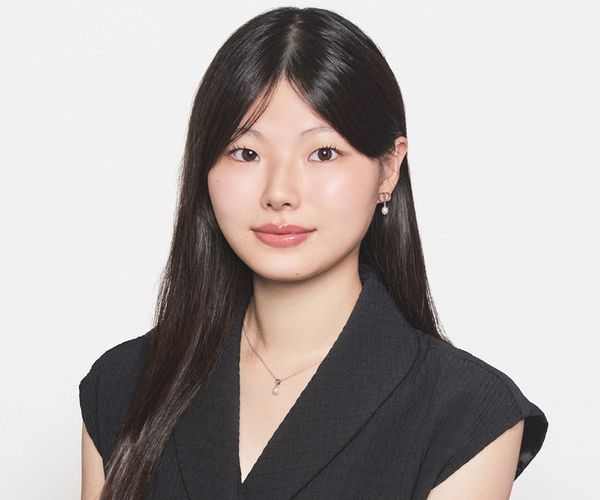
Chihiro Yanase
Could you tell us a little about yourself and what inspired you to study in the United States, and at Boston University specifically?
Of course! Hi, I’m Chihiro, a rising sophomore studying International Relations with a Business minor. I grew up in Japan and attended an international school there until middle school, before moving to Washington State for high school.
I wanted to study in the States because Japanese schools tend to be very rigorous, and test-based studying basically determines the next four years of everyone’s life. I didn’t really align with this system, and also felt that it cultivates a less diverse academic environment. I wanted to be somewhere people from different backgrounds could come together.
I did a summer program at Boston University during my sophomore summer in 2023, and it was really fun! I took an IR class and a digital media class, which was great, but what really drew me to BU more than anything were the people and the environment. A year later, I applied to BU through early-decision and was thrilled to be accepted!
What were your first impressions when you arrived in the US? Were there any surprises about American college life or culture? What were the easiest and hardest things to adapt to?
When I first came to Washington State from Japan, the biggest shock was the lack of public transportation. It is a very car-centric city, and since I couldn’t drive, it felt very inconvenient. Now in Boston, the public transportation is much better because I can use the T, though it’s still less convenient and reliable than Japan. Another challenge to adapt to was the weather. I wasn’t used to the super snowy, cold weather.
As for American college culture, the sheer amount of clubs on campus really shocked me. My high school was in a secluded area with only a few clubs, and I was leading half of them! When I went to BU’s orientation, the overwhelming number of clubs and organizations available was a great surprise and motivated me to explore my interests.
How have you navigated making friends or connecting with people from different backgrounds? Do you feel like you’ve found your sense of community on campus?
Orientation was very helpful. I didn’t find a single massive friend group, but I found individual friends I connected with deeply. I even went on trips with some of them over spring and Thanksgiving breaks! I also met a lot of people through my dorms. And being part of the Japanese Student Association (JSA) definitely helped as well, building a sense of community for Japanese students and people who like Japan.
Academically, my FY101 class—an IR-specific first-year experience class—was great. It’s hard to meet people in massive lecture halls, but through FY101, I met freshmen from all over the world and maintained those connections in our larger IR lectures. Outside of class, I used to go to open gym a lot to play basketball, which was my main hobby. I made many friends there. A few friends and I even formed an intramural basketball team, though we eventually got too busy to follow through with it.
Talk to me a little bit about the IPM program– what inspired you to be a mentor?
When I first came to BU, I felt a little lost. Boston was a completely different culture and environment, and handling things like ISSO emails was overwhelming. I just wished I had a mentor– an international student who could be a support system while I got used to the culture. I figured a lot out on my own and with international friends, but I would have loved someone to rely on. When I saw that the IPM program existed and there was a position to become a mentor, I applied because I wish I had that support.
What’s that experience been like so far?
I currently have two mentees. I am keeping in contact with one of them over email; she asks me questions about getting involved at BU and what surprised me when I arrived.
The other mentee is a Japanese student currently living in Tokyo, doing a year-long study abroad. It’s her first time leaving Japan and her family, and she doesn’t speak English very well. I was actually able to meet up with her in person while I was in Japan! We talked about her fears and excitement, and it felt great to offer her a sense of safety and comfort. We even set up a time to meet on the BU campus so I can show her around.
Looking back on your time at BU so far, what’s something you’ve learned about yourself or your identity that you might not have discovered if you had stayed in Japan?
In Japan, I was definitely more introverted. Japanese culture relies heavily on implicit actions– trying to decipher what the other person is thinking from subtle cues without them explicitly stating it. I would often not say what I was thinking, hoping people would just understand.
When I came to the US, I realized that if I don’t express my thoughts, people won’t understand me. I discovered a more expressive and determined side of myself that I wouldn’t have found if I had stayed in Japan. Instead of relying on others to decipher my feelings, I learned to take action, stand up for my beliefs, and pursue what I’m actually interested in.
What advice would you give to other international students who are about to start their college journey in the US?
The biggest piece of advice is not to be scared. I know it’s easier said than done. When you enter a new culture and country, it’s easy to be timid and stay within your comfort zone. Many international students subconsciously get scared of being different, worrying that people won’t like them because of it. But everyone is different, and everyone is still trying to figure things out. You have to go outside your comfort zone. You’ll never know if you don’t try, and it’s always better to regret doing something than to regret not doing it at all.