News
How Politics Shapes Our Understanding of, and Response to, COVID-19
SPH seminar panelists discuss a “crisis within a crisis”—a pandemic that has exacerbated the nation’s health inequities
Mass. Medical Schools Graduating Students Early to Help Hospitals
A Note to Our Readers: As the nation deals with the coronavirus outbreak, The BUlletin will provide stories that may help policymakers respond. For more information, please contact BU Federal Relations. Follow us on Twitter for the latest updates from the University.
 ON THE CHARLES RIVER
Mass. Medical Schools Graduating Students Early to Help Hospitals
The BU School of Medicine joins the Commonwealth's three other medical schools in allowing fourth-year medical students to leave school and join doctors on the frontlines of the coronavirus pandemic. Learn how it works
 RESEARCH HIGHLIGHT
BU Scientists Develop FDA-Approved Coronavirus Test
Facing dire shortages and long response times, BU School of Medicine researchers raced to develop an in-house, same-day COVID-19 test for the Boston Medical Center. See how they did it
 COMMUNITY RESOURCE
BU Researchers Heed Plea to Help Local Hospitals
Researchers across Boston University are donating critically needed protective gear, like masks and gloves, from their labs to workers at Boston-area hospitals.
Feel inspired
IN CASE YOU MISSED IT...
The New York Times reports that Boston University took unprecedented steps to help students stranded abroad return to the United States... Kevin Gallagher of the BU Global Development Policy Center outlines how the International Monetary Fund could help developing countries respond to the COVID-19 financial crisis in a Brookings Institution piece... Danielle Citron of the BU School of Law discusses how to stop online coronavirus disinformation during a New America Foundation online event... Lucy Hutyra and Jeffrey Geddes of the BU College of Arts & Sciences explain how COVID-19 is decreasing carbon emissions to WBUR... BU will postpone Commencement until late August or early fall.
Third COVID-19 Stimulus Package Supports Higher Ed
A Note to Our Readers: Beltway BUzz plans to publish intermittently when we have news on the federal government coronavirus response pertinent to BU. Please visit our website and Twitter account for timely updates.
BU IN DC
Danielle Citron of the School of Law participated in a virtual panel on combating online disinformation about the coronavirus hosted by the New America Foundation on March 25.
THIRD COVID-19 STIMULUS PACKAGE SUPPORTS HIGHER ED
The U.S. House of Representatives is poised to pass the Coronavirus Aid, Relief, and Economic Security (CARES) Act (H.R. 748), the third COVID-19 relief bill considered by Congress, and send it to the President for his signature shortly.Recognizing the impact of the virus on higher education, the bill includes the following:
- $14.250 billion for emergency relief for institutions of higher education.
- Funding for COVID-19 related research at the National Institutes of Health ($945 million), U.S. Department of Energy Office of Science ($95 million), National Science Foundation ($75 million), Department of Defense Health programs ($415 million), and the National Endowments for the Arts and Humanities ($75 million each).
- Deferment of student loan payments, principal, and interest through September 30, 2020, for all federally-owned student loans.
- Tax incentives for charitable giving.
A fourth COVID-19 aid package is already being discussed, but its timeline is unclear since Congress plans to adjourn until at least April 20 to minimize the spread of COVID-19 among lawmakers.
Read a summary of the higher education provisions
NEW FEDERAL ACTIONS TO ADDRESS COVID-19
Congress and federal agencies continue to offer guidance and support for students and researchers impacted by coronavirus. This week:
- Research agencies, including the National Institutes of Health, National Science Foundation, the Department of Energy, and Department of Defense continue to update the research community on flexibility in grants administration and research funding opportunities related to COVID-19.
- The Massachusetts Congressional delegation, led by Sen. Elizabeth Warren (D-MA), urged substantial aid for higher education as it grapples with COVID-19. Many of the delegation's requests were adopted in the stimulus bill being considered by Congress this week.
- The Student and Exchange Visitor Program at the U.S. Department of Homeland Security issued a collection of frequently asked questions about the impact of coronavirus disruptions for students with F and M visas. The higher education community continues to press for further clarification on a number of issues.
- The U.S. Department of Education will halt collection actions and wage garnishment for student loan borrowers for at least 60 days.
GRANTS NEWS YOU CAN USE
While attention is focused on addressing the coronavirus epidemic, federal research agencies continue to issue solicitations for their regular research programs:
- The Air Force Office of Scientific Research (AFOSR) released its annual call for the Young Investigator Program. This prestigious program provides early career university faculty a path into the Air Force’s research enterprise through multi-year research grants.
- The Department of Defense’s FY 2020 Peer Reviewed Cancer Research Program funding opportunities have been released. Investigators should pay close attention to the novel peer review process used by the Department's medical research programs.
- The National Science Foundation (NSF) is seeking proposals that expand diversity within the geosciences research community by furthering the impact of the existing investments, scaling up diversity efforts, or advancing unique and effective ways to improve diversity and inclusion in the geosciences.
Live Coronavirus Research Gets Underway at BU
A Note to Our Readers: As the nation deals with the coronavirus outbreak, The BUlletin will provide stories that may help policymakers respond. For more information, please contact BU Federal Relations. Follow us on Twitter for the latest updates from the University.
 RESEARCH HIGHLIGHT
Live Coronavirus Research Gets Underway at BU
Scientists at BU's National Emerging Infectious Diseases Laboratories will screen thousands of drugs for effectiveness against COVID-19 infection. Follow their progress
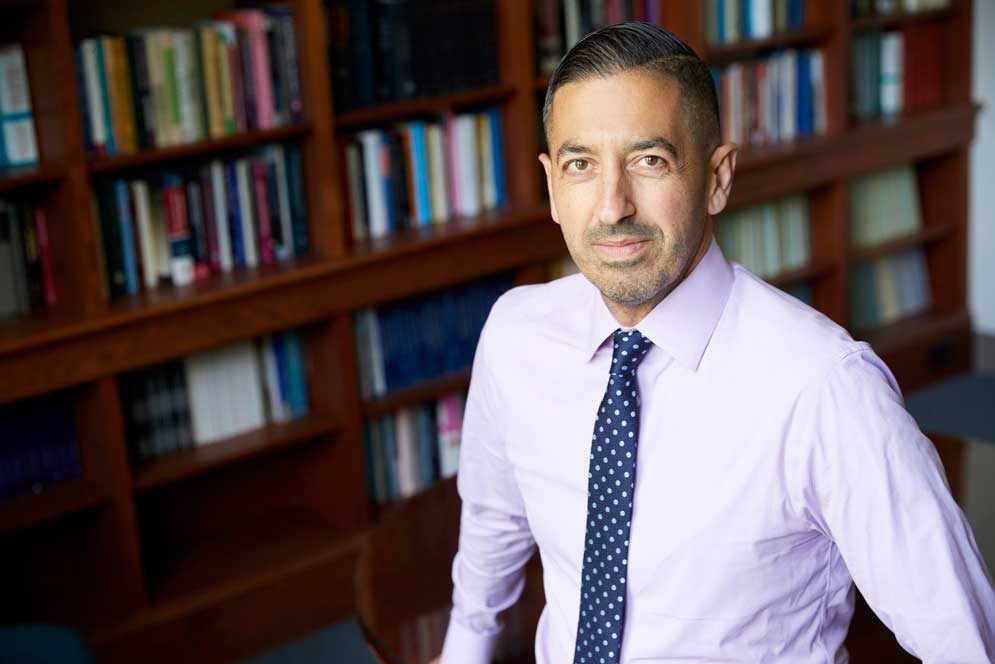 FACULTY EXPERT
Galea to Lead Coronavirus & Equity Taskforce
BU School of Public Health Dean Sandro Galea will lead a statewide emergency task force to ensure that vulnerable populations are not disproportionately affected by coronavirus, or by the steps taken to combat it. Learn about it

ON THE CHARLES RIVER
BU Adjusts to the Coronavirus Reality
The University has moved to online teaching and dramatically scaled back research for the semester. Students, faculty, and staff are adapting to these abrupt changes.
See how we're doing
IN CASE YOU MISSED IT...
BU scientists are donating personal protective equipment and other items from their research labs to hospitals treating coronavirus patients... Nahid Bhadelia of the BU School of Medicine and BU School of Public Health Dean Sandro Galeaparticipated in virtual town hall meetings on coronavirus with Massachusetts Reps. Katherine Clark and Ayanna Pressley on March 17 and 18... BU Associate Provost and Vice President for Research Gloria Waters and Darrell Kotton of the BU School of Medicine explain to WBUR the difficult decision to wind down research labs in order to keep researchers safe... Helen Jenkins of the BU School of Public Health describes what Great Britain got wrong in its COVID-19 response in The Washington Post... Catherine Klapperich of the BU College of Engineering says that point-of-care diagnostics could simplify coronavirus testing in The Verge.
Federal Government Responds To COVID-19
A Note to Our Readers: Beltway BUzz plans to publish intermittently when we have news on the federal government coronavirus response pertinent to BU. Please visit our website and Twitter account for timely updates.
BU IN DC
Nahid Bhadelia of the School of Medicine was a guest speaker for a virtual townhall regarding the coronavirus hosted by Rep. Katherine Clark (D-MA) on March 17.
School of Public Health Dean Sandro Galea was the featured guest speaker for a virtual townhall regarding the coronavirus hosted by Rep. Ayanna Pressley (D-MA) on March 18.
FEDERAL GOVERNMENT RESPONDS TO COVID-19
Congress and federal agencies continue to take steps to alter their operations and address the concerns of stakeholders as the impact of the coronavirus spreads:
- The White House Office of Management and Budget released a memo on Thursday permitting federal agencies to provide administrative relief to federal grantees and applicants whose work is interrupted by coronavirus. Scientific agencies have been updating their previous guidance on the grant flexibilities permitted for research impacted by coronavirus.
- The U.S. Department of Education has issued guidance regarding federal financial aid rules for interrupted or online study.
- The White House Office of Science and Technology Policy (OSTP) has released a machine-readable COVID-19 open research dataset coronavirus research and is asking artificial intelligence researchers to develop text and data mining techniques to help scientists answer high-priority scientific questions.
- The National Institutes of Health, National Science Foundation, Department of Defense, and Department of Energy are seeking research proposals pertaining to COVID-19.
- Congress has passed a bill (S. 3503) ensuring that student veteran benefits will not be interrupted if veterans switch from residential to online coursework. The President is expected to sign it shortly.
WHAT'S NEXT?
Lawmakers are currently working on relief and stimulus bills as the country deals with coronavirus. Of interest to colleges and universities, the White House, Senate Republicans, and Senate Democrats are considering funds for colleges and school districts for cleaning, online learning, and student counseling; emergency financial aid for students and student loan relief for borrowers; and increases to federal research agency budgets. The higher education community is seeking student aid, research, and tax support for the sector as it grapples with unprecedented closures and interruptions.
Live Coronavirus Research Gets Underway at BU NEIDL
Virologist Robert Davey will screen thousands of drugs for effectiveness against COVID-19 infection
Agencies Prepare for COVID-19 Disruptions
BU IN DC
Robert Loftis and Megan Kerin accompanied a group of Pardee School of Global Studies graduate students who discussed foreign affairs career paths with officials at government agencies and international organizations on March 9 through 11.
AGENCIES PREPARE FOR COVID-19 DISRUPTIONS
Federal research and immigration agencies have announced plans to respond to the impact of the coronavirus, including:
- National Institutes of Health: The NIH has offered guidance for investigators requesting a no-cost extension due to research interruptions, dealing with the impact of interrupted grant-funded travel, or seeking a grant deadline extension due to quarantine.
- National Science Foundation: The NSF's grant submissions policies are unchanged, and it plans to update its guidance every two weeks. The agency will move to virtual peer review panels.
- Students on F and M visas: Immigration and Customs Enforcement is permitting international students to participate in distance learning without losing their immigration status.
- Visitors from Europe: The Administration has temporarily prohibited non-citizens from entering the United States from most of Europe, starting at midnight tonight.
BUZZ BITS...
- The National Science Foundation (NSF) announced that Rebecca Keiser will serve in the newly created role of NSF chief of research security strategy and policy. Dr. Keiser has led the agency's Office of International Science and Engineering since 2015, and has played an integral role in its efforts to address science security concerns.
- The National Institutes of Health (NIH) Center for Scientific Review is soliciting feedback on ways to simplify the NIH merit review process. An NIH working group will review the feedback and determine whether to formally propose regulatory changes.
- The National Aeronautics and Space Administration (NASA) has issued a rule requiring grantees to report findings or administrative actions relating to sexual harassment by investigators supported by a NASA grant.
GRANTS NEWS YOU CAN USE
The Department of Defense (DOD) Congressionally Directed Medical Research Program (CDMRP) released its fiscal year 2020 Peer Reviewed Medical Research Program solicitations. The DOD intends to make $360 million available across 44 topic areas, including emerging viral diseases, chronic migraine and post-traumatic headache, and women's heart disease. CDMRP utilizes a two-tiered review process that includes both scientific and programmatic review, so investigators are urged to carefully review the submission requirements.
A Note to Our Readers: As Congress heads into a Congressional District Work Period, Beltway BUzz will take a break from publication until lawmakers return to Washington. Follow @BUFederal on Twitter for updates.
SPH Dean to Chair Statewide Emergency Task Force on Coronavirus & Equity
Goal is to mitigate impact on vulnerable populations such as low-income people and immigrants
Investing in Massachusetts
 ADVOCACY RESOURCE
Investing in Massachusetts
Boston University, Harvard, and MIT ask the Massachusetts Congressional delegation to invest in federal student aid, research, and the humanities in fiscal year 2021. Here's our request
 YOU'RE INVITED
Opportunity Zones: How Are They Working for Cities?
Join the BU Initiative on Cities for a Capitol Hill briefing on April 2nd to discuss whether the federal Opportunity Zones policy can deliver on its goal of improving the lives of low-income Americans. RSVP today
 FACULTY EXPERTS
What We've Learned About Coronavirus
Drs. Nahid Bhadelia and Ronald Corley from BU’s National Emerging Infectious Diseases Laboratories discuss the latest research and guidelines for containing the outbreak. Learn about it
IN CASE YOU MISSED IT...
RSVP to a Capitol Hill briefing on Building the Next Generation Climate Workforce this Thursday... Check out the latest health and wellness research, from nutrition to back pain, on the HealthMatters podcast hosted by Karen Jacobs of BU Sargent College... Jonathan Woodson of the BU Institute for Health System Innovation & Policy weighs in on how the military is responding to the coronavirus in The New York Times... Scientific American blogs about BU School of Medicine alumna Rebecca Davis Lee Crumpler, the women's health pioneer you've probably never heard of... The NIH Director's Blog describes the brain's nightly "rinse cycle" based on research from Laura Lewis of the BU College of Engineering.
BU & Peers Urge Research, Student Aid Support
BU & PEERS URGE RESEARCH, STUDENT AID SUPPORT
Boston University, Harvard University, and the Massachusetts Institute of Technology once again jointly urged the Massachusetts Congressional delegation to increase federal funding for student aid and research. In a memorandum sent to each Massachusetts Congressional office this week, the universities requested support for key student aid investments in Pell Grants, Federal Work Study, and Graduate Assistance in Areas of National Need. The institutions also recommended robust funding for vital research agencies such as the National Institutes of Health, the National Science Foundation, the National Endowment for the Humanities, and the science missions of the Department of Energy and NASA. The memorandum comes as Congress begins consideration of the fiscal year 2021 spending bills that determine federal agency budgets.
FEDERAL GOVERNMENT ADDRESSES CORONAVIRUS
This morning, President Donald J. Trump signed into law a spending bill (H.R. 6074) that will provide approximately $8 billion to federal agencies involved in coronavirus response efforts. Among other things, the measure provides $836 million to the National Institutes of Health: $826 million to the National Institute of Allergy and Infectious Diseases for research on vaccines, therapeutics, and diagnostics, and $10 million to the National Institute for Environmental Health Sciences for health worker training.
Additionally, the U.S. Department of Education on Thursday announced flexibility in student aid rules for students and institutions whose course of study has been impacted by coronavirus. The modified rules are designed to help aided students whose study abroad experiences are cancelled or those who are unable to attend class due to quarantine.
BIDEN, SANDERS ON HIGHER ED
Now that the field of Democratic presidential candidates has narrowed to two, BU Federal Relations presents a primer on the higher education policies proposed by former Vice President Joe Biden and Senator Bernie Sanders (I-VT).
- Free college: Biden would make two years of community college debt-free for all. Sanders would guarantee tuition- and debt-free attendance at all public institutions, Historically Black Colleges and Universities, and Minority-Serving Institutions.
- Pell Grants: Biden proposes doubling the maximum individual Pell Grant award and expanding eligibility to formerly incarcerated students and Dreamers. Sanders proposes expanding the Pell Grant program to cover other non-tuition fees and college costs.
- Student debt: Biden would simplify the loan-repayment process by consolidating various plans into one income-driven repayment plan, lowering the maximum loan payment from 10 percent to five percent of discretionary income, and forgiving the remainder of the debt after 20 years of payments. Sanders would cancel all $1.6 billion in outstanding student debt.