News
NIH Funding, Equal Opportunity Summit, Artificial Intelligence
BU IN DC
Nicole Huberfeld of the School of Law moderated the second installment of a National Cancer Policy Forum webinar series on the impacts of the Supreme Court's Dobbs decision on access to reproductive health services in the context of cancer care on July 24th.
SENATORS PROPOSE INCREASES FOR NIH, PELL
The Senate Appropriations Committee approved spending bills on Thursday which would bolster student aid and biomedical research budgets in fiscal year 2024. Working under the budgetary caps set by the Fiscal Responsibility Act (Public Law 118-5), the Committee recommended a 2% increase to the National Institutes of Health and a 3% increase to the maximum Pell Grant award for low-income students. The Senators proposed maintaining the current year's funding levels for the Advanced Projects Research Agency - Health (ARPA-H) and the National Endowments for the Arts and the Humanities. The Senate's suggested funding levels stand in contrast with the significant cuts proposed by the House Appropriations Committee earlier this month. Both chambers will need to reconcile their competing bills later this year in order to determine the outcome of the fiscal year 2024 budget.
BUZZ BITS...
- On Wednesday, the U.S. Department of Education hosted a national summit on promoting equal opportunity in higher education in the aftermath of the U.S. Supreme Court decision that prohibits the consideration of race in college admissions. The Department announced it would be releasing guidance in August on how colleges can comply with the ruling while cultivating diverse applicants.
- The President's Council of Advisors on Science and Technology (PCAST) is seeking input on a coordinated federal strategy on nutrition science and research. PCAST is requesting stakeholder comments on maximizing federal investments in nutrition research, how interventions for chronic diseases should be incorporated, and strategies for ensuring equitable access to federal nutrition research funding.
- The Department of Defense announced on Monday that it has created three new positions in the Office of the Under Secretary of Defense for Research and Engineering, replacing the role of Deputy Chief Technology Officer. The new Assistant Secretaries of Defense will oversee Science and Technology, Critical Technologies, and Mission Capabilities.
GRANTS NEWS YOU CAN USE
BU Federal Relations recently posted a comprehensive overview of the federal artificial intelligence/machine learning (AI/ML) landscape compiled by Lewis-Burke Associates. AI/ML remains a top research priority under the Biden Administration and continues to enjoy strong bipartisan support given the wide range of applications, but there are growing concerns about potential negative impacts. This compendium provides detailed information on AI/ML priorities for the Biden Administration and Congress, as well as research priorities and major funding opportunities at federal agencies such as the National Science Foundation, the Department of Defense, the National Institutes of Health, and the Department of Energy.
A Note To Our Readers: Due to the Congressional District Work period, Beltway BUzz will not publish in August. Be sure to check our website and social media for updates. See you in September!
Close Up: SPH Briefing on Capitol Hill
Senator Edward Markey (Hon.’04) (D-Mass) spoke at a briefing, hosted by BU’s School of Public Health on Capitol Hill July 20, on the detrimental effects of climate change on vulnerable populations and how communities are mobilizing to address it.
Inside the Mind of an Internet-Safety Vanguard
“You can never say your job is done,” says BU computer engineer Gianluca Stringhini, whose research focuses on cyber safety and making the internet a safer place for everyone.
Climate Resilience, Council of Economic Advisers, Rural Mortality
BU IN DC

Building Equitable Resilience to Climate Events
Senator Edward Markey (D-MA) joined the Boston University School of Public Health, the American Cancer Society, and the Mystic River Watershed Association to discuss how extreme weather affects vulnerable communities and what policymakers can do to mitigate the impacts on July 20th.
FACULTY EXPERT

From BU Wheelock to Washington
BU economist Joshua Goodman just wrapped up a year working on education policy with the Biden Administration's Council of Economic Advisers.
RESEARCH HIGHLIGHT

Rural Mortality Rose during Year Two of Pandemic, despite Vaccines, New Study Finds
BU research highlights how healthcare inequities between urban and rural areas, and vaccine skepticism, played a role in deaths related to COVID.
THOUGHT LEADERS
In Case You Missed It...
BU announced Robert Lowe will be the new chief of the BU Police Department, with a focus on inclusivity, transparency, and student well-being... Leonardo Martinez of the BU School of Public Health shares his research indicating that almost half of all tuberculosis cases in prisons go undetected globally in The Washington Post... Dean Susan Fournier of the BU Questrom School of Business dissects the consumer appeal of the Barbie brand for CNBC... Deborah Carr of the BU College of Arts & Sciences warns that older people may underestimate the health risks of moving to hotter climates in The Washington Post... Carl Streed of the BU Chobanian & Avedisian School of Medicine was recognized by the American Medical Association with the Excellence in LGBTQ Health Award.
Climate Resilience, Budget Cuts, Defense Research
BU IN DC
Sheryl Grace of the College of Engineering spoke about her research at a Capitol Hill briefing sponsored by the National Aeronautics and Space Administration on July 18th.
Greg Wellenius and Amruta Nori-Sarma of the School of Public Health hosted a Capitol Hill briefing on building equitable resilience to climate events on July 20th.
SPH HOSTS CAPITOL HILL BRIEFING
On Thursday, the Center for Climate and Health at the School of Public Health (SPH) hosted a Capitol Hill briefing for Congressional staff on how to build equitable resilience to climate events. Professor Amruta Nori-Sarma highlighted CAFE, a joint BU-Harvard environmental health research coordination center supported by a $6.7 million National Institutes of Health grant. Dr. Leticia Nogueira of the American Cancer Society explained how climate change impacts healthcare delivery and access, and Marissa Zampino of the Mystic Watershed Association described community-based efforts to mitigate extreme weather impacts on vulnerable populations. SPH's Gregory Wellenius moderated a question and answer session with the panelists and audience, followed by closing remarks from U.S. Senator Edward Markey (D-MA).
HOUSE PROPOSES RESTRAINED FUNDING FOR STUDENT AID, RESEARCH
Congress continues to work on fiscal year 2024 spending bills, proposing to shrink or hold steady funding for student aid and science accounts in order to bring spending below the budget caps set by the Fiscal Responsibility Act (Public Law 118-5). Republican House appropriators proposed maintaining the maximum Pell Grant award at its current level of $7,395, eliminating Federal Work Study, and reducing funding for the Institute of Education Sciences by 12%. For science agencies, a House subcommittee recommended a 1% increase for the National Science Foundation, a 9% decrease to the National Institutes of Health, and a 0.1% decrease for NASA research programs. The House Appropriations Committee would also cut the budgets of both the National Endowments for the Arts and the Humanities by 10%. The spending bills still need to approved by the full U.S. House of Representatives and negotiated with the U.S. Senate, and the final budget outcome is unlikely to be determined until late this year.
HOUSE APPROVES DEFENSE POLICY BILL
Last week, the U.S. House of Representatives narrowly passed the National Defense Authorization Act, an annual bill that sets military policy and provides a framework for the research priorities of the Department of Defense. Lawmakers adopted several proposals which purport to curb malign foreign involvement in Defense-funded research, such as restricting research collaborations with Chinese entities and creating a public database of all scientists working on Defense-funded research. The bill also proposes a ban on so-called "gain of function" research with microorganisms and would require DOD grantees to provide at least a 25% cost-share. The U.S. Senate began debate on its own defense policy bill, which does not contain the House bill provisions, this week; the two chambers are expected to reconcile their bills later this year.
Building Equitable Resilience to Climate Events Capitol Hill Briefing

Boston University School of Public Health hosted an in-person lunch conversation on Capitol Hill on Thursday, July 20, 2023. The briefing included leading public health experts from the American Cancer Society and the Mystic River Watershed Association about the detrimental effects of climate change on vulnerable populations, and how communities are mobilizing to address the impacts of climate change on the ground. The audience learned what lawmakers could do to enact policies that will provide support to the most vulnerable communities as extreme weather intensifies and ensure more equitable health outcomes for all. The briefing closed with remarks from U.S. Senator Edward Markey (D-MA) on the importance of combatting climate change to improve human health.
SPEAKERS:
Dr. Amruta Nori-Sarma, Assistant Professor for Environmental Health, Boston University School of Public Health
Dr. Leticia Nogueira, Scientific Director, Health Services Research, American Cancer Society
Marissa Zampino, Community Organizer, Mystic River Watershed Association
CLOSING REMARKS:
Senator Ed Markey, D-MA, United States Senate
MODERATOR:
Dr. Gregory Wellenius, Professor and Director, Center for Climate and Health, Boston University School of Public Health
Related Materials
- Presentation Slides
- Event recording
- Photo slideshow
- Human Health Is Suffering Because of Climate Change | The BRINK, May 2023
- Close Up: SPH Briefing on Capitol Hill | BU Today, July 2023
- Faculty Hold Congressional Briefing to Warn of Health Effects from Climate Change | SPH, August 2023
NSF & DOE Science Budgets, NIH Behavioral Health, SCOTUS Decisions
BU IN DC
College of Communication Dean Mariette DiChristina moderated a panel at the National Academies of Sciences, Engineering, and Medicine Climate Crossroads Summit on July 11th and 12th. Nicole Huberfeld of the School of Law participated in a National Cancer Policy Forum webinar on the impacts of the Dobbs decision on cancer care on July 10th. Linda Sprague Martinez of the School of Social Work moderated a panel during a National Academies of Sciences, Engineering, and Medicine symposium on long COVID on June 22nd and 23rd.
FACED WITH BUDGET CAPS, CONGRESS PROPOSES SCIENCE CUTS
Operating under discretionary spending caps imposed by the Fiscal Responsibility Act (Public Law 118-5) signed into law in June, this week lawmakers began releasing the annual spending bills that set fiscal year 2024 funding levels for federal science agencies. The Senate Appropriations Committee is proposing a $300 million decrease for the National Science Foundation (NSF) budget and a $454 million decrease for science activities at the National Aeronautics and Space Administration, while the House Appropriations Committee proposed level funding for the U.S. Department of Energy Office of Science. Science accounts were not uniquely targeted; the stringent budget caps forced legislators to propose restrained spending for many federal programs. Proposed funding levels for other research and student aid accounts are expected to be released later this month, although final spending bills are unlikely to be negotiated by both chambers of Congress until late this year.
BUZZ BITS...
- Dr. Mandy K. Cohen took over as director of the Centers for Disease Control and Prevention (CDC) on July 10th. President Joe Biden named Dr. Cohen as his choice for the role after Dr. Rochelle Walensky announced her departure from the agency in June. Dr. Cohen is an internal medicine physician who previously led North Carolina's health department and served as chief operating officer of the Centers for Medicare and Medicaid Services.
- The National Institutes of Health (NIH) announced that Dr. Jane M. Simoni will be the next NIH Associate Director of Behavioral and Social Sciences Research. Dr. Simoni is currently a clinical psychologist at the University of Washington. She will join the NIH on July 30th.
- The National Aeronautics and Space Administration (NASA) announced that Dr. Prasun Desai will serve as acting associate administrator for the NASA Space Technology Mission Directorate (STMD). Dr. Desai has worked at NASA for 33 years and currently serves as STMD's deputy associate administrator. He replaces Jim Reuter, who retired on June 30th after leading STMD since 2018.
SUPREME COURT STRIKES DOWN AFFIRMATIVE ACTION, STUDENT DEBT RELIEF
On June 29th, the U.S. Supreme Court ruled against race-conscious college admissions, with the majority arguing that the practice violates the equal protection clause of the 14th Amendment. The opinion does permit colleges to consider applicants' descriptions of the impact of race on their lives. The following day, the Court struck down the Biden Administration's plan to forgive up to $20,000 in student loan debt for certain borrowers, finding that the U.S. Department of Education exceeded its statutory authority. In response, the Administration announced plans to pursue a new rule-making under the Higher Education Act to enact its loan forgiveness proposal in a different manner. It also finalized regulations allowing more borrowers to benefit from income-driven loan repayment plans, as well as plans to help borrowers ease back into repayment this fall.
Climate & Health, Anthony Jack, Affirmative Action
YOU'RE INVITED
Building Equitable Resilience to Climate Events
Join Boston University on July 20th for an in-person Capitol Hill briefing with experts from the American Cancer Society and the Mystic River Watershed Association about the detrimental effects of climate change on vulnerable populations, and how communities are mobilizing to address the impacts of climate change.
FACULTY EXPERT
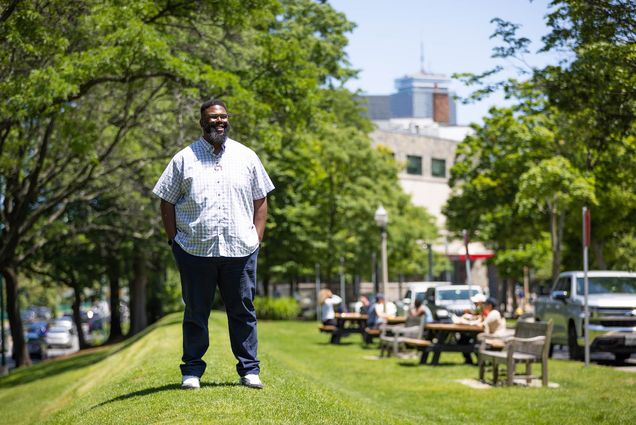
Sociologist and Scholar Anthony Abraham Jack's Mission: Create a More Welcoming Campus
The award-winning higher education scholar and author of The Privileged Poor: How Elite Colleges Are Failing Disadvantaged Students is joining the BU Wheelock College of Education & Human Development and will be the inaugural faculty director of BU's Newbury Center for first-generation students.
ON THE CHARLES RIVER
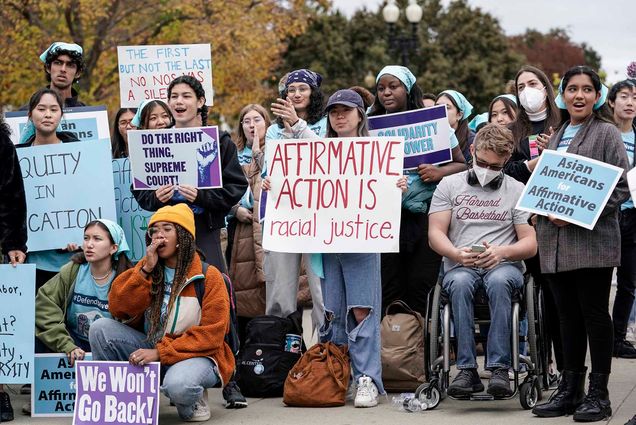
Disappointed and Determined, BU Community Reacts to SCOTUS Affirmative Action Ruling
BU officials vow to remain committed to building a diverse student body, with no intention of "rolling back the clock" to a time when diversity and equity issues did not matter.
Read their reactions
THOUGHT LEADERS
In Case You Missed It...
Robert Tsai of the BU School of Law explains how recent Supreme Court decisions were shaped by "movement judges" in Politico... Benjamin Sovacool and Rebecca Pearl-Martinez of the BU Institute for Global Sustainability are partnering with the National Renewable Energy Laboratory to bring an environmental justice lens to tackling today's energy challenges... The BU Initiative on Cities published a new policy brief examining "Policing and the Punitive Politics of Local Homelessness Policy"... Nicolette Manglos-Weber of the BU School of Theology discusses how moral panic is a common theme in the spread of anti-LGBTQ+ laws globally in The Conversation.
New BUPD Chief Robert Lowe Values Inclusivity and Transparency, Will Contribute to Student Well-Being
He wrote his dissertation on reducing implicit bias and says growing up amid the diversity of Cambridge helped shape his career.
How Is the Conversation around Mental Health Changing among College Students?
As awareness of its importance rises, mental health has become a topic of much discussion in higher education, especially in the wake of the COVID-19 pandemic. SPH researcher Sarah Lipson investigates mental health impacts among young people, primarily students.