News & Insights
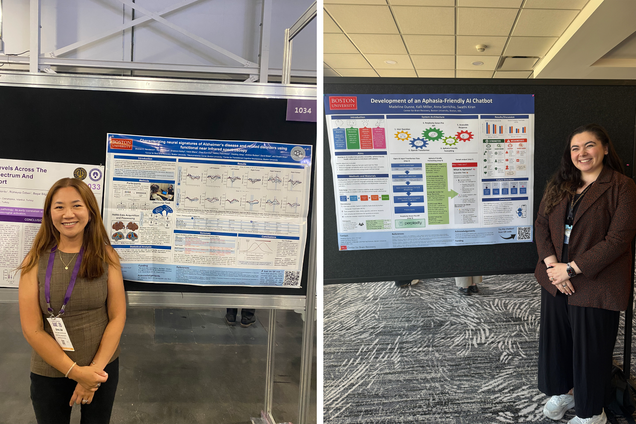
CBR Researchers Present at National and International Conferences
This summer, researchers from the BU Center for Brain Recovery (CBR) attended and presented at several leading conferences, both nationally and internationally, focused on aphasia, cognitive neuroscience, and neurodegenerative disorders. From Pittsburgh to Athens, CBR team members had the ability to share their research, connect with field leaders and fellow trainees, More

BU-Led Framingham Heart Study Brain Aging Program Receives $31.5 Million Funding Renewal

CBR Seminar Series: Ajay Halai
CBR Seminar Series: Ajay Halai, June 29, 2026 Title: Leveraging AI to improve diagnosis and prognosis in post- stroke aphasia Abstract: Aphasia affects at least one third of stroke survivors, yet the field has historically characterised it through syndrome-based taxonomies that poorly capture the graded, multidimensional nature of language impairment. My programme of... More

10 Key Takeaways from Boston Tech Week: How AI Is Transforming the Future of Brain Health
Transforming Brain Health and Disease through AI #BosTechWeek May 29, 2026 AI is rapidly reshaping how we understand, diagnose, and treat the brain at a moment when aging populations are placing unprecedented strain on healthcare systems. To address this shift, Boston University and the BU Center for Brain Recovery hosted an expert... More

$9M Grant Awarded to BU Co-Led Research to Advance Understanding and Early Detection of Cerebral Amyloid Angiopathy
Translational Framework For Innovation in Cerebral amyloid angiopathy (TRAFFIC) June 9, 2026 Cerebral amyloid angiopathy (CAA) is a common cause of brain bleeds in older adults and an important contributor to cognitive impairment and dementia, including Alzheimer's disease. However, the condition remains difficult to accurately diagnose and currently lacks targeted treatment options. CAA... More

Brain Recovery After Stroke: How AI Could Be Used To Predict the Best Treatment Path

Governor Healey Proclaims June 2026 National Aphasia Awareness Month in Massachusetts
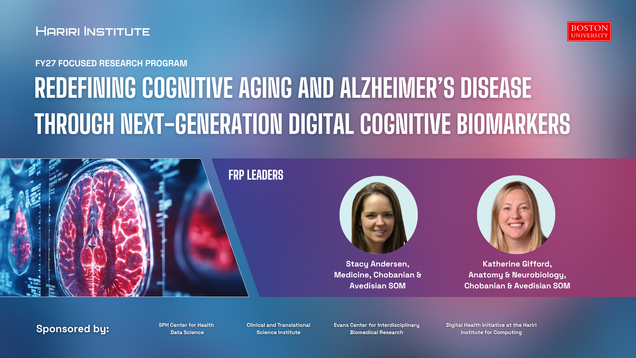
Redefining Cognitive Aging and Alzheimer’s Disease through Next-generation Digital Cognitive Biomarkers FRP

ReMIND: An AI Assistant for Neuroimaging Analysis
ReMIND: An AI Assistant for Neuroimaging Analysis Researchers in the Kolachalama Laboratory at Boston University have recently developed ReMIND, a tool powered by artificial intelligence (AI) to aid clinicians with the growing demand of interpreting and reporting on large quantities of multi-sequence brain scans. With the increasing incidence of neurological disorders, clinicians... More

BU Center for Brain Recovery Joins International Partnership with Ewha Brain Institute
May 20, 2026 The Boston University Center for Brain Recovery (CBR) and the Ewha Brain Institute formally launched a new international partnership this spring during a Partnership Launch and Research Workshop hosted by Ewha Womans University in Seoul, South Korea. The event featured a ceremonial signing of the Memorandum of Understanding (MOU), More

CBR Seminar Series: Leonardo Bonilha
CBR Seminar Series: Leonardo Bonilha, May 18, 2026 Title: White Matter, Brain Health and Digital Twin in Aphasia Recovery Abstract: Classical lesion-symptom mapping has provided a solid foundation for understanding the neurobiology of language and aphasia, yet lesion location alone accounts for only a fraction of the variability in aphasia severity and recovery. More

How is Bilingual Aphasia Different from Monolingual Aphasia?
What is Bilingual Aphasia? Bilingual aphasia occurs when a person who speaks two languages develops aphasia, an acquired language disorder commonly caused by stroke. How Bilingual Aphasia is Different Cases of bilingual and multilingual aphasia differ from monolingual aphasia due to the interaction of multiple languages in the brain. Decades of research have indicated... More

CBR Seminar Series: Kyrana Tsapkini
CBR Seminar Series: Kyrana Tsapkini, April 27, 2026 Title: Electrical stimulation in neurodegenerative disorders: efficacy, mechanisms and new trends Abstract: Primary Progressive Aphasia (PPA) presents a critical unmet need for scalable, effective interventions targeting progressive language decline. This work advances a novel therapeutic framework combining noninvasive brain stimulation with behavioral language therapy, with... More

MedAI Hackathon 2026
April 10–11, 2026 The inaugural MedAI Hackathon successfully brought together over 230 registrants across the Boston University community, bridging the Charles River Campus and the Medical Campus. The event marked an exciting achievement for convergent research at BU, as participants collaborated in cross-disciplinary teams to develop AI powered solutions for real-world... More
Cross-linguistic differences in the semantic networks for animal fluency between English and Korean speakers with and without aphasia
Abstract Background: Semantic fluency tasks are widely used to assess lexical – semantic retrieval in healthy aging and aphasia; however, growing evidence indicates that semantic organization is influenced by culturally grounded lexical experience. Prior cross- linguistic work suggests that Korean speakers rely on culture- specific semantic schemas – such as zodiac... More