Skip to Main Content
Boston University
  • Bostonia
  • BU Today
  • The Brink
  • University Publications

    • Bostonia
    • BU Today
    • The Brink
  • School & College Publications

    • The Record
Other Publications
BU Today
  • Sections
News, Research, Community

Glacial melt found to be faster than thought

Robert Kaufmann on how it happened and why there is no turning back
February 21, 2006
  • Art Jahnke
Twitter Facebook
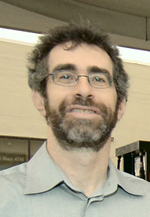
Robert Kaufmann. Photo by Kalman Zabarsky

In what one scientist describes as “clearly a climate signal,” Greenland glaciers have been found to be melting much faster than had been thought, and researchers now believe that they could eventually pour enough water into the oceans to raise global sea levels by 20 feet. In a study conducted by researchers at NASA’s Jet Propulsion Laboratory and the University of Kansas, scientists have learned that the amount of ice flowing into the sea from glaciers in southern Greenland has doubled in the past 10 years, and there is evidence that the melt could soon spread to the massive ice sheets that cover the north of Greenland.

BU Today talked to Robert Kaufmann from the Center for Energy and Environmental Studies, who is a College of Arts and Sciences geography professor, about what this means for our climate and the climate of our children.

BU Today: What’s causing the glacial melt?

Kaufmann: I would assume global warming.

What’s causing global warming?

Human activity is largely responsible for the temperature increase of the last 150 years.

What human activity?

Emitting carbon dioxide into the atmosphere. Emitting methane into the atmosphere. Emitting CFCs [chlorofluorocarbons] into the atmosphere.

Can global warming be slowed or reversed?

In theory it could be slowed, but it is highly unlikely. It would take stopping emissions of all of those gases, so unless we are willing to give up coal and oil and gas, that ain’t gonna happen anytime soon.

Is the Kyoto Accord relevant here?

Even if it were fully adopted, the Kyoto Accord is not going to stop global warming. We have to think of it as a nice first step. Even if it were implemented today, the planet would still be warming, albeit at a slower rate.

What will this kind of glacial melt do to the shorelines of the world?

As glaciers melt, they do two things. They increase the amount of fresh water in the oceans and they increase the sea level. Depending on where the glacier is and depending on the amount of water that melts, it could do something else: it could slow or stop thermohaline circulation, the ocean current that moves between the surface and deeper waters and acts as a conveyer belt, bringing heat north. In the past when this has happened, the earth has cooled, especially Europe.
 
If it were to happen again, how long would it take to cool?

If glaciers and ice sheets melt at a rapid rate, it could cool in decades. You won’t get an ice sheet the day after tomorrow, but the cooling would be noticeable within decades. We would have a very large problem.

That sounds worrying. How did we manage to make this happen?

We have increased the atmospheric concentration of carbon dioxide from 280 parts per million to about 370 parts per million, and when you put extra molecules of carbon dioxide into the atmosphere, it lasts for about a century. We are committed to global warming. There is nothing we can do about it now.

Is there a formula for increasing carbon dioxide and warming the planet?

If you double the atmospheric concentration of carbon dioxide relative to the 280 parts per million, you increase the temperature about seven degrees Fahrenheit. We have increased the concentration somewhere between a third and a half. Global temperatures have risen over a degree in the last 150 years. We see that very clearly.

Does all of this alarm you?

Yeah!


Explore Related Topics:

  • Global
  • Public Safety
  • Sustainability
  • Share this story

Share

Glacial melt found to be faster than thought

Share

  • Twitter
  • Facebook
  • Reddit
  • LinkedIn
  • Email

Latest from BU Today

  • Public Safety

    BUPD Offers Tips for How to Keep You and Your Property Safe

  • Arts & Culture

    Wheelock Family Theatre Gives High School Students a Hands-On Role in Theater Management

  • Student Life

    10 BU Hacks to Navigate the Student Experience

  • Film & TV

    BU Alum Julian Shapiro-Barnum Takes Late-Night Outdoors

  • CLASS SELECTION

    Student Creates AI-Powered Tool to Analyze Classroom Space Usage on Charles River Campus

  • University News

    New financial aid program covers tuition for families earning less than $200,000

  • BUTI

    Photos Capture Excitement of BU Tanglewood Institute’s 60th Anniversary Celebration

  • Things-to-do

    Want to Beat the Summer Heat? Check Out One of the Boston Area’s Many Public Pools

  • Student Life

    BU Chobanian & Avedisian School of Medicine Welcomes First-Year Medical Students During White Coat Day

  • Move-in 2026

    Boston University Move-In 2026: Everything You Need to Know

  • Student Life

    BU’s Chobanian & Avedisian School of Medicine Matches Mentees & Mentors

  • Humanities

    BU PhD Student Highlights Overlooked Revolutionary War Voices Through Internship at the Boston Athenaeum

  • Student Life

    Interning at City Hall: Making an Impact Where It Matters Most

  • BUTI

    Strike Up the Band for Boston University Tanglewood Institute’s 60th Anniversary

  • University News

    MBTA Green Line B Branch Service to be Suspended Twice in August

  • Things-to-do

    A Trip to the Sea via the T

  • University News

    BU Schedules Informational Town Halls Regarding New Federal Cap on International Students’ Time in the US

  • Film & TV

    As Christopher Nolan’s The Odyssey Hits Movie Screens, BU Students Already Know the Story

  • Health & Medicine

    Chobanian & Avedisian School of Medicine’s Chief Resident Immersion Training (CRIT) Marks 25th anniversary

  • Arts & Culture

    CFA’s Jim Demler and His Identical Twin Brother Make Their Off-Broadway Debut

Section navigation

  • Sections
  • Must Reads
  • Videos
  • Series
  • Close ups
  • Archives
  • About + Contact
Get Our Email

Explore Our Publications

Bostonia

Boston University’s Alumni Magazine

BU Today

News, Research, Community

The Brink

Pioneering Research from Boston University

  • Twitter
  • Facebook
  • Youtube
  • LinkedIn
  • Instagram
  • Weibo
  • TikTok
© Boston University. All rights reserved. www.bu.edu
© 2026 Trustees of Boston UniversityPrivacy StatementAccessibility
Boston University
Notice of Non-Discrimination: Boston University prohibits discrimination and harassment on the basis of race, color, natural or protective hairstyle, religion, sex or gender, age, national origin, ethnicity, shared ancestry and ethnic characteristics, physical or mental disability, sexual orientation, gender identity and/or expression, genetic information, pregnancy or pregnancy-related condition, military service, marital, parental, veteran status, or any other legally protected status in any and all educational programs or activities operated by Boston University. Retaliation is also prohibited. Please refer questions or concerns about Title IX, discrimination based on any other status protected by law or BU policy, or retaliation to Boston University’s Executive Director of Equal Opportunity/Title IX Coordinator, at titleix@bu.edu or (617) 358-1796. Read Boston University’s full Notice of Nondiscrimination.
Search
Boston University Masterplate
loading Cancel
Post was not sent - check your email addresses!
Email check failed, please try again
Sorry, your blog cannot share posts by email.
Glacial melt found to be faster than thought
0
share this