Skip to Main Content
Boston University
  • Bostonia
  • BU Today
  • The Brink
  • University Publications

    • Bostonia
    • BU Today
    • The Brink
  • School & College Publications

    • The Record
Other Publications
BU Today
  • Sections
News, Research, Community

Getting Native American culture right

An online course hopes to set the record straight
June 19, 2006
  • Meghan Noe
Twitter Facebook
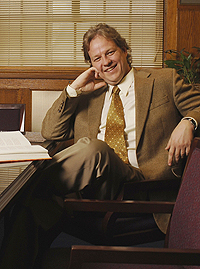
Greg Salyer, associate professor and chair of the department of Liberal Studies at MET

Many people still imagine Native Americans as people who wore headdresses and lived in tepees. Not even close, says Greg Salyer, associate professor and chair of the Department of Liberal Studies in Metropolitan College. This summer Salyer wants to set the record straight in his course Interior and Exterior Landscapes: Understanding Native American Cultures.

“Every time I teach this course, students note, with various levels of disappointment and even anger, that no one ever taught them about Native Americans and the important issues their cultures raise for Americans of all ethnicities,” says Salyer, who teaches the course online. “This ignorance is typical of American understandings of the original inhabitants of the continent. We expect Native Americans to exist in museums or, if they exist now, to look like something out of a western.”

Another myth, says Salyer, is that Native Americans are a vanishing people. In fact, their numbers are growing.  According to the U.S. Census Bureau, the American Indian and Alaska native population rose by 1 percent, or 43,000, from 2004 to 2005. The census also reports that in 2005 the American Indian and Alaska native population was younger than the general population, with approximately 29 percent under the age 18, compared with 25 percent in the total population.

To help students understand that many of their ideas about Native Americans are false and culturally biased, Salyer asks them to complete the Implicit Association Test and other online activities created by the Office of Distance Education. Students then learn the truth about Native Americans through the latter’s writings, poems, and dramas, and they witness their cultural and religious traditions, read about how they have been portrayed and represented throughout history, and obtain a glimpse into their modern-day experiences.
 
“One of the main criticisms Native people have about their existence in the larger American culture is that their voices are not heard,” says Salyer.  “Worse still, their voices are replaced by people who are not Native but claim to speak for them. As a non-Native person, I have to be sure not to elide those voices with my own or someone else’s. The best way to do that is to read the works of Native Americans themselves. Literature provides the kind of free and open space we need to understand those voices.”

Of the six students in the class, which runs through June 30, one is living near an Indian reservation in Ontario this summer, and another is playing hockey in Alaska, the home state of many Native people.

Salyer says that in the best cases, what students learn in his class will change their lives.  “And at the very least,” he says,  “I’d like them to know that there are Native people living here in America, who have stories and lives that are different from the ones we know and live by. The United States has been remarkably resistant to making adjustments to its mythology or its history. Native Americans’ presence reminds us that they were the original inhabitants of the ‘New World’ and that they were the victims of a 500-year genocide that was justified with religious and political excuses. It’s a hard history for Euro-Americans to face, but until we do, we won’t know ourselves completely, much less the people whose land we walk upon today.”

Explore Related Topics:

  • Culture
  • Local
  • Poetry
  • Religion
  • Share this story

Share

Getting Native American culture right

Share

  • Twitter
  • Facebook
  • Reddit
  • LinkedIn
  • Email

Latest from BU Today

  • CHURCH CLOSINGS

    Why Might a Record Number of Churches Close This Year?

  • In the City

    Love Thrift Shopping? Check Out Our Guide to the Best Secondhand Shops in and around Boston

  • Things-to-do

    This Weekend @ BU November 13 to 16

  • Campus Life

    BU Launches Online AI Course For Undergrads; Additional AI Resources for Faculty, Staff

  • University News

    Round of Applause: Craig Childress

  • Visual Arts

    New 808 Gallery Exhibition Showcases Faculty, Alumni Artwork

  • Varsity Sports

    BU Men’s Soccer Heads to Lehigh for Patriot League Semifinal Tuesday

  • Varsity Sports

    BU Men’s Basketball Hosts Brown in Season Home Opener

  • Watch Now

    Video: Leaders Among Us—President Gilliam in Conversation with BU Community

  • University News

    Boston University Tanglewood Institute to Celebrate 60th Anniversary

  • Student Life

    Networking Doesn’t Have to Make You Cringe

  • Campus Life

    BU Food Pantry Helps Students Facing Food Insecurity

  • Fine Arts

    BU, MassArt, Tufts Open Fine Arts Studios to the Public for Second Annual Event

  • Campus Life

    Office Artifacts: Leslie Dietiker

  • Varsity Sports

    Chasing Titles: BU Women’s Soccer, Field Hockey Ready for Patriot League Semifinals

  • Things-to-do

    This Weekend @ BU: November 6 to 9

  • Student Life

    Comm Ave Runway: November Edition

  • New to FitRec? Here’s What You Need to Know

  • Watch Now

    Two New Visual Arts Programs Help Boston Medical Center Residents and Fellows Hone Their Skills as Clinicians

  • University News

    BU Seeks Your Input About Campus Spaces

Section navigation

  • Sections
  • Must Reads
  • Videos
  • Series
  • Close ups
  • Archives
  • About + Contact
Get Our Email

Explore Our Publications

Bostonia

Boston University’s Alumni Magazine

BU Today

News, Research, Community

The Brink

Pioneering Research from Boston University

  • Twitter
  • Facebook
  • Youtube
  • LinkedIn
  • Instagram
  • Weibo
  • TikTok
© Boston University. All rights reserved. www.bu.edu
© 2025 Trustees of Boston UniversityPrivacy StatementAccessibility
Boston University
Notice of Non-Discrimination: Boston University prohibits discrimination and harassment on the basis of race, color, natural or protective hairstyle, religion, sex or gender, age, national origin, ethnicity, shared ancestry and ethnic characteristics, physical or mental disability, sexual orientation, gender identity and/or expression, genetic information, pregnancy or pregnancy-related condition, military service, marital, parental, veteran status, or any other legally protected status in any and all educational programs or activities operated by Boston University. Retaliation is also prohibited. Please refer questions or concerns about Title IX, discrimination based on any other status protected by law or BU policy, or retaliation to Boston University’s Executive Director of Equal Opportunity/Title IX Coordinator, at titleix@bu.edu or (617) 358-1796. Read Boston University’s full Notice of Nondiscrimination.
Search
Boston University Masterplate
loading Cancel
Post was not sent - check your email addresses!
Email check failed, please try again
Sorry, your blog cannot share posts by email.
Getting Native American culture right
0
share this