Using Statistics to Map an Ancient Greek Sanctuary
- By: ronansm
Becky Vithayathil is a student in Boston University’s M.S. in Statistical Practice program. Before coming to BU, she worked in data analytics for fast-paced start-ups.
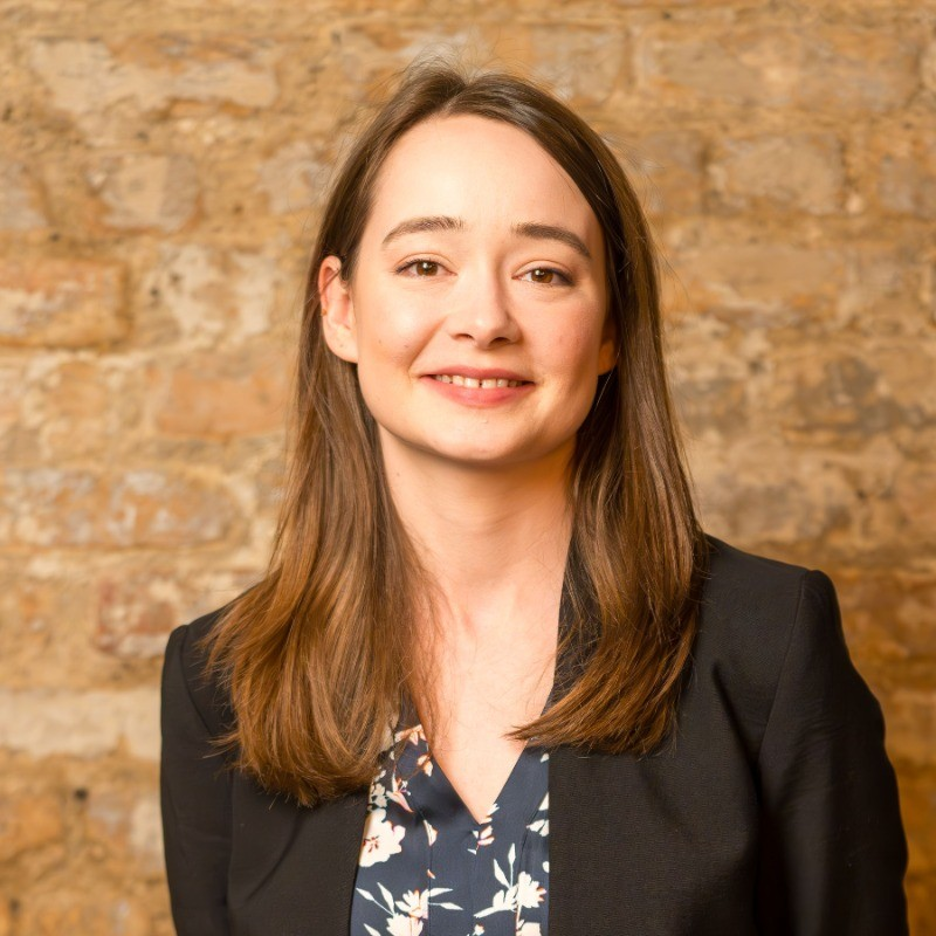
As a statistical consultant in the program, she works with a range of clients, from BU research centers and departments like the Center for Space Physics and the Department of Neurobiology to external research groups such as the Amykles Research Project. Her statistical modeling work has contributed to a co-authored paper in the Journal of Cerebral Blood Flow and Metabolism, and she is lead author on a manuscript in preparation describing a predictive model of the Amykles archaeological survey area.
What the project was about
The Amyklaion is an ancient Greek sanctuary near the modern village of Amykles, just south of Sparta. Archaeologists from the Amykles Research Project want to understand how the sanctuary connected to the surrounding valley. To find out, survey teams walk the landscape in a grid of roughly 20-by-20-meter squares and count the pottery fragments lying on the surface. Lots of fragments in one place can point to past human activity there.

The initial field survey covered only part of the area. We wanted to answer two questions: what landscape features are linked to where pottery turns up, and can we estimate how much pottery is likely in the squares no one has surveyed yet?
I used QGIS, a geographic mapping tool, to extract spatial data for each square. The data had some interesting challenges. Squares varied in size, so bigger squares could contain more pottery fragments simply because they were bigger. Ground visibility also mattered, since it’s easier to spot pottery on clear ground than in thick vegetation. And ancient pottery doesn’t respect modern survey grid lines, so neighboring squares tended to be correlated with each other.
The model was built to account for these challenges. It adjusts for differences in square size and ground visibility, and adds a spatial component that lets nearby squares inform each other’s predictions. The model captures the broad pattern of pottery density well, but it underestimates the most intense hotspots, which we think reflects ancient settlement activity that none of our current variables can measure. That’s a useful lead for the archaeologists going forward. The project’s survey program will extend into new areas each season, and each round of fieldwork will be a chance to test the model’s predictions against real data and refine it.

How it connects to MSSP
This project is what the MSSP program is built around: taking a real research question or business problem, choosing methods that fit the data, and explaining the results clearly to a variety of stakeholders including people who aren’t statisticians. A big part of the work was translating ideas like spatial correlation into terms that would be meaningful to archaeologists, and then listening to their expertise to interpret what the model was telling us.
Applied modeling coursework gave me the tools, and the consulting experience taught me to work through a messy, real-world problem with a client instead of a clean textbook dataset.
What I’m proud of
I’m most proud of getting the validation step right for this model. Survey squares close together tend to be related, so a standard accuracy check can make a model seem better than it is. I used a method called buffered spatial cross-validation, which tests the model only on areas set apart from the ones it learned from. That gives a much more realistic picture of how well it predicts somewhere new.
M.S. in Statistical Practice student at Boston University.
Connect on LinkedIn →