News
Dr. Sean Elliott Receives 4 Year National Institute of Health Grant to study “Structure, Function and Diversity in the Bacterial Cytochrome c Peroxidase Family”
Dr. Sean Elliott was recently awarded 4 years of support from the National Institute of Health (NIH) for his research into bCCPs.
The new grant will enable studies in the Elliott Group to dissect the way in which nature has made use of a common motif of bioinorganic chemistry, the iron-bearing structure known as a c-type heme, and to utilize it for diverse chemistry. While Elliott has a long-running interest in heme and redox chemistry, here the group studies the titular ‘bacterial cytochrome c peroxidase’ (or, bCCP) family of enzymes. While prototypical bCCPs are found in gram negative microorganisms where they detoxify endogenous or exogenous hydrogen peroxide (H2O2), the Elliott group has realized that there exist in microbes novel bCCPs which engage in unknown chemistry. In the work sponsored by the NIH, the Elliott group will use a combination of biochemistry, electrochemistry, spectroscopy and structural biology to elucidate the bCCPs found in under appreciated microbes, and attempt to rationalize why the enzymes work as they do.
The work to be supported is a team effort where the enzymes discovered and produced in the Elliott Group will be examined here at BU, but also in collaboration with structural biologists at MIT and spectroscopists at Carnegie Mellon and the University of Michigan.
As bCCPs are enzymes on the front-line of the native defenses of NIH Select List pathogens including Pseudomonas aeruginosa, Burkholderia complex species, Vibrio cholerae, Campylobacter jejuni, and Yersinia pestis, these studies will provide fundamental insight into the long-term development of new antimicrobial compounds that will target the novel features of bCCP structure.”
Dr. Elliott, who is also a two time recipient of the Scialog® Award Research Corporation (2010-2011), and received the 2007 Gitner Award for Distinguished Teaching in 2007 and an NSF CAREER Award in 2005 (among other honors), works with the Elliott Research Group to investigate the interplay between biological systems and redox-active species (e.g., metal ions, organic radicals, disulfide bonds, reactive oxygen species). Their emphasis is on the kinetic and thermodynamic basis for catalytic redox chemistry, as well as the molecular basis of how nature tune redox cofactors do the hard work of Life.
Dr. Damiano Recieves $12M in Supplemental Funding from NIH

Read the full article in ENG News: http://www.bu.edu/eng/2017/01/04/study-supports-final-pivotal-trial-of-bionic-pancreas/
Dr. Arturo Vegas Highlighted in BU Today
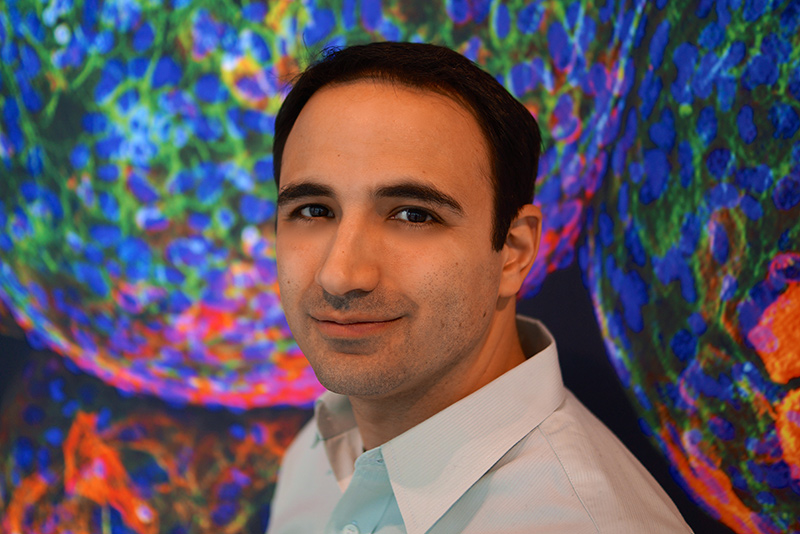
Dr. Arturo Vegas was recently featured in BU Today for his research into Type 1 Diabetes. The full article is called “New Targets to Treat Type 1 Diabetes” and there’s an excerpt from the article by Barbara Moran is below.
For more information about Dr. Vegas visit his Faculty Page and for more on his research group visit the Vegas Group Page.
“Type 1 diabetes is rare but devastating. A person’s own immune system attacks the pancreas, destroying insulin-producing tissue and the body’s ability to regulate blood sugar. About five percent of people with diabetes—approximately 1.25 million Americans—have this form of the disease, according to the American Diabetes Association. Unregulated blood sugar can lead to blindness, kidney failure, and death.
Scientists aren’t sure what causes type 1 diabetes, though they suspect that a genetic predisposition, combined with an environmental trigger, causes a sudden disruption in the immune system that causes it to attack the body’s own tissue. The only treatment is a lifetime of careful blood sugar monitoring, with insulin injections as needed.
But what if there were a way to block the immune system before the damage was done, preserving at least some of the pancreas’ ability to produce insulin? That’s the goal of Arturo Vegas, a Boston University College of Arts & Sciences assistant professor of chemistry, whose lab combines biology, chemistry, materials science, and engineering to develop targeted therapies for complex diseases like diabetes. He recently was awarded a prestigious $1.4 million Type 1 Diabetes Pathfinder Award from the National Institutes of Health (NIH) to pursue the work.”
Congratulations Dr. Vegas!
Dr. Arturo Vegas Presents Research to Congressional Biomedical Research Caucus
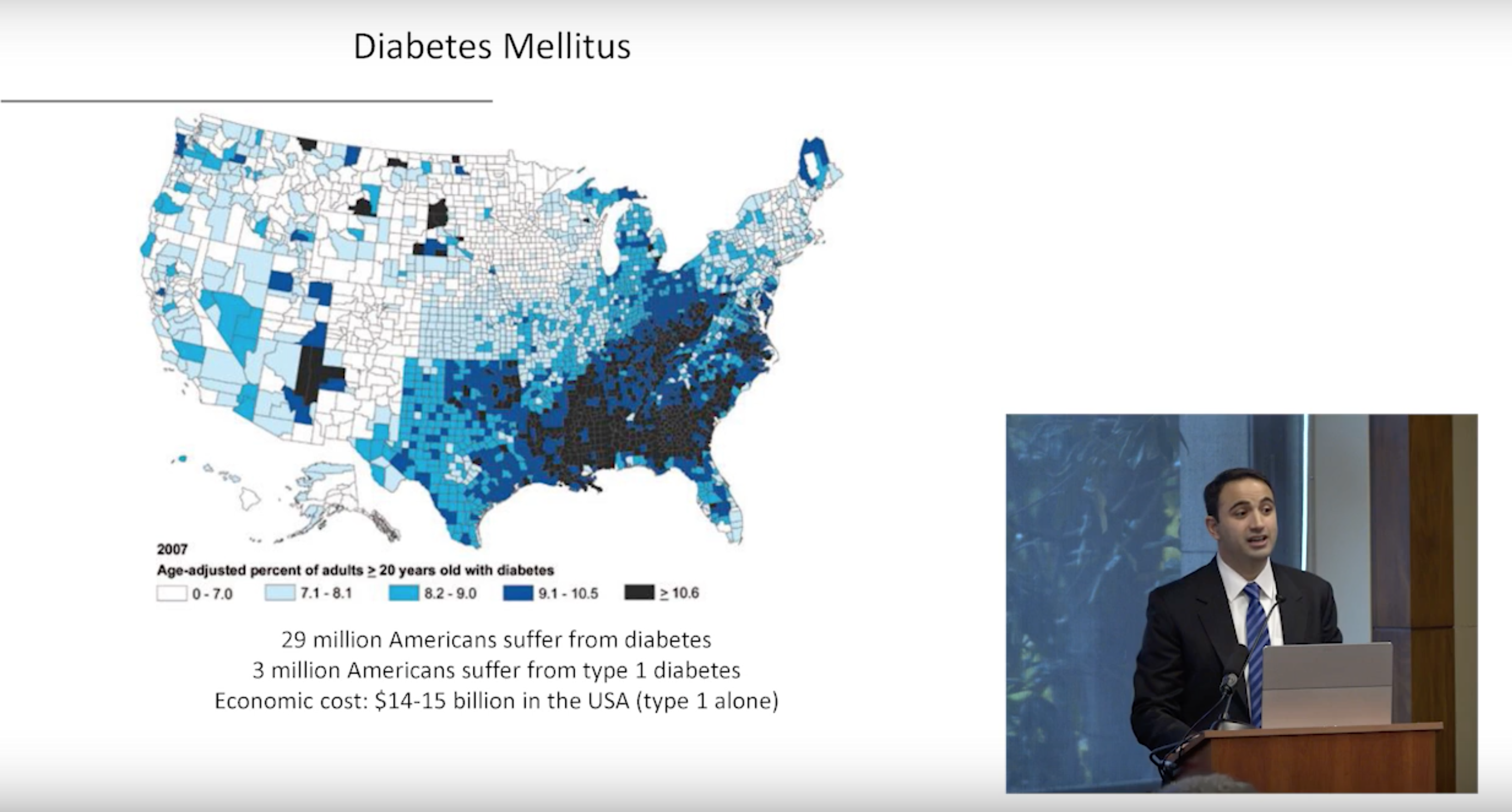 On October 5th, 2016 Dr. Arturo Vegas, who is a leader in the development of targeted therapies, discussed the recent progress to overcome challenges in the field including the development of automated insulin dosing, the production of mature insulin-producing cells from human stem cells, and new materials that can be used to prevent the rejection of transplanted insulin-producing tissue to the Coalition for the Life Sciences Congressional Biomedical Research Caucus.
Lynn Marquis, the Director of the Coalition for the Life Sciences Congressional Biomedical Research Caucus, invited Dr. Vegas to present his exciting research on Type 1 diabetes to a varied group of Congressional Representatives from across the country.
Type 1 diabetes, formally known as juvenile diabetes, is a disease characterized by the inability of patients to produce their own insulin hormone. It currently afflicts an estimated three million Americans. While a rigorous regimen of blood glucose monitoring coupled with daily injections of insulin remains the leading treatment, diabetics still suffer ill effects due to challenges with daily compliance and imperfect blood glucose control. The technologies Dr. Vegas is researching and discussed are bringing us closer than ever to mitigating this disease and improving the quality of life for these patients.
“The words of Sir Winston Churchill are applicable regarding the impact of their significant advances on a potential cure for diabetes: ‘This is not the end. It is not even the beginning of the end. But it is perhaps the end of the beginning.’” –Stock et al. Cell Stem Cell 18: 431-433. 2016
Watch his presentation here: “Are We Close to a Cure for Type 1 Diabetes?” – Arturo Vegas Presents to CBRC
Dr. Khalil Receives NIH “New Innovator Award”
Ahmad "Mo" Khalil, a College of Engineering assistant professor of biomedical engineering, has received a New Innovator Award under the High-Risk, High-Reward program sponsored by the National Institutes of Health (NIH). Read more >>
Xue Han and Wilson Wong, both MCBB faculty in ENG, have also received the NIH New Innovator Award.
MCBB Alum, Michelle Olsen (GRS ’15), Paper Featured in BU Research
BU MCBB PhD and Frydman lab alum, Michelle Olsen, is the lead author of a paper titled “Polyamines and Hypusination Are Required for Ebolavirus Gene Expression and Replication” which was recently published in the American Society for Microbiology’s mbio journal in July 2016. Michelle is now a postdoctoral fellow in the Connor Lab where she works to understand how disabled forms of Ebola virus hijack and infect cells. The paper’s findings were featured online in BU Research.
Dr. Klapperich to Join Board of Directors in the Biomedical Engineering Society (BMES)
Professor Catherine Klapperich (BME, MSE), associate dean for Research and Technology Development, will join the Board of Directors for a term spanning 2016-2019. The board is the main governing body of BMES and performs tasks ranging from electing an executive director to managing society resources and public image while maintaining accountability.
“It’s a great honor to participate in the leadership of BMES,” said Klapperich. “It gives us a great avenue to promote the field and engage in efforts to diversify and strengthen the pool of students and advanced trainees in biomedical engineering.”
Dr. Ngo Receives Career Development Professorship
From ENG News, by Amy Laskowski, BU Today:
 The Reidy Family Career Development Professorship, which recognizes College of Engineering and Questrom School of Business faculty, goes his year to John Ngo, an ENG assistant professor of biomedical engineering. The Ralph Edwards Career Development Professorship, given to MED junior faculty, has been awarded to Joshua Campbell (MED’12), a MED assistant professor of computational biomedicine.
Ngo’s research applies principles of evolution, chemistry, and engineering to develop new tools for visualizing, measuring, and controlling biomolecules in cells and organisms. Currently, his lab studies how proteases—proteins that “chop up” other proteins—are used by cells to regulate gene expression in response to different biological signals.
He says his Career Development Professorship came as a complete surprise, and that upon learning that he had been selected, he immediately wrote to thank his former mentors. “As somebody who is just starting an independent career, I know that much of my success is owed to the scientists who coached me along the way,” says Ngo, whose undergraduate degree is from the University of California, Santa Barbara, and PhD in biochemistry and molecular biophysics from the California Institute of Technology. “To me, this award is a big reminder of how lucky I am to have been trained by such great teachers. So, in honor of my mentors, I’m going to pay it forward and use this award to enhance the training environment of my lab for my own students.”
Ho Lab Research Featured in CAS Magazine
The research of the Ho lab, directed by Associate Professor of Biology Angela Ho and Research Assistant Professor Uwe Beffert, was recently featured in the College of Arts & Sciences magazine. Their research, funded by the National Institutes of Health and the Harold and Margaret Southerland Alzheimer’s Research Fund, investigates the cellular and molecular basis of human brain diseases, including Alzheimer's Disease and autism.
Dr. Daniel Segrè at the White House
 Dr. Daniel Segrè, a Professor of Biology and Biomedical Engineering, and a member of the Bioinformatics program, recently attended an event at the White House as part of the launch of the National Microbiome Initiative by the White House Office of Science & Technology Policy. This event coincides with BU’s own microbiome initiative, which will be launched with a Fall 2016 conference: Microbes at Multiple Scales: From Genes to the Biosphere. These initiatives will involve modeling microbial systems, environmental and human health impacts, and applying the techniques of synthetic biology to microbiome research.