Faculty News
Dr. Mary Dunlop Receives New BU Postdoctoral Awards Excellence in Mentorship and Research

Excerpt from The Brink "New BU Postdoctoral Awards Celebrate Excellence in Mentorship and Research"
When postdoctoral researcher Jean-Baptiste Lugagne began applying to faculty positions last year, he steeled himself for a daunting process. In an intensely competitive job market, university search committees seek candidates who can demonstrate vast skill sets beyond their field-specific expertise, from teaching to grant writing to lab management.
But Lugagne had a secret weapon to help him through the job search: his faculty mentor, Mary Dunlop. A Boston University College of Engineering associate professor of biomedical engineering, Dunlop guided Lugagne in refining his research proposal, gave him feedback on his interview materials, and even helped him organize a practice “chalk talk” with other faculty to ensure he was prepared for his presentations to search committees. The preparation paid off: Lugagne is joining the University of Oxford as an assistant professor of engineering science next year.
Now, in recognition of her deep commitment to the professional and personal development of postdoctoral researchers at BU, Dunlop has been awarded the University’s first-ever Award for Excellence in Mentoring Postdocs. She was honored at BU’s National Postdoc Appreciation celebration.
“These awards reflect the critical contributions of our postdocs and their mentors,” says Pallavi Eswara, director of postdoctoral affairs at BU. “Our postdocs are doing excellent research, but they are also contributing to our research community in countless other ways, as teachers, mentors, DEI leaders, and innovators.”
Read more here.
Congratulations Dr. Mary Dunlop!
Michelle Teplensky Receives Beckman Young Investigator Award
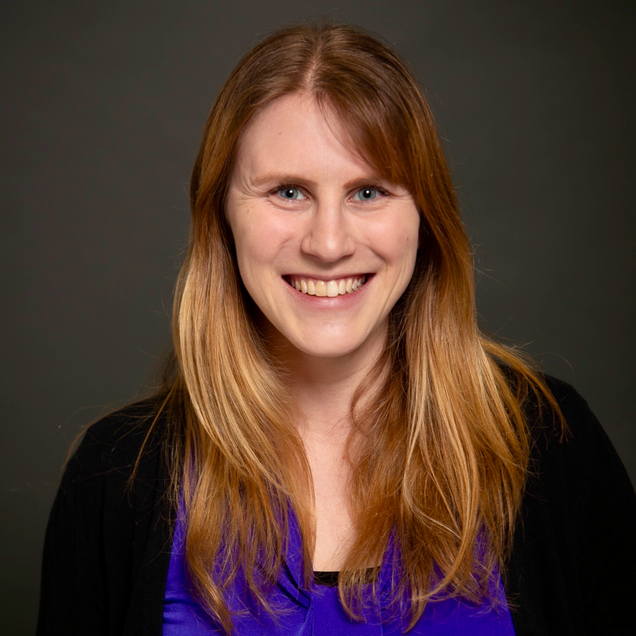
Dr. Michelle Teplensky was recently named one of the 2024 Beckman Young Investigators. She and her team will receive $600,000 over four years to engineer versatile vaccine responses through nanomaterial design, with implications for the treatment of not only the flu but also other infectious diseases including the viruses that cause COVID-19, HIV, and more.
The Beckman Young Investigator (BYI) Program provides research support to the most promising young faculty members in the early stages of their academic careers in the chemical and life sciences, particularly to foster the invention of methods, instruments and materials that will open up new avenues of research in science.
Read a detailed announcement here.
Congratulations, Dr. Michelle Teplensky!
Green Lab Publishes Patent for Detecting Nucleic Acids

Milad Babaei, MCBB PhD student of the Green Lab, and Dr. Zhaoqing Yan (GRS '23), along with their mentor, Dr. Alexander Green, are co-authors on a recently published patent. This patent, titled "Isothermal Nucleic Acid Detection Assays and Uses Thereof" by Green et al. (US Patent 2023/0313283, October 2, 2023), describes rapid methods for detecting nucleic acids, from viruses to circulating mRNAs, in low-cost portable formats.
Nucleic acids, such as DNA and RNA, play a crucial role in genetic information. "Isothermal" refers to processes that occur at a constant temperature. In the context of nucleic acid detection, isothermal assays are methods that allow the amplification and detection of nucleic acids at a constant temperature without the need for thermal cycling, as in PCR (Polymerase Chain Reaction).
The team is currently expanding its panel of detection by developing lateral flow strips that can spontaneously probe for multiple targets using multiple test lines. This capability is crucial for the future of detecting and analyzing nucleic acids, which are fundamental in various fields, including medical diagnostics, research, and biotechnology.
Congratulations, Dr. Alexander Green, Milad Babaei, and Dr. Zhaoqing Yan!
Michelle Teplensky Named AIChE’s 35 Under 35
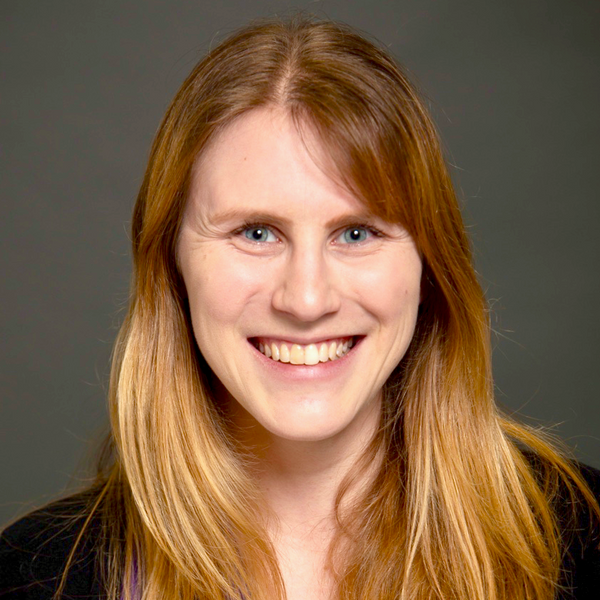 Dr. Michelle Teplensky was recently named 2023 AIChE's (American Institute of Chemical Engineers) 35 under 35. AIChE honors 35 chemical engineering professionals who have mad great contributions to the field in seven categories, bioengineering, chemicals and materials, education and outreach, energy and environment, innovation and entrepreneurship, leadership. and safety. Teplensky was recognized under the bioengineering category.
Teplensky and her research group focuses on engineering nanotechnology to control immunological cell connectivity, processing, and communication by design. In doing so, they elucidate fundamentals about cellular events and leverage this knowledge to develop improved therapeutics and vaccines that can impact the treatment of cancer and infectious disease. Their work is highly interdisciplinary, and bridges the fields of engineering, chemistry, nanotechnology, immunology, and biomaterials. By sitting at this interface, we are able to develop and incorporate synthetic nanoscale advances to control immunological activity and elucidate design rules that have widespread impacts on therapeutic development. She hopes that the students trained in her lab enter their careers feeling inspired.
Teplensky loves to shop at Stew Leonard’s, and she has become an avid fan of Boston Univ.’s hockey team. Her family has a tradition of buying and completing a puzzle on every vacation.
Congratulations, Michelle Teplensky!
Alexander Green on Saliva Test for Soldiers, Athletes, and Others Aims to Predict Performance
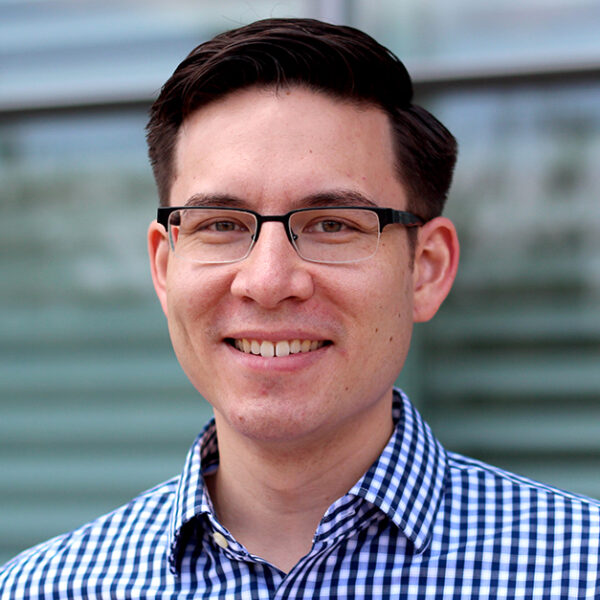 Dr. Alexander Green, BU's Associate Professor in Biomedical Engineering, and his colleagues plan to develop a fast, portable saliva test that will analyze an assortment of biomarkers associated with performance on challenging tasks. This project is funded by the US Defense Projects Agency (DARPA), which aims to develop a test that will one day save lives and dollars by predicting soldiers' performance on missions.
With funding up to $17.7 million federal funds, Green and his team will start by testing volunteers as they undergo precise physiological tests. For example, the volunteers might be intensely exercising for multiple days with little rest, while the team will take samples to see how their performance might be associated with different biomarkers, such as testosterone, cortisol, and myoglobin.
Though this research will be a complex challenge, Green's long experience in developing paper-based testing systems will guide him through this research journey. You can read more about it here.
Congratulations, Dr. Alexander Green!
Daniel Segrè and Melisa Osborne Featured in The Brink
Dr. Daniel Segrè and Dr. Melisa Osborne were recently featured in The Brink for their article "Non-additive microbial community responses to environmental complexity," which was published in nature communications this spring. An excerpt of The Brink article is below:
There’s a lot of interest right now in how different microbiomes—like the one made up of all the bacteria in our guts—could be harnessed to boost human health and cure disease. But Daniel Segrè has set his sights on a much more ambitious vision for how the microbiome could be manipulated for good: “To help sustain our planet, not just our own health.”
Segrè, director of the Boston University Microbiome Initiative, says he and other scientists in his field of synthetic and systems biology are studying microbiomes—microscopic communities of bacteria, fungi, or a combination of those that exert influence over each other and the surrounding environment. They want to know how microbiomes might be directed to carry out important tasks like absorbing more atmospheric carbon, protecting coral reefs from ocean acidification, improving the fertility and yield of agricultural lands, and supporting the growth of forests and other plants despite changing environmental conditions.
Read the full article here.
Dr. Sarah Davies Featured in The Brink
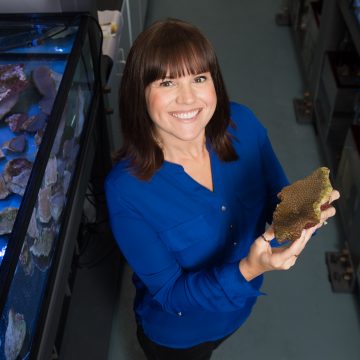
Dr. Sarah Davies was recently featured in The Brink's article, "Sexism and Racism in Science: How the Coronavirus Pandemic Exposed Everything." The Brink interviewed Dr. Davies about her new PLOS Biology paper, "Promoting inclusive metrics of success and impact to dismantle a discriminatory reward system in science." The paper is the product of a collaboration between Dr. Davies and 23 others, including BU's Dr. Wally Fulweiler, Dr. Colleen Bove, and Dr. Hanny Rivera. An excerpt of The Brink article is below:
In science, career progress—or lack thereof—is typically determined by certain criteria, such as how often a researcher’s studies are cited by other scientists, and by the number of papers they publish in prestigious, high-impact scientific journals (which often comes with an expensive price tag paid by a paper’s authors). Those metrics, however, are biased against already marginalized groups in science—namely, those who don’t identify as white males—and ensure that sexism and racism continue to plague the field, according to 24 researchers who have penned a new PLOS Biology piece on the topic.
Sarah Davies, the piece’s co-lead author and a Boston University College of Arts & Sciences assistant professor of biology, says the time crunch and workload created by the coronavirus pandemic was a tipping point for many marginalized researchers. “I’ve never been busier, so it was an interesting choice to take on a ‘perspectives’ piece outside my field of [marine biology] research,” she says. “But the coronavirus pandemic created the perfect storm of being ‘over it.’” For Davies, that meant the daunting task of navigating a changing work and research environment while juggling childcare amidst the pandemic.
Read the full article here.
Sarah Davies Receives NSF Awards
Dr. Sarah Davies recently received two National Science Foundation (NSF) awards: a Biological Oceanography award and a co-funded Biological Oceanography and Biological Sciences award.
Dr. Davies is collaborating with Dr. Kirstin Meyer-Kaiser at WHOI for the NSF Biological Oceanography award, which will fund the proposal "Collaborative Research: How do selection, plasticity, and dispersal interact to determine coral success in warmer and more variable environments?". Dr. Davies and Dr. Meyer-Kaiser will conduct coral spawning research in the Rock Islands in Palau alongside Palauan interns in spring 2022. This work will also fund a Reef Music event in collaboration with Multiverse. The event will be conducted in Spanish and will be free of charge to attendees in East Boston. Dr. Davies is the PI and Dr. Meyer-Kaiser is the co-PI.
Dr. Davies is collaborating with with Dr. Adrienne Correa at Rice University and Dr. John Parkinson at University of Southern Florida for the co-funded NSF Biological Oceanography and Biological Sciences award, which will fund the proposal "Collaborative Research: Building consensus around the quantification and interpretation of Symbiodiniaceae diversity." The overarching goal of this workshop is to recognize and build further consensus around the identification and analysis of Symbiodiniaceae (the coral's algal symbiont) genetic variation and come up with a practical ‘consensus road map’. This workshop will take place via Zoom, with 75 researchers from across the world attending. Dr. Davies is the PI and Dr. Correa and Dr. Parkinson are the co-PIs.
Research in the Davies Lab leverages in situ environmental data and mesocosm/culturing work with large-scale genomic and transcriptomic data to identify the mechanisms underlying adaptation, dispersal, and symbiosis in corals. The lab's long-term research vision aims to uncover mechanistic links from phenotype to genotype and predict evolutionary trajectories for this critical symbiosis under climate change.
Congratulations, Sarah!
Dr. Kim McCall Featured in The Brink
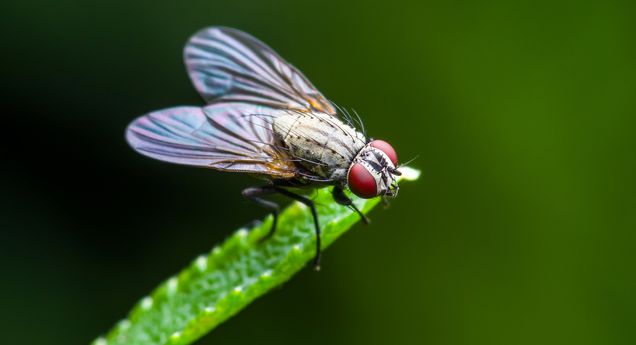
They’re the bane of summer picnics, the nemesis of busy kitchens. For most of us, flies are a seasonal annoyance, buzzing pests to be shooed, sprayed, or swatted. But to scientists, the insects are the ideal test subjects for studying a range of human diseases. What’s happening at the molecular level in their tiny bodies as they grow, age, and get sick closely mirrors what happens in ours—about 70 percent of human disease genes can also be found in flies. But they’re much less complex creatures, making it easier for researchers like Kim McCall to uncover valuable new insights into a host of chronic diseases.
McCall’s lab at Boston University is full of fruit flies. Tens of thousands of them, known as Drosophila melanogaster, are stored carefully in vials in a temperature-controlled room. McCall, a BU College of Arts & Sciences professor and chair of biology, studies Drosophila to better understand the molecular mechanisms that cause programmed cell death, particularly in the ovaries and brain. Cell death is a vital part of life in all animals, including flies and humans. It’s what enabled your body to develop in the womb—old cells making way for new ones—and what gives you a fighting chance against viruses as your body takes down infected cells. But it doesn’t always go according to plan.
Read the full Brink article here.
Dr. Muhammad Zaman Publishes New Book, Biography of Resistance
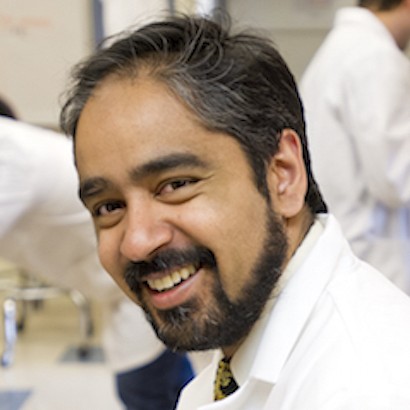
For the past eight months, the world’s attention has been focused on the deadly health crisis caused by the COVID-19 pandemic, which has already infected 30 million people and killed more than 950,000.
But in his gripping, highly readable new book, Biography of Resistance: The Epic Battle Between People and Pathogens (Harper Wave, 2020), Muhammad Zaman, a Boston University College of Engineering professor of biomedical engineering and of materials science and engineering, says there is an equally urgent crisis before us—drug-resistant infections.
More than 700,000 people die each year as a result of multidrug-resistant diseases, including at least 35,000 in the United States. And as Zaman, a Howard Hughes Medical Institute Professor, makes clear, the situation is getting more urgent. Without action, he writes, we are likely to face an unimaginable public health crisis: “It will be like the great plague of the Middle Ages, the influenza pandemic of 1918, the AIDS crisis of the 1990s, and the Ebola epidemic of 2014 all combined into a single threat.” A 2019 report issued by the United Nations Ad Hoc Interagency Coordination Group on Antimicrobial Resistance predicts that drug-resistant diseases could claim as many as 10 million lives a year by 2050.
Read the full article on BU Today.